Key Highlights
- An international buyer shortlists your trading company based on structural transparency, not corporate fluff.
- Showcasing verified processing plant ties and third-party certifications overrides a lack of massive asset ownership.
- Separating your product catalog into destination-specific regulatory tiers proves deep compliance awareness.
- Including precise logistical capabilities—like port proximities and packaging flexibilities—instantly reduces buyer friction.
- Replacing generic "Quality Guaranteed" text with explicit step-by-step laboratory gates projects true operational authority.
When an international procurement desk opens an attached PDF or reviews your digital portfolio, you have exactly less than sixty seconds to survive their initial elimination round. In the high-velocity global agricultural and commodity trade, global buyers don't have the time to read long-winded essays about your corporate vision or generic promises of "premium quality." They are actively scanning your profile for concrete operational markers that prove your business represents the lowest possible risk to their supply chain.

Most emerging trade houses treat an export company profile like a basic domestic marketing brochure. They pack it with generic stock images of cargo ships and vague text, which immediately signals a lack of real field experience to an auditor. This standard is even higher for setups looking to scale up and export rice in bulk or aggressively shift seasonal varieties across sensitive food corridors where cargo traceability is absolutely everything. To stand out among global competitors, your profile must read like a crisp, asset-backed operational dossier. It needs to show a buyer that your internal logistics, compliance gates, and sourcing lines are fully prepared to handle high-volume international contracts from day one.
The Architecture of a Trust-Backed Profile
Building a highly effective Export Business Profile requires a complete structural shift. Buyers want to know your physical capacities, your sourcing networks, and your structural risk management long before they care to look at your pricing sheets.
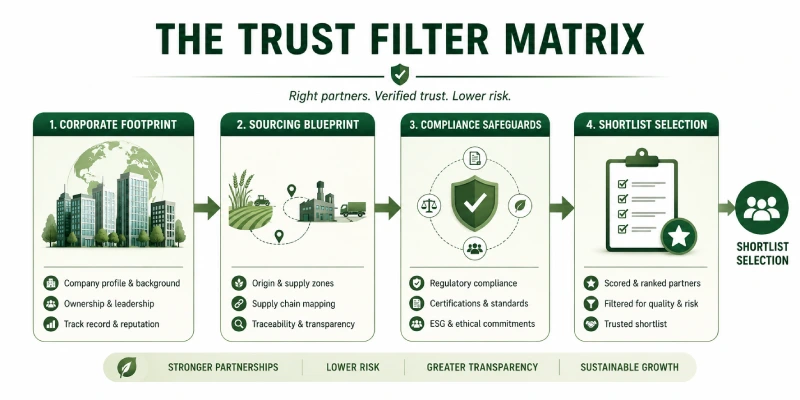
To transform your portfolio from a generic brochure into an ironclad trust asset, organize your presentation around four distinct operational blocks:
Phase 1: The Sourcing Blueprint and Infrastructure Realities
The single biggest mistake that triggers immediate buyer rejection is pretending to own massive processing plants when you are operating as an agile merchant exporter. Overseas buying desks are highly sophisticated; they run thorough background checks and see right through exaggerated asset claims.
True trust is built on absolute transparency regarding your procurement pipeline:
- Detail Your Supply Networks: If your business model relies on strategic partnerships with processing mills across major regional clusters, state that clearly in your Export Portfolio. Frame it as an operational advantage. Explain how your deep ties with multiple sorting units allow you to secure steady volumes during peak crop movements while insulating the buyer from localized infrastructure breakdowns. This clear structural mapping is vital for firms positioned to export edible oil in bulk, where refiners must guarantee consistent tank access and uninterrupted crushing capacity.
- List Your Local Processing Assets: Explicitly lay out your packaging capacities, Sortex machinery access, and storage specifications. Inform the buyer exactly where your cargo is accumulated, processed, and packed. Providing clear locations and capacities turns your business from an unverified middleman into a tangible, reliable extension of their sourcing infrastructure.

Phase 2: Documenting Your Quality Filters
Every generic exporter claims their product is the best in the market. To an overseas compliance team, those empty phrases mean absolutely nothing. To earn instant credibility, your Export Company Portfolio must replace sales talk with documented, step-by-step quality milestones.
Instead of writing a vague paragraph on quality assurance, map out your inspection track as a structured flow diagram. Detail your initial sampling protocols right at the regional mandi yards. Explain the automated mechanical sorting, moisture verification, and de-stoning gates on the mill floor.
Conclude the section by naming the independent, globally recognized surveying institutions—such as SGS, Intertek, or Bureau Veritas—that you contract to pull final composite samples straight from the loading terminal before sealing the containers.
Phase 3: Presenting a Compliance-First Catalog
When buyers skim your product section, they aren't just looking at images of grains, spices, or oils. They are looking to see if your product lineup aligns with the complex regulatory frameworks of their home customs borders.
When building an Export Portfolio, avoid listing your products in a massive, unorganized block. Instead, categorize your offerings based on specific destination metrics. Clearly state your baseline specifications—including maximum moisture allowances, admixture caps, broken-grain tolerances, and color uniformity parameters.
If your desk is building a pipeline to export dried fruits in bulk, highlighting your moisture-controlled sorting buffers and physical sizing parameters directly in the catalog proves you know how to prevent transit rot. Furthermore, if you aim to export spices in bulk, showing your clean laboratory logs for volatile oil percentages and pesticide residue ceilings tells a buyer that you don't just sell commodities—you actively master international border clearance.
Phase 4: Defining Logistical and Commercial Capability
The final segment of a professional profile must answer the practical, day-to-day questions of a procurement manager. This section is where you address your geographical location, transport speeds, and structural flexibility.
Critical Operational Capability Framework
| Portfolio Information Category | Specific Data Element to Include | What the Buyer is Secretly Evaluating | High-Value Trust Marker to Highlight |
|---|---|---|---|
| Logistical Proximity | Primary loading ports (e.g., Mundra, Nhava Sheva) and average transit timelines to the terminal yard. | Can your logistics team hit narrow vessel loading slots without incurring container detention fees? | Direct access to dedicated rail-siding routes or long-term contracts with regional fleet operators. |
| Packaging Versatility | Available weight profiles (e.g., 20kg, 25kg, 50kg) and material options (PP, multi-wall paper, Jute, Flexitanks). | Can this supplier adapt their bagging lines to match local wholesale handling preferences and environmental laws? | Ability to handle custom-branded private-label stenciling and specialized nitrogen-purged vacuum packing. |
| Biosecurity Track | Active fumigation protocols and proximity to regional Plant Quarantine stations. | Will the cargo clear destination plant inspections without an active insect larvae infestation hold? | Enforcing standard pre-shipment Phosphine or Methyl Bromide treatments backed by accredited service partners. |
| Commercial Terms | Standard accepted Incoterms (FOB, CFR, CIF) and a clear, tiered payment framework roadmap. | Is this exporter financially stable enough to manage high-volume supply lines without demanding full advance cash? | Offering flexible, hybrid credit structures (e.g., 30% TT advance deposit with a 70% Irrevocable Sight LC) to verified counterparties. |
The Tactical Verdict
Learning How to Make Export Portfolio assets that convert casual leads into repeat customers isn't about professional graphic design or corporate jargon. In the competitive international arena, trust is earned by offering clarity and reducing operational friction.
By organizing your company profile around verifiable processing partnerships, mapping out explicit quality-control checkpoints right on the factory floor, and presenting a compliance-first product catalog that respects destination customs borders, you strip all the guesswork out of the transaction. You transform your profile away from a basic marketing presentation and turn it into a high-impact commercial document that establishes your trade house as the safest, most professional choice on a global buyer's shortlisting desk.
Disclaimer
The information provided is for educational and informational purposes only. Buyer evaluation criteria, documentation requirements, certifications, and compliance expectations may vary across industries, countries, and procurement organizations. Exporters should customize their company profiles based on target markets, products, and buyer requirements.


-(1)converted.webp "Tradologie Reviews: Bridging Global Trade Gaps Through Technology")