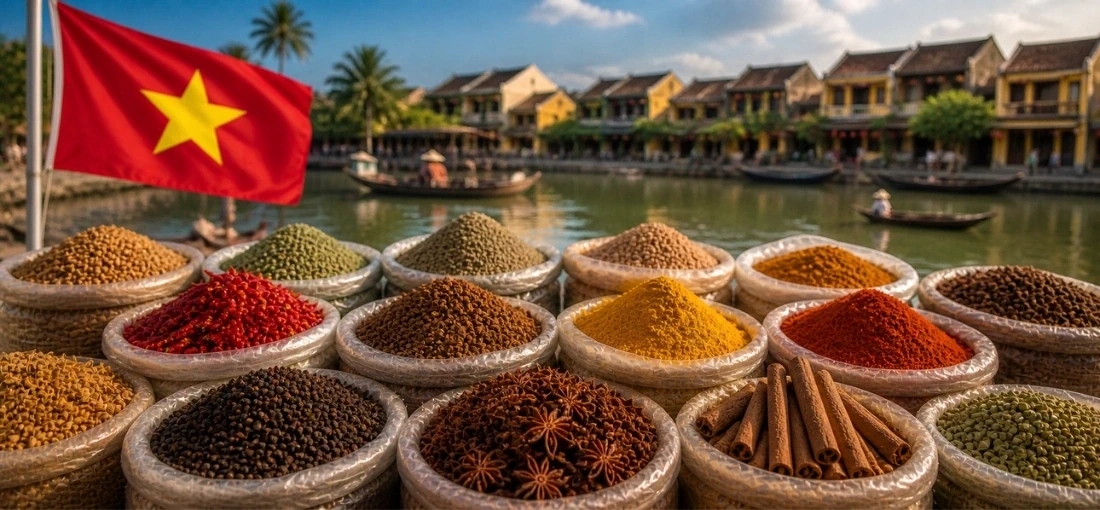
Vietnam is a unique player in the global arena; it is simultaneously a massive exporter and a significant importer of specialized spices. In the year 2025, Vietnam's spice imports were valued at approximately USD 75-85 million . While the country is famous for its own pepper and cinnamon, its massive food processing industry and rapidly modernizing retail sector create a constant hunger for international varieties like cumin, turmeric, and high-grade cardamom.
Tradologie offers a direct digital bridge into this complex market. Instead of getting lost in traditional wholesale networks, you can connect with active spices importers in Vietnam through an AI-enabled trade hub designed for transparency and speed.
How Tradologie simplifies the Vietnamese trade:

The Vietnamese spice trade is a mix of massive state-linked corporations, global flavoring houses, and aggressive private retailers. These are the key organizations defining the bulk import landscape.
Leading Spice Importers & Processors in Vietnam
| Rank | Company Name | Headquarters | Market Focus | Unique Market Position |
|---|---|---|---|---|
| 1 | VinaSpice | Ho Chi Minh City | Industrial & Export | A massive processor that imports raw materials for large-scale value-added spice products. |
| 2 | Masan Group | Ho Chi Minh City | FMCG & Retail | One of Vietnam's largest conglomerates with massive bulk needs for their sauce and seasoning lines. |
| 3 | Visimex | Hanoi | Organic & Specialty | A leader in the high-end segment, importing specialized spices for the European and US re-export markets. |
| 4 | Ajinomoto Vietnam | Dong Nai | Seasoning & Food Processing | A major industrial buyer requiring consistent bulk spice inputs for regional flavor enhancers. |
| 5 | WinCommerce (WinMart) | Hanoi | Retail Chain | The country's largest grocery network with a constant requirement for private-label bulk spices. |
| 6 | Phúc Sinh Group | Ho Chi Minh City | Commodities & B2B | Known as a "king of pepper," but they import significant volumes of non-local spices for their global clients. |
| 7 | Duy Ha Spices | Hanoi | Traditional Wholesale | A primary link for importing raw spices destined for the traditional markets in Northern Vietnam. |
| 8 | Unilever Vietnam | Ho Chi Minh City | Consumer Goods | Sources spices at an industrial scale for their massive range of food and Knorr-branded products. |
| 9 | Nedspice Vietnam | Binh Duong | Global Processing | A Dutch-owned giant that imports raw spice stock to be cleaned and graded in their high-tech Vietnam facilities. |
| 10 | Vinafood 1 | Hanoi | State-owned Trade | A massive government-linked entity that manages large-scale commodity imports for national food security. |
Vietnam isn't just a destination for consumption; it's a global processing factory. The logic is blunt: Vietnamese factories have become the "kitchen" for much of the world.
The demand here is driven by a food-processing sector that is constantly adding value to raw materials and re-exporting them. In fact, if you can supply the high-purity raw materials required for EU and US export grades, you can secure long-term volume because spices importers in Vietnam and food processors are under pressure to meet those strict western benchmarks. Beyond industry, the middle class in Hanoi and Ho Chi Minh City is growing, and they are looking for the "real thing" when it comes to non-local Indian or Middle Eastern spices. If your grading is reliable and your paperwork is transparent, the contracts here are high-volume and recurring.

In Vietnam, logistics is about speed and proximity to the industrial zones. Landing your cargo at the right port can save days in domestic transit.
By matching your shipping strategy to the port closest to your buyer's factory, you ensure that your spices importers in Vietnam stay stocked and your margins stay protected from high inland freight costs.
Exporters can connect with verified spices buyers in Vietnam through AI enabled trade solutions like Tradologie. Instead of depending on traditional wholesale networks, exporters receive direct access to active buyers with real time bulk requirements.
Vietnam is both a major exporter and importer of spices. Its rapidly growing food processing industry and retail sector create strong demand for imported varieties like cumin, turmeric, and cardamom. This makes Vietnam a strategic market for bulk exporters.
Spices buyers in Vietnam include industrial processors, FMCG companies, seasoning manufacturers, supermarket chains, and commodity traders. Many of these companies import bulk raw spices for processing and re export purposes.
Vietnam’s spice market is heavily processing driven. Buyers are not only importing for domestic use but also for value addition and re export to Europe and the USA. This increases demand for high purity and export grade raw materials.
Tradologie provides a transparent digital trade ecosystem where exporters can connect directly with verified spices buyers in Vietnam, receive live RFQs, and negotiate securely without middlemen. This makes the trade process faster and more structured.