
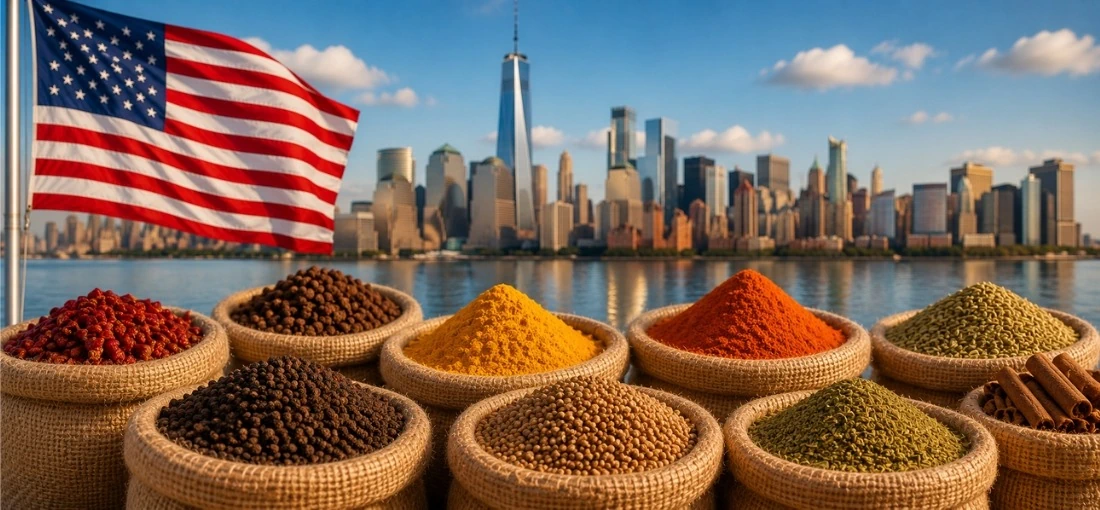
The United States represents the single largest market for value-added flavor solutions in North America, with its spices sector projected to reach a valuation of $4.3 billion in 2026. This is a massive engine fueled by a constant consumer shift toward international ethnic cuisines and clean-label products. For exporters, the reality of the US market is strict: buyers are not just looking for raw materials; they are looking for HACCP-certified, steam-sterilized inventory that meets rigorous FDA safety standards, such as the absence of Salmonella in 25g samples.
Tradologie provides the direct digital access needed to navigate this high-stakes environment. We offer an AI-enabled trade ecosystem where you can engage with major spices importers in USA through a systematic, transparent process that eliminates traditional brokerage barriers.
How Tradologie drives trade in the US market:

The US landscape is dominated by corporate-scale volume buyers and specialized "clean label" cooperatives that supply everything from 25,000+ bodegas to massive national retail chains like Walmart and Kroger.
Leading Spice Importers & Processors in USA
| Rank | Company Name | Headquarters | Market Focus | Unique Market Position |
|---|---|---|---|---|
| 1 | McCormick & Company | Hunt Valley, MD | Retail & Industrial | The $4.5 billion industry giant supplying 40% of US retail shelf space. |
| 2 | Frontier Co-op | Norway, IA | Organic Premium | A $700 million leader in organic spices paying 35-45% premiums for quality. |
| 3 | Olam Spices | Fresno, CA | Bulk Processing | Focuses on bulk black pepper and dehydrated aromatics for the foodservice industry. |
| 4 | Badia Spices | Doral, FL | Latin/Hispanic Market | The primary supplier for 25,000+ bodegas, specializing in S4 chili and cumin. |
| 5 | Gel Spice Company | Bayonne, NJ | Private Label | The "King of Private Label," producing store-brand spices for major regional chains. |
| 6 | Spice Chain Corp. | S. Plainfield, NJ | Ethnic Focus | Vital link for 2,500+ Indian groceries, including Patel Brothers and Subzi Mandi. |
| 7 | B&G Foods | Parsippany, NJ | Premium Brands | Manages the Spice Islands brand, prioritizing Tellicherry pepper and premium quills. |
| 8 | Pacific Spice Company | Commerce, CA | West Coast Foodservice | Major buyer of grinding chilies and cumin for large Western restaurant chains. |
| 9 | Simply Organic | Norway, IA | Clean Label Retail | Targets health-conscious consumers with a strict "non-GMO verified" position. |
| 10 | Penzeys Spices | Wauwatosa, WI | Direct-to-Consumer | Operates 400+ retail stores and a massive e-commerce portal for home cooks. |
The US market is no longer just about salt and pepper; it is about sophisticated "flavor solutions." In fact, ground and powdered forms now dominate roughly 56% of the market share , reflecting the American consumer's demand for convenience and ready-to-eat meals.
While pepper remains the "king" with a 33% projected share, functional ingredients like turmeric, garlic, and ginger are seeing rapid growth due to immunity-boosting trends. The logic is blunt: if you can provide high-quality raw materials that pass FDA Import Alerts and meet specific volatile oil or curcumin minimums (like 5% curcumin for turmeric), the contracts are massive. Spices importers in USA are actively moving toward "forward cover"—securing inventories early in the season to stabilize costs against weather disruptions and rising tariffs.

In the US, landing your cargo at the right port is critical to managing inland drayage costs. Most bulk shipments arrive in 20ft containers (18-20MT) at hubs closest to the major processing clusters.
Match your logistics to the port nearest your buyer's sterilization facility. Getting this right ensures your spices importers in USA avoid unnecessary transport bottlenecks and maintain the strict "Salmonella absence" standards required for final processing.
Finding buyers in the US market is less about quantity and more about quality. Exporters today are increasingly using AI enabled trade ecosystems like Tradologie to connect directly with verified importers, processors, and private label companies that already have active bulk demand.
The American food industry runs heavily on flavor innovation. From Tex Mex sauces and ready meals to organic wellness products, the demand for imported spices continues to rise across retail and industrial sectors. This has pushed the US spices market toward a projected valuation of nearly $4.3 billion by 2026.
The market includes everything from multinational giants like McCormick to specialized organic companies and industrial blenders. Buyers range across retail chains, seasoning manufacturers, foodservice companies, and private label suppliers serving supermarkets nationwide.
US buyers are extremely compliance focused. Beyond pricing, they expect FDA compliant shipments, HACCP certification, proper steam sterilization, and consistent microbiological safety standards. Reliability often matters more than offering the cheapest quote.
Tradologie works more like a structured trade ecosystem than a listing platform. Exporters can receive live RFQs, negotiate directly with buyers, and manage bulk trade conversations in a transparent digital environment designed for international transactions.