
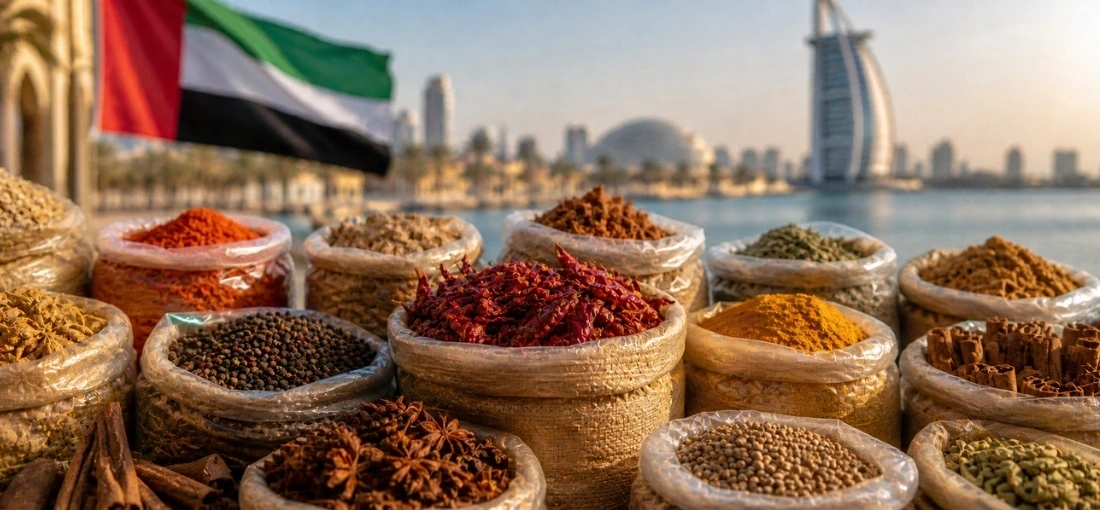
The UAE isn't just buying spices for its b2c needs; it is the commercial heartbeat of the whole international market and service and acts as an re-export hub. In 2025, the country pulled in roughly $186.75 million in spices, making it the fifth-largest spice importer on the planet. The real story here is the "logistics bridge." In fact, a massive chunk of the cargo landing in hubs like Jebel Ali doesn't stay in the UAE—it gets turned around and shipped straight out to Saudi Arabia, Kuwait, and across African markets.
Tradologie provides the most direct digital route for spice exporters to tap into this high-margin re-export engine. We offer an AI-enabled trade ecosystem that moves beyond simple directories, ensuring a steady supply of real import requirements from verified spice importers in UAE.
As a leading AI-powered agro trade facilitation platform, we offer:

The UAE landscape is defined by massive trading houses in free zones and industrial blenders serving the regional food manufacturing sector. These are the key players anchoring the market in 2026.
| Rank | Company Name | Headquarters | Market Focus | Unique Market Position |
|---|---|---|---|---|
| 1 | Pure Food Limited | Dubai | Retail & Foodservice | Leading distributor with a 14.57% market share, critical for UAE supply stability. |
| 2 | Jayanti Herbs & Spice | Dubai (DMCC) | Specialty & Re-export | Dominant in ethnic food markets with a strong focus on black pepper and cinnamon. |
| 3 | Bombay Foodstuff Trading | Dubai (JAFZA) | Wholesale & Bakery | Leading wholesale supplier specializing in bulk re-exports to Europe and the USA. |
| 4 | Arab & India Spices LLC | Ajman | Industrial Processing | Established in 1986, operates massive state-of-the-art manufacturing facilities. |
| 5 | Hemani Group | Dubai | Herbal & Retail | One of the largest integrated importers with extensive retail distribution and private labeling. |
| 6 | J H S DMCC | Dubai | Bulk Commodities | Essential trader for UAE’s commodity trading ecosystem, serving major wholesale channels. |
| 7 | Ugarit Foodstuff Trading | Dubai | HORECA Sector | Key supplier for food manufacturing and hospitality sourcing throughout the UAE. |
| 8 | Ankit General Trading | Dubai | GCC Redistribution | Facilitates large-volume regional trade for both domestic use and GCC-wide exports. |
| 9 | Ninja Gulf General Trading | Dubai (FZCO) | Free-Zone Trade | Major player in free-zone logistics, enhancing cross-border supply chain efficiency. |
| 10 | Organic Spices LLC | Abu Dhabi | Organic & Health | Renowned for premium whole spices and powders with a focus on purity and quality. |
In the UAE, logistics is about free zone advantages and re-export speed. Landing your cargo at the right port determines your tax benefits and regional reach.

By aligning your shipping with the port nearest to your buyer's free zone warehouse, you ensure that your spices importers in UAE can move stock faster and more cost-effectively than through any other global hub.
UAE importers have access to a vast assortment of spices for wholesale, food processing distribution, hospitality, restaurants and retail markets as well as re-export and retail. Demand is influenced by the quality of the product and origin of the product, grade, packaging and buyer needs.
The most commonly used spices that are purchased by UAE importers are:
For bulk purchases, UAE buyers generally evaluate the quantity of purchase, quality, origin specifications packaging, certifications price and delivery terms prior to making the purchase.
Tradologie is a B2B platform where spice producers can interact with buyers who are looking for large quantities. Instead of relying solely on traditional marketplace listings, suppliers are able to be part of purchasing opportunities based on real needs of buyers.
The steps can include:
Buyer Requirement - Supplier Participation - Commercial Offers - Negotiation - Trade Finalisation
Spice sellers can showcase their products in accordance with the specifications of the buyer, including quantity as well as commercial requirements.This makes the process of sourcing more pertinent to the actual requirements of trade.
Exporters who are targeting the UAE Tradologie offers consumers who are looking for products like the black pepper and coriander, turmeric, cumin chilli, cinnamon, and many other spices.
The platform's focus is on verifiable members and organized trade talks can aid suppliers in moving away from discovery of products to significant B2B conversations about procurement.
The search for a buyer is just the beginning of trading in international spices. Suppliers must determine if the buyer has a legitimate commercial need and whether the proposed deal is compatible with their capabilities in supply and product.
The most effective method is:
Suppliers and exporters of spices seeking to expand into UAE, Tradologie offers a B2B marketplace that is focused on bringing together traders with actual procurement needs.
Sign up with Tradologie to research the bulk spice trade opportunities and meet prospective UAE customers.
Exporters can connect with verified spices buyers in UAE through AI enabled trade solutions like Tradologie. Instead of relying on static directories, exporters receive real time bulk RFQs from active buyers across the UAE market.
The UAE is one of the world’s largest spice trading hubs and acts as a major re export center for the Middle East and Africa. A large share of imported spices is redistributed to Saudi Arabia, Kuwait, and African markets through UAE logistics networks.
Spices buyers in UAE include wholesale traders, industrial food processors, HORECA suppliers, free zone trading companies, and organic spice distributors. Many of these buyers operate at regional GCC scale and purchase in bulk quantities.
UAE buyers focus heavily on logistics speed, re export efficiency, and competitive pricing. Since the UAE acts as a redistribution hub, buyers prefer exporters who can ensure consistent supply and fast shipment turnaround.
Tradologie provides an AI enabled trade ecosystem where exporters can connect directly with verified spices buyers in UAE, receive live import requirements, and negotiate in transparent digital trade rooms without middlemen.
Black pepper, cinnamon, turmeric, cardamom, and blended spices are among the most demanded products. Demand remains high due to retail consumption, hospitality growth, and GCC wide redistribution activities.
Jebel Ali Port is the primary gateway and handles nearly 70% of UAE spice imports. Khalifa Port supports industrial buyers, while Sharjah Free Zone is widely used for regional redistribution into GCC and African markets.
Yes, exporting to spices buyers in UAE is highly profitable because the country combines strong domestic demand with large scale re export opportunities. Buyers often operate in high volume trading environments, creating recurring bulk demand.