
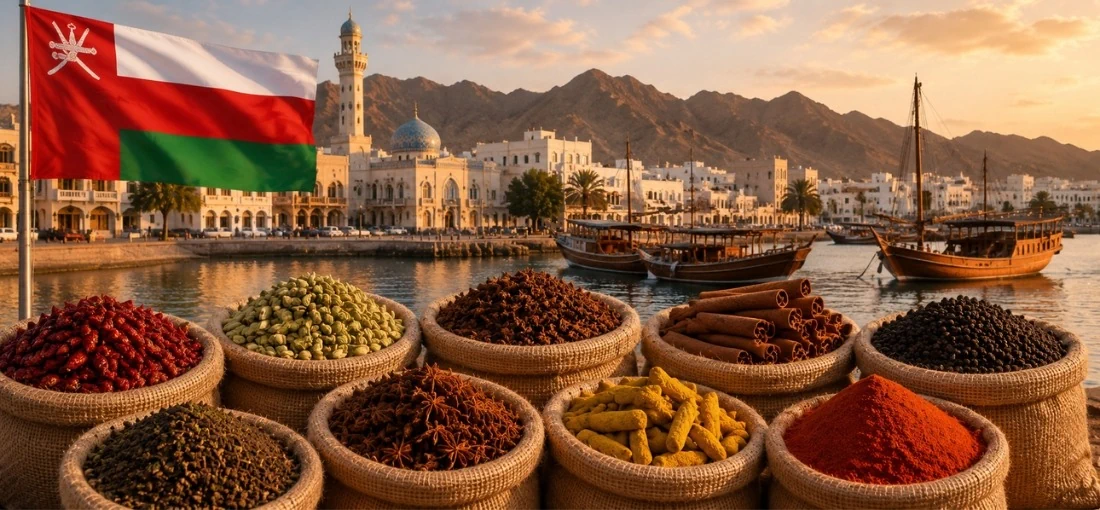
Oman is a high-potential trade destination where a rich culinary tradition meets a modern national focus on food security. In the year ending January 2026, Oman's imports of coffee, tea, and spices reached a significant valuation of USD 106.27 million. This steady demand is fueled by Oman Vision 2040 , a strategic initiative that has already seen over USD 4.9 billion invested in agricultural and food-related projects to diversify the national economy. For exporters, Oman is no longer just a local market; it is a stable, premium-wage hub looking for high-quality bulk inputs to feed its rapidly growing food processing sector.
Tradologie provides the most direct digital path to bypass traditional trade hindrances in this region. We offer an AI-enabled trade solution where you can connect with the best spices importers in Oman and do large-scale exports with full transparency and efficiency.
How Tradologie drives trade in Oman:

The Omani spice landscape is a mix of massive industrial blenders that fuel the nation's snack and prepared-food industries, and dominant retail groups with nationwide distribution.
Leading Spice Importers & Processors in Oman
| Rank | Company Name | Headquarters | Market Focus | Unique Market Position |
|---|---|---|---|---|
| 1 | Oman Foodstuff Factory (Al Mudhish) | Muscat | Processing & FMCG | A giant in the local market; uses massive spice volumes for its famous snack and seasoning lines. |
| 2 | Lulu Hypermarket Oman | Muscat | Retail & Distribution | The absolute heavy hitter of retail, requiring a constant stream of private-label spices. |
| 3 | Manar Food Industries | Muscat | Industrial Snacks | Dedicated to the "perfect balance of flavor with spices" for its 40+ snack variants. |
| 4 | Nesto Hypermarket | Various | Retail & Wholesale | A dominant regional player with high-volume demand for both whole and ground spices. |
| 5 | Jawad Sultan Group | Muscat | Foodservice & FMCG | A diversified conglomerate with a deep reach into Oman's professional hospitality kitchens. |
| 6 | Enhance Oman (W.J. Towell) | Muscat | Distribution & Retail | One of the country's largest distributors, managing a massive portfolio of international food brands. |
| 7 | Al Maya Group Oman | Muscat | Retail & Wholesale | A regional force that specializes in importing and distributing authentic international food products. |
| 8 | Khimji Ramdas (Food Division) | Muscat | FMCG & Industrial | A legacy player with a massive supply chain for raw commodities and processed ingredients. |
| 9 | HyperMax | Various | Hypermarket Retail | A rapidly growing retail chain with significant bulk requirements for its nationwide outlets. |
| 10 | Omani Vegetable Oils & Ghee Co. | Salalah | Industrial Blending | Uses spices and spice oils at an industrial scale for their specialty cooking fats and oils. |
Oman is a strategic win because it rewards reliability over the lowest price point. The logic is blunt: the country has achieved a food self-sufficiency rate of 65.8% , but it still relies heavily on imports for approximately 34.2% of its food needs. This creates a permanent demand for high-value raw materials like Turmeric, Black Pepper, and Cloves.
In fact, major sourcing partners like Indonesia, Kenya, and Malaysia have already carved out significant trade flows, but the India-Oman CEPA agreement is opening even wider doors for exporters with streamlined regulatory procedures. If you can provide bulk raw materials that meet strict Omani food safety standards and support their industrial snack manufacturing, you are looking at recurring, high-volume contracts in a market that values long-term resilience.

In Oman, choosing the right port is the difference between a smooth delivery and getting buried in inland freight costs. Most bulk spice shipments arrive at hubs closest to the major processing clusters.
Match your shipping to the port nearest your buyer's factory. It is the only way to ensure your spice importers in Oman receive their stock without the high inland transit costs that eat into your profit margins.
Exporters can connect with verified spices buyers in the Philippines through AI enabled trade ecosystems like Tradologie. Instead of relying on traditional trading networks, exporters gain direct access to active buyers with real time bulk requirements.
The Philippines has a rapidly growing food processing industry and strong consumer demand for flavorful food products. With the spices and seasonings market valued at around USD 872.4 million in 2025, imports continue to rise for products like black pepper, cinnamon, and nutmeg.
Spices buyers in the Philippines include seasoning manufacturers, sauce companies, snack food producers, food ingredient suppliers, and industrial processors. Many of these businesses operate at large manufacturing scale and require continuous bulk supply.
Philippine buyers are highly volume driven because the market is closely tied to food manufacturing and instant food production. Buyers prioritize consistent grading, safety compliance, and uninterrupted supply for industrial scale operations.
Tradologie provides exporters with an AI enabled trade ecosystem where they can access verified spices buyers in the Philippines, receive live RFQs, and negotiate directly in transparent digital trade rooms without intermediaries.
Black pepper, cinnamon, nutmeg, and imported seasoning blends are among the most demanded categories. Demand is driven by the country’s massive sauces, snacks, instant noodles, and food manufacturing industries.
Port of Manila is the primary gateway for industrial cargo, while Cebu serves Central Philippines. Batangas offers faster access to Southern Luzon industrial zones, and Davao supports Mindanao’s food manufacturing clusters.
Yes, exporting to spices buyers in the Philippines can be highly profitable because the country relies heavily on imported bulk spices for industrial food production. Demand remains strong and recurring due to the expanding food manufacturing sector.
The biggest challenge is logistics management across the country’s island network. Exporters must also ensure consistent quality, proper documentation, and timely shipment planning to avoid delays and increased inland transport costs.
Exporters can scale by maintaining consistent product quality, ensuring reliable logistics, and building direct relationships with industrial buyers. Using AI enabled trade ecosystems like Tradologie also helps exporters continuously access recurring bulk demand.