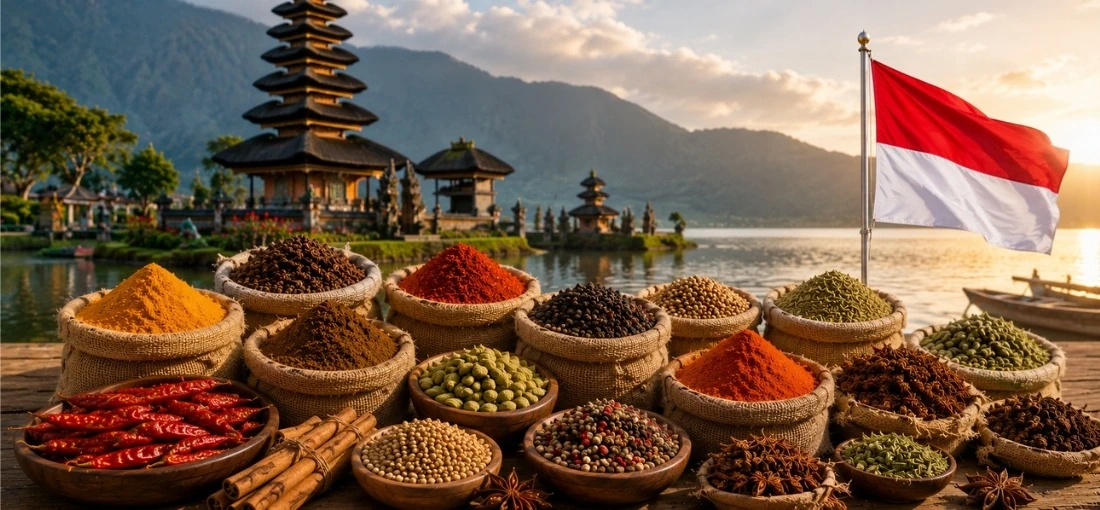
The Indonesian archipelago, historically christened the "Mother of Spices," functions as a sophisticated, dual-track marketplace for global spices traders . While widely celebrated as a dominant global origin for cloves, nutmeg, and vanilla , Indonesia's rapid industrial scaling has transformed the nation into a heavy institutional importer of raw botanical materials. According to 6wresearch website, the import trend in the Indonesian spice market showed significant growth from 2023 to 2024, with a notable increase of 94.14%. The compound annual growth rate for imports from 2020 to 2024 stood at 43.81%.
Walk through the automated processing terminals at the Port of Tanjung Priok or look at the production lines in the industrial zones of Tangerang and Surabaya. The demand for bulk inputs like premium chillies, specialized oleoresins, black pepper variations , and custom seasoning agents is significant. Sourcing directly to spice importers in Indonesia networks requires a precise understanding of high-turnover food manufacturing workflows and complex national certification structures.
Tradologie delivers the direct digital gateway needed to navigate this dynamic, quality-focused commercial market . We offer an advanced, AI-enabled trade solution where you can engage directly with major Indonesian spice buyers , prioritizing verified compliance with national food safety benchmarks, streamlining documentation, and protecting your transactional margins .

The Indonesian spice trade is anchored by massive domestic consumer conglomerates, global raw material ingredient processors, and specialized institutional blenders supplying the country's high-velocity food manufacturing sector.
| Rank | Company Name | Headquarters | Market Focus | Unique Market Position |
|---|---|---|---|---|
| 1 | PT Sumber Inti Pangan | Tangerang | Industrial & Custom Blends | A cornerstone processing giant manufacturing over 100 varieties of customized powdered spices and infused seasoning oils for global instant soup and snack lines. |
| 2 | PT Kobe Boga Utama | Tangerang | FMCG & Seasoning Mixes | A premier historic manufacturer renowned for high-velocity consumer spice mixes, coating flours, and the iconic BonCabe chili sprinkle lines. |
| 3 | PT Bamboe Indonesia | Surabaya | Consumer Retail & Bulk Packing | An absolute household name dominating the instant traditional paste and authentic retail spice pack sectors across Southeast Asia. |
| 4 | PT Motasa Indonesia | Sidoarjo | Wholesale Processing | A heavy-volume industrial milling house specializing in mass processing, grinding, and automated packing of high-purity pepper and core spices. |
| 5 | PT Anu Prima Jaya | North Jakarta | Corporate B2B & HORECA | Rapidly growing distribution engine supplying custom instant spices, powdered aromatics, and raw materials directly to leading industrial brands. |
| 6 | PT Kikkoman Akufood Indonesia | Bekasi | Savory Sauces & Seasonings | A vital industrial partnership manufacturing specialized all-purpose Halal seasoning formulations and umami flavor enhancers via natural fermentation. |
| 7 | PT Global International Foods | Jakarta Hub | Customized Snack Seasonings | Specialized manufacturer producing customized savory and sweet seasoning powders engineered specifically for large-scale biscuit and potato chip lines. |
| 8 | PT Ganesha Abaditama | Jakarta | Preservative-Free Marinades | Prominent processor focusing on clean-label, high-purity marinade mixes and restaurant-quality spice blends free from artificial colorants. |
| 9 | Bumi Menara Internusa | Various Hubs | Foodstuffs & Blends | A diversified institutional trading house importing substantial volumes of specialized non-hazardous bulk spices and seasoned formulations. |
| 10 | PT Hoki Sukses Mandiri | Jakarta | Flavor Packaging & Imports | Strategic distributor managing large-scale container lines of imported flavor components and specialty spice blends for regional food networks. |
Securing a sustainable position in the Indonesian import arena means moving past simple spot-market tactics and embracing an absolute commitment to shifting regulatory landscapes.
1. Mandatory Halal Deadlines & Extensions
The compliance roadmap for international suppliers has taken a critical turn. The full mandatory Halal certification deadline for the vast majority of food and beverage products—including raw bulk imports and industrial ingredients—has been officially extended to 17 October 2026. While high-risk sectors like meat and dairy face much tighter rules already in force at the border, plant-based spices and general ingredients are currently navigating the final phases of this rollout.
2. The Plant-Based "Halal by Default" Reality
From a botanical standpoint, plant-based spices such as dried chillies, peppercorns, and seed crops are generally considered Halal by default. However, the industrial reality is far more strict. If processing aids, extraction solvents, or flow carriers are utilized during milling, they must be verified as completely Halal-compliant. In commercial practice, Indonesian purchasing agencies and BPJPH regulators require formal, cross-endorsed certification for any processed or bulk spices entering industrial manufacturing chains.
3. The Mycotoxin, Aflatoxin & Audit Overlap
Operating in a tropical climate brings severe environmental challenges. Because the high humidity across the archipelago naturally fosters rapid fungal growth, local purchasing managers enforce a zero-tolerance stance on contamination. Crucially, the regulatory framework directly pairs Halal compliance with strict food safety. Standard Halal audits conducted by Indonesian authorities frequently include comprehensive evaluations of an origin facility’s Good Manufacturing Practices (GMP), operational hygiene, and end-to-end traceability systems. Should an incoming container of raw spices fail to satisfy these integrated parameters, customs will freeze the manifest instantly.

Navigating Indonesian customs entry requires precise coordination with world-class maritime hubs to optimize transit times and prevent costly inland logistical delays.
Aligning your shipping allocations, container types, and vessel selections directly with the maritime terminal closest to your buyer's central sterilization or milling facility is an operational necessity. It remains the most effective strategy to completely wipe out unexpected container detention fees and preserve your underlying export margins.
[Register as a seller on Tradologie and connect with verified spices buyers in Indonesia]
Indonesia has rapidly evolved into a major institutional importer of raw botanical materials, seasoning ingredients, and processed spice inputs due to large scale food manufacturing growth
Exporters increasingly use AI enabled trade ecosystems like Tradologie to connect directly with spices importers in Indonesia, receive live RFQs, and negotiate bulk supply contracts with verified buyers.
Premium chillies, oleoresins, black pepper variants, seasoning blends, and customized spice formulations are among the most demanded products in Indonesia’s industrial food sector.
Indonesia’s regulatory framework increasingly requires formal Halal certification for processed food ingredients and industrial spice imports. Buyers and BPJPH authorities expect strict compliance and documentation support.
Major players include PT Sumber Inti Pangan, PT Kobe Boga Utama, PT Bamboe Indonesia, PT Motasa Indonesia, and PT Kikkoman Akufood Indonesia.
Indonesia combines large scale domestic spice production with massive industrial import demand for customized seasoning systems, processed spice ingredients, and food manufacturing formulations.