
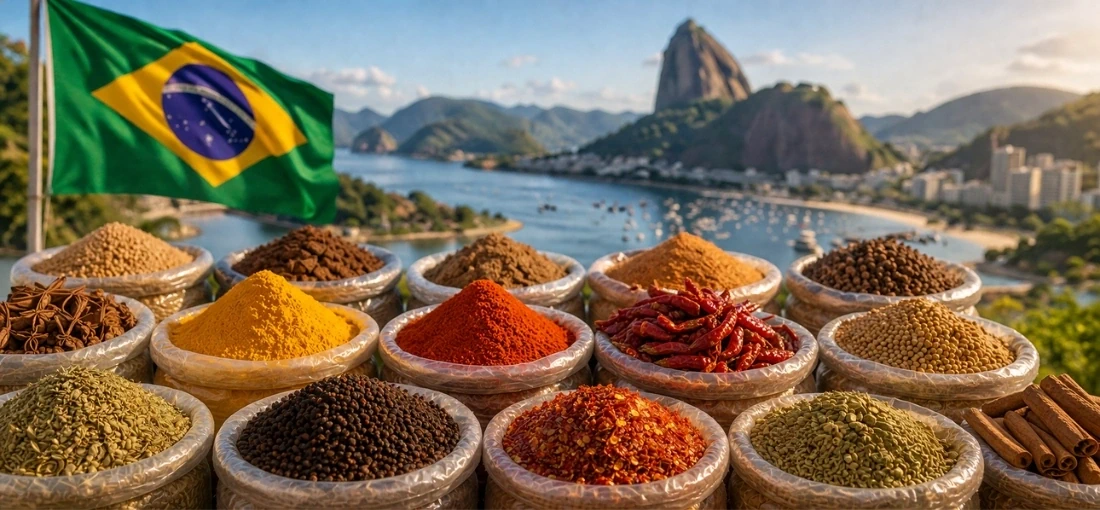
Brazil isn't just a world-class producer; it is a massive consumer market that is currently hungry for global flavors. While the domestic market is strong, the real movement is in the surging demand for exotic seasonings that the local soil just doesn't provide. By 2025, the local industry has pivoted hard toward professionalized sourcing, with trade value expected to hit roughly USD 54.9 million by 2030. This isn't just about table basic spice imports ; it's about a growing middle class and a heavy-duty food processing sector that needs a constant stream of imported cumin, turmeric, and ginger to keep their production lines running.
Tradologie provides the most efficient digital gateway to this lucrative South American region. We move beyond simple directories by offering an AI-enabled trade ecosystem where you can connect with the best spice importers in Brazil through a transparent and streamlined process.
Why Tradologie is the preferred hub for Brazilian trade:

The Brazilian spice landscape is a mix of global flavoring giants, massive industrial blenders, and specialized brokers who dominate the regional supply chain. These are the players currently moving the needle for bulk trade in the country.
| Rank | Company Name | Headquarters | Market Focus | Unique Market Position |
|---|---|---|---|---|
| 1 | Ajinomoto do Brasil | São Paulo | Seasonings & Industrial | The absolute leader in regional flavor enhancers; they have a massive appetite for bulk inputs. |
| 2 | McCormick (Forno de Minas) | Various Locations | Retail & Industrial | A global titan that manages a huge chunk of the branded spice shelf space in Brazil. |
| 3 | Brazcomm | Rio de Janeiro | Brokerage & Export | A critical link for any exporter looking to move bulk shipments into the domestic retail grid. |
| 4 | Golden Agrícola | Bahia | Grains & Spices | They handle everything from black pepper to cloves; a major player in the Bahia trade cluster. |
| 5 | Sensient Technologies Brazil | São Paulo | Flavors & Colors | The go-to importer for high-purity spice extracts used by Brazilian food manufacturers. |
| 6 | Associated British Foods (ABF) | Various Locations | Retail & Industrial | A global force with a deep, specialized footprint in the Brazilian seasoning sector. |
| 7 | Kerry Group Brazil | São Paulo | Food Ingredients | They focus on the high-tech side of spice-based ingredients for industrial food production. |
| 8 | Dohler Brazil | Limeira, SP | Industrial Processing | A massive industrial buyer that turns raw spice imports into food and beverage components. |
| 9 | Everest Spices (Distributors) | Various | Ethnic & Specialty | The primary gateway for authentic Indian spice profiles entering the Brazilian market. |
| 10 | Bart Ingredients (Partners) | Various | Retail & Private Label | Specialized in the premium and wellness spice segments booming in cities like São Paulo. |
Brazil is a "hidden gem" because of a massive irony: it's a global leader in pepper, but it's starving for everything else. In 2025 alone, the trade bridge with India saw over USD 21.8 million in spices moving toward Brazil. The demand for seeds like cumin and anise is already topping $10M, with roots like turmeric and ginger following closely at $9.4M.
Because the Brazilian Ministry of Agriculture (MAPA) is cracking down on quality, spice importers in Brazil are desperate for partners who don't cut corners. If your grading is consistent and your lab reports are solid, you are looking at a market that is ready to pay a premium for reliability.

In Brazil, your port choice determines whether you make a profit or get buried in the "Custo Brasil" (the high cost of doing business).
Don't just ship to the biggest port; ship to the one that puts your goods on a truck nearest your buyer. This is the only way to ensure your spice importers in Brazil avoid the typical trans-continental bottlenecks that kill margins.
Exporters can connect with verified spice buyers in Brazil through AI enabled trade ecosystems like Tradologie. Instead of relying on outdated directories, exporters gain access to real time RFQs and direct negotiations with active Brazilian importers.
Brazil has a rapidly growing food processing industry and rising demand for global flavors. While the country produces black pepper locally, it imports large volumes of cumin, turmeric, ginger, and specialty seasonings for industrial and retail consumption.
Spice buyers in Brazil include industrial processors, seasoning manufacturers, retail distributors, food ingredient companies, and brokerage firms. Many of these buyers source in bulk for large scale food production and retail distribution networks.
Brazilian buyers are increasingly focused on quality consistency and regulatory compliance. With stricter oversight from MAPA, importers prefer exporters who can provide proper grading, purity standards, and reliable lab documentation.
Tradologie provides exporters with a transparent AI enabled trade ecosystem where they can access verified spice buyers in Brazil, receive live bulk requirements, and negotiate directly in secure digital trade rooms.
Cumin, turmeric, ginger, anise, and premium seasoning blends are among the most demanded products. Demand is driven by Brazil’s expanding middle class, food processing industry, and growing preference for international cuisines.




