From Dubai’s Jebel Ali Port to Abu Dhabi’s institutional procurement networks, the UAE hosts a diverse ecosystem of rice importers handling bulk shipments for domestic consumption and regional re-exports.

Rice importers in UAE primarily source basmati and non-basmati rice from India for domestic consumption and large-scale re-export through Dubai.
Expand your rice business to the Gulf's most dynamic markets. Whether you're connecting with rice importers in Dubai's bustling trade zones or targeting rice buyers across the UAE, you need access to genuine verified importers who are actively placing bulk orders not just collecting quotes.
The United Arab Emirates is one of the major rice importers globally. It's a country with an extensively diverse population and witnesses people from different ethnicities. This vibrant Gulf country has a flourishing food and hospitality infrastructure which is significantly influenced by Indian food.
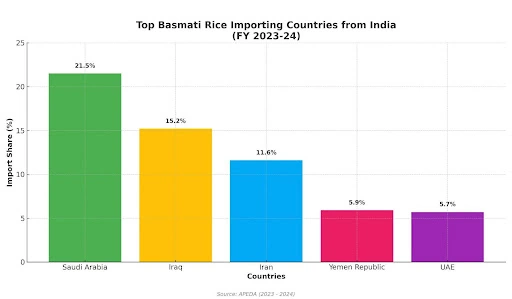
The country alone is among the top 5 basmati rice buyers after Saudi Arabia, Iraq, Iran and the Yemen Republic and accounts for India's 5.7% of total basmati rice exports. India exported 389.15 thousand Metric Tonnes of rice to the UAE in the financial year 2024-2025. UAE accounts for over $333 Million for India's Basmati rice exports.
Dubai plays a central role in this trade ecosystem. As the region's commercial hub, Dubai rice buyers handle the majority of import volumes through Jebel Ali Port while also serving as a re-export gateway for the broader Middle East, Africa, and CIS regions. This makes Dubai rice importers particularly strategic partners for Indian exporters looking to establish a strong regional footprint.
It's also a leading re-export market for rice. The b2b basmati rice importers in UAE procure and sell to local food companies, which further export globally through white labelling.
Tradologie is among leading business development platforms that provides the most rice buyers from the global countries, including UAE.
(Note: Volumes are estimated based on regional transit and domestic distribution capacity).
| Rank | Company / Entity Type | Headquarters / Location | Approx. Annual Volume | Unique Market Position |
|---|---|---|---|---|
| 1 | Al Ghurair Foods | Dubai | 145,000 MT | A dominant industrial milling and trading powerhouse leveraging immense capital to secure massive bulk shipments for the entire GCC. |
| 2 | Olam Agri Gulf | Dubai (DMCC) | 130,000 MT | Acts as a massive re-export hub, bridging Asian origins with deep distribution networks across East and West Africa. |
| 3 | KRBL DMCC | Dubai | 110,000 MT | The regional powerhouse for premium Basmati, heavily dominating the retail and HORECA sector with branded and bulk supply. |
| 4 | Lulu Group International | Abu Dhabi | 105,000 MT | A massive FMCG conglomerate importing huge volumes to support both its captive retail hypermarket consumption and private-label manufacturing. |
| 5 | Phoenix Global Resources | Dubai (DMCC) | 100,000 MT | Focuses heavily on high-volume logistics and cross-border arbitrage, making it a frictionless partner for African re-exports. |
| 6 | Al Maya Group | Dubai | 95,000 MT | Strategically pairs high import volumes with a deeply entrenched domestic wholesale and retail supermarket infrastructure. |
| 7 | Choithrams | Dubai | 85,000 MT | A deeply established heritage FMCG player leveraging decades-old supplier networks to import premium and standard rice for domestic retail. |
| 8 | Abu Dhabi Ports (KIZAD Agri-Hub) | Abu Dhabi | 80,000 MT | Acts as a crucial institutional procurer and logistics facilitator, driving the UAE's national food security stockpiling initiatives. |
| 9 | Amir Chand Jagdish Kumar DMCC | Dubai | 75,000 MT | Aggressively captures market share in the premium aromatic segment, specifically focusing on Basmati distribution across the Levant. |
| 10 | Baqer Mohebi Enterprises | Dubai | 70,000 MT | Focuses heavily on the HORECA (Hotel, Restaurant, and Café) sector, securing consistent spot-market shipments for the hospitality industry. |
Rice is a critical commodity in the UAE's food supply ecosystem which is driven by high per capita consumption and complete dependence on imports. It also forms a staple across institutional procurement, HORECA supply, and organized retail, which is facilitated by a network of existing rice importers in the UAE. You can negotiate orders directly with these genuine buyers directly on Tradologie.
The UAE also functions as a big transit and re-export hub and redistributes large rice volumes to Africa, the Levant, and CIS countries through its ports. This strategically positions the UAE not just as a consumption-driven importer, but as a strategic node in regional food logistics, most importantly for Dubai-based rice buyers.
While opportunities exist across the UAE-Dubai stands out as the nerve center of rice commerce in the region. Understanding why rice importers in Dubai dominate the market helps exporters make smarter business decisions.
Middle East processes over 70% of UAE rice shipments in which Jebel Ali Port is absolutely the largest port. This gives rice trading companies in Dubai unmatched logistics efficiency and cost advantages. The port's deep-water berths and 24/7 operations mean faster turnaround times and lower demurrage costs for bulk shipments.
Many rice buyers in Dubai redistribute rice to 50+ countries across Africa. Meaning they don't just serve local markets. the Levant and Central Asia. This means a single partnership with Dubai-based rice importers can open doors to multiple markets. For rice exporters, this multiplier effect turns one buyer relationship into a regional distribution network.
JAFZA is free trade zone, offer streamlined regulations like tax benefits and simplified customs procedures. This makes it easier for both local basmati rice importers in Dubai and international suppliers to conduct business efficiently without the bureaucratic delays common in other markets.
Rice importers Dubai-based have decades of experience and established relationships with food service companies, HORECA suppliers, retail chains, and institutional buyers across the GCC. They understand local taste preferences, quality standards, and packaging requirements—knowledge that's invaluable for first-time exporters.
For Indian exporters, this means connecting with rice buyers in Dubai isn't just about accessing one market—it's about partnering with traders who can amplify your reach across the entire region while providing the infrastructure and market knowledge to ensure successful, repeatable transactions.
Rice buyers in Dubai and basmati rice importers across the UAE source a diverse range of Indian rice which caters to the region's multi-tiered food market and spans premium retail, food service, and re-export segments.
Basmati Rice:
Non-Basmati Rice:
The UAE's rice import ecosystem is supported by a strong port infrastructure and well-integrated logistics networks. This ensures the smooth handling of bulk shipments for both major exporting countries and rice buyers in UAE.
Tradologie's reliability and competence in the agro trade sector can help your rice trade business grow significantly. We are among the rare platforms that are dedicated to the food commodity sector. Here are some of the benefits of exporting rich with our platform.
In today’s global trade environment, exporters increasingly rely on structured platforms that enable direct interaction with verified buyers across multiple countries. These systems streamline bulk trade by ensuring transparency in pricing, quantity, and payment processes, making it easier for suppliers to scale internationally.
Ready to expand the buyer base for your rice export business? Book your free demo with us today and see for yourself how simple and easy it is to network with Basmati Rice importers in UAE and turn inquiries into purchase orders.
Join Tradologie - the smarter way to expand internationally.
Buyers generally place bulk inquiries starting from a minimum of 26 metric tonnes for rice.
You can secure orders by participating in live negotiations with buyers and offering the most competitive price based on your profile and product quality.
Payments are securely processed through internationally accepted methods such as LC at Sight or Escrow accounts, ensuring safety for both parties.
Indian 1121 Basmati, Traditional Basmati, and Golden Sella Basmati are highly preferred in UAE markets. For non-basmati rice, varieties like IR 64, IR 36, and Sona Masoori are frequently imported for mass catering, institutional use, and retail segments.
You can connect with verified rice buyers in the UAE through B2B platforms like Tradologie, which allow you to negotiate directly with importers, get real-time inquiries, and close deals securely.
The UAE has a strong network of rice importers including food distribution companies, re-export trading houses, and wholesalers based in Dubai, Sharjah, and Abu Dhabi. Many of these importers use B2B platforms like Tradologie to source basmati and non-basmati rice in bulk from India and other exporting countries.
Tradologie charges just a 1% success fee on completed deals, along with a nominal subscription cost
Tradologie provides complete end-to-end support including profile setup, buyer negotiations, documentation assistance, linguistic support, and dedicated account management.