
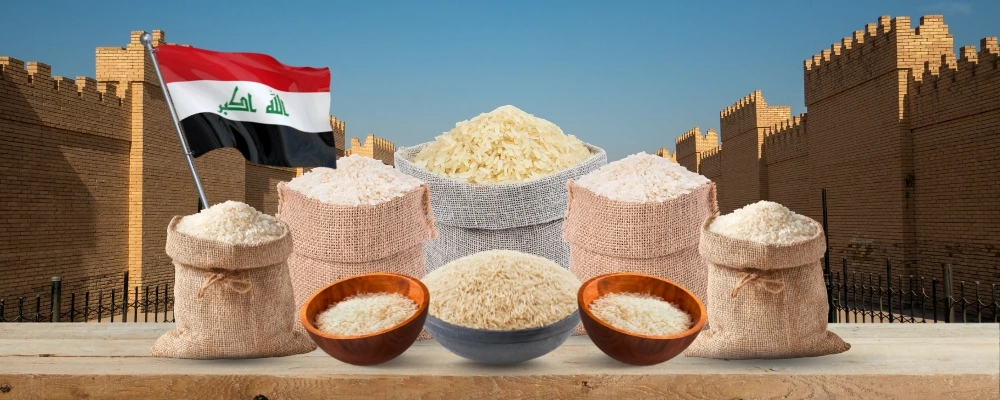
If you follow global rice trade even casually, Iraq stands out immediately. This is not a small or occasional buying market. It is one of the largest rice importers with an unrelenting demand from the local markets. Iraq imported around $1.64 billion worth of rice In 2024 alone which makes it among the top global buyers. More importantly, rice is the second most imported product in the country. That tells you everything about how essential it is.
Rice in Iraq is not a premium lifestyle item. It is everyday food. Household consumption is strong, government procurement is active, and food distribution systems depend heavily on imports. Local production is limited, so the country relies on steady external supply. That's why volumes remain high year after year.
If you look at sourcing patterns, India leads with around $929 million, followed by Thailand at about $607 million. The United States, Turkey, and Pakistan supply smaller portions. What this shows clearly is that Iraq is a serious, volume-driven market where bulk contracts matter more than small seasonal deals.
For exporters, this is not a trial market. It is a scale market. Once you enter and build trust, movement tends to continue and rice buyers in Iraq start giving your recognition as a trusted supplier.
In today’s global trade environment, exporters increasingly rely on structured platforms that enable direct interaction with verified buyers across multiple countries. These systems streamline bulk trade by ensuring transparency in pricing, quantity, and payment processes, making it easier for suppliers to scale internationally.
Become a verified exporter on Tradologie — Register Today.
| S. No. | Company Name | Type / Segment | Key Notes |
|---|---|---|---|
| 1 | Shameem Gulbahar Co. Ltd. | Large bulk importer | Largest rice importer in Iraq (~32% share) with high shipment volumes |
| 2 | Marakib Al Atyab General Transport & Trading Co. | Trading & logistics importer | Accounts for ~29% of imports; strong in bulk procurement |
| 3 | Cihan General Trading Company | General trading importer | ~20% share; one of the most consistent importers |
| 4 | Bamo Company for General Trading Ltd. | High-volume food importer | Leading importer in packaged/bag rice segments |
| 5 | Nasrat Company for General Trading | Rice & food importer | Among top bag rice importers with steady shipments |
| 6 | Asmani Awi | Regional trading importer | Active importer with notable shipment share |
| 7 | Kharman for General Trading | Rice importer | Significant importer in specific rice categories |
| 8 | Bamo Company for General Trading (AN variant listing) | Bulk rice importer | Appears in multiple datasets with high shipment frequency |
| 9 | Marakib Al Atyab (variant listing) | Core importer | Dominates certain rice segments (up to ~62% in sub-categories) |
| 10 | Various Regional Distributors (Baghdad, Basra, Erbil) | Importers & wholesalers | Iraq has 200+ active rice importers, many mid-sized distributors |
Iraq is not a speculative market. The demand is basic and constant. Rice is part of daily consumption and also linked to the country's food distribution system. Since local production does not fully meet the requirement, imports remain necessary year after year. That's why volumes stay strong even when global prices fluctuate.
In 2024 alone, Iraq imported around $1.64 billion worth of rice, which clearly shows the size of the opportunity. This is not a small niche market. It is a bulk-driven market.
Here's why exporters find it profitable:
This market is more about scale and continuity than premium positioning. If exporters can manage supply consistency and competitive pricing, Iraq tends to offer steady and repeat movement over time.
If you observe Iraq's trade pattern, the market is clearly volume-driven. The focus is not on niche premium positioning but on steady and large-scale supply. Most of the imports fall under milled rice categories, with India and Thailand dominating the movement with a wide network of b2b merchant rice buyers in Iraq.
Here's how the import structure broadly looks:
In practical trade, HS 100630 carries the majority of the volume. Non-basmati and parboiled categories move strongly because of pricing and bulk distribution needs. Basmati is present but smaller compared to markets like Saudi Arabia or Iran.
Iraq remains more of a scale and supply-continuity market rather than a premium-driven one.
In Iraq's case, most rice shipments enter from the southern side. Rice importers in Iraq usually don't experiment much with routes. They stick to what works and what clears smoothly.
Here are the main ports used for bulk rice imports by bulk rice importers in iraq:
In real trade, rice importers in Iraq mostly look at freight cost, clearance speed, and how quickly the rice can move inland toward Baghdad and other major cities. Exporters who understand this routing and plan accordingly usually face fewer delays.
In the Iraq market, the demand is already there. The real challenge is reaching the right buyers and working on serious volume requirements. Many exporters struggle with middlemen or unclear payment terms. Tradologie simplifies this process.
Here's how it works in practice:
Scale and continuity matter more than small shipments. Tradologie helps suppliers engage with serious bulk rice buyers in Iraq, close deals faster, and build long-term bulk movement instead of chasing one-time transactions.
If you are planning to enter the Iraq market, this is not the place for small trial shipments. It's a volume-driven space.
Register as a seller on Tradologie.com and connect directly with genuine bulk rice buyers in Iraq. Participate in live negotiations, quote against real requirements, and secure long-term contracts.
Move steady volumes, build repeat business, and grow in one of the world's largest rice importing markets




