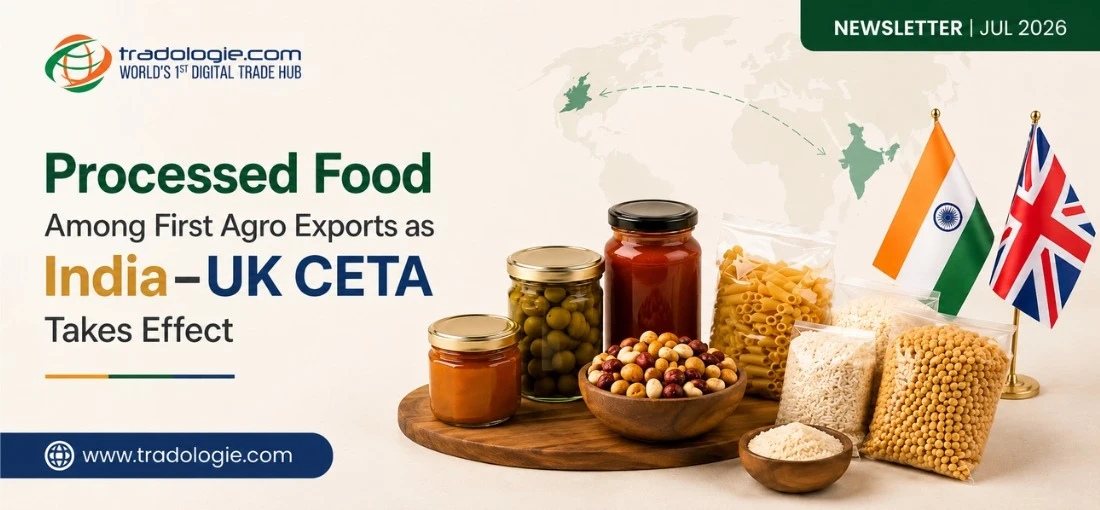
The India-UK Comprehensive Economic Partnership Agreement (CETA) officially went live yesterday, July 15, 2026, and it's arguably one of the most significant trade milestones for our agricultural sector in years. Honestly, the activity we saw on day one is a promising sign. With over USD 140 million worth of Indian goods already shipped out to the UK within the first 24 hours, it's clear that UK buyers were ready to pounce the moment the new preferential tariff regime kicked in.
Keep reading this informative piece of blog if you want to export agro commodities to UK. It will provide vital trade-related information on the same.
India-UK Bilateral Trade & Tariff Liberalization Indicators (July 2026)
| Sourcing & Trade Parameter | Day-One Implementation Metrics |
|---|---|
| Official Enforcement Date | July 15, 2026 |
| Day-One Total Export Inflow | Over USD 140 Million |
| Immediate Tariff Elimination | Duty-Free Access on ~99% of Exports |
| Current Merchandise Trade Level | Approximately USD 25.12 Billion |
Source: Press Information Bureau (PIB)

What is promising is that processed food exports were front and center from the very start. This isn't just about moving raw ingredients; it's a clear signal that the food processing industry is finally ready to compete on a global stage. Marine products exports also hit the ground running, and with import duties essentially wiped out, our seafood exporters are looking at a much more aggressive pricing strategy against international competitors.
Direct Tariff Liberalization and Market Competitiveness
The sheer scale of this deal is impressive. By eliminating import duties on nearly 99% of Indian exports from Day One, the UK has essentially leveled the playing field for India. If you are an exporter, you aren't just getting a minor break; you are getting a structural pricing advantage that is going to be incredibly hard for our competitors to match.
The goal of this India-UK trade agreement is ambitious, to say the least. Both nations are aiming to push total India-UK bilateral trade from nearly USD 60 billion in FY26 to USD 100 billion by 2030, and frankly, agricultural and value-added food products are expected to do the heavy lifting to get us there.
Achieving that won't be easy, but considering the deal was hammered out over 14 grueling rounds of negotiations and more than 800 technical sessions, it's clear both sides are deeply invested in making this work. To ensure businesses don't get lost in the fine print, the Department of Commerce is already gearing up to work with Export Promotion Councils to guide industrial clusters through the documentation and rules of origin requirements.
Regional Opportunities and the Value-Added Shift
One of the most exciting aspects of the India-UK CETA is how it's translating into real-world opportunities for regional farming hubs. Seeing the flag-off ceremonies in Jammu was a refreshing reminder of the untapped potential in places like Jammu & Kashmir. For growers who have spent years dealing with apples, walnuts, saffron, and honey, this deal finally gives them a direct, premium runway into the UK market.
When British High Commissioner Lindy Cameron called this the "new gold standard" of trade deals, it felt like more than just diplomatic jargon—the breadth of market access granted here is truly a different beast compared to what we've seen before.
For our local food processing units, this is the long-awaited pivot we've been needing. The lower duties mean that value-added goods—like our pickles, ready-to-eat meals, and fruit pulps—are now highly competitive in the UK consumer market. We are finally moving away from the "raw commodity" trap and heading toward high-value, processed exports that capture the margins we deserve.

Long-Term Certainty and Sustainability Frameworks
Beyond the immediate tariff wins, this agreement offers something arguably more valuable: stability. For any agricultural millers and exporters looking to invest in new processing machinery or UK-focused supply chains, the rules-based framework provided by the India-UK CETA creates a much safer environment for long-term planning.
We aren't ignoring the future, either. With the UK's proposed Carbon Border Adjustment Mechanism (CBAM) looming, both countries have kept the door open for adjustments. The agreement even grants India the right to seek modifications if future carbon taxes unfairly target our exports, which provides a nice layer of insurance for our producers.
Summary: A Strategic Leap for Agribusiness
For India's agro-export sector, this isn't just another trade deal—it's a massive opportunity to stop playing small. By leveraging this India-UK trade pact, we have the chance to significantly expand the presence of our rice, spices, tea, coffee, and organic products in one of the world's most premium markets. We have the goods, we have the tariff advantage, and now, we have the rules in place to compete effectively. Now, it's just a matter of execution.
Want to export your agro products globally? Register as a seller on Tradologie today and connect with 1 Million+ buyers globally.




.webp "Sinking the Costs: How India’s Sea-Route Breakthrough Is Changing the Global Mango Game")