In a major push that underlines India's expanding agricultural trade footprint, the Ministry of Commerce facilitated a series of fresh agricultural and processed food shipments in July, successfully connecting regional Indian harvests with brand-new buyers across Canada, Singapore, the UAE, Iraq, Bhutan, and the Maldives.
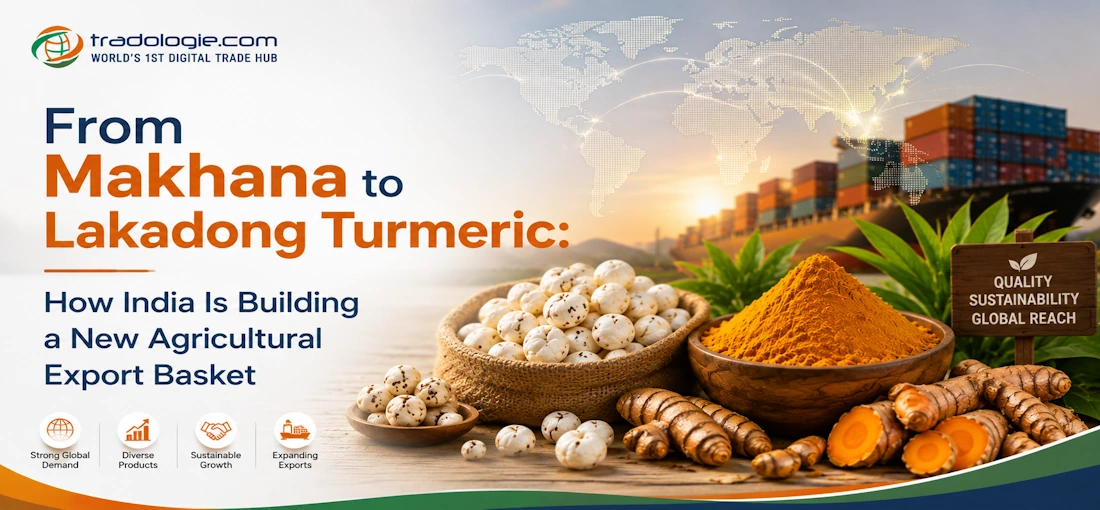
This is where the real long-term growth is heading. Exporters and government bodies are expanding beyond traditional bulk crops to build an exciting and diversified agricultural export palette. We are seeing specialized produce that includes GI-tagged Lakadong turmeric , value-added makhana , and temperature-sensitive stone fruits which are processed and packed right at origin. All this is unlocking premium margins across international retail shelves.

When Darbhanga Meets Canada: The Value-Addition Advantage
Let's look at makhana (fox nuts) as a clear example of how value addition transforms an export category.
For generations, Bihar has grown the vast majority of the world's fox nuts . The real game changer happened this July when the first-ever commercial sea consignment of flavored, value-added makhana—a solid 7 metric tons—shipped directly from Darbhanga, Bihar to Canada.
Why does this matter so much for trade?
Because when exporters roast, season, and package fox nuts into pouches that are convenient and suit consumers abroad, they capture the final retail value right at home. And this is part of a massive, ongoing growth trend. APEDA trade figures show India’s total makhana export volume climbing from roughly 6,700 MT in 2020 to 25,130 MT in 2024. Entering a high-value consumer market like Canada shows that makhana is quickly scaling into a permanent global superfood staple.
Lakadong Turmeric: Leading with Quality and Origin
In the spice trade, competing purely on low price per ton is never the goal. The real prize lies in specialized, high-potency varieties.
When GI-tagged Lakadong turmeric from Ri Bhoi in Meghalaya reached buyers in Singapore, it proved how powerful origin branding can be. Standard commercial turmeric generally carries about 2% to 3% curcumin. In contrast, Lakadong turmeric grown in the unique soil of Meghalaya naturally packs an exceptional 7% to 12% active curcumin.
That natural potency, backed by an official Geographical Indication tag, allows Indian exporters to bypass basic commodity bidding and supply directly to high-paying wellness, pharmaceutical, and specialty extract brands.

Bringing Named Regional Varieties to World Markets
We are seeing this exact momentum take off across horticulture. Instead of sending out generic fruit shipments, exporters are creating active international demand for specific, named regional varieties:
- Amrapali Mangoes from Gumla and Deoghar in Jharkhand reached retail buyers in Dubai.
- Neelam and Totapuri Mangoes grown in Karnataka were exported directly to the Maldives.
- Areko Cherries and Scentrose Plums from Jammu & Kashmir landed in premium fresh markets across the UAE and Singapore.
- Fresh Ginger, Pineapples, and Natural Honey from the hills of Meghalaya were successfully shipped to Singapore.
When overseas consumers fall in love with the sweetness of an Amrapali mango or the distinct taste of Scentrose plums, they begin asking for that specific crop by name season after season. That creates long-term brand loyalty that is hard to displace.
Processed Food Exports Unlocking Higher Returns
Alongside fresh produce, processed and shelf-stable foods are generating impressive export earnings per metric ton.
Take Kashipur in Uttarakhand, where processors successfully shipped frozen French fries all the way to Iraq. At the same time, consignments of Purabi Ice Cream from Assam made direct inroads into Bhutan.
Processing agricultural raw materials into value-added consumer goods solves storage and perishability issues, supports manufacturing jobs at the local level, and brings in substantially higher foreign exchange per acre of farm output.
Where the New Shipments Are Heading
Here is a quick snapshot showing how these regional products are connecting with new global markets:
| Product Category | Regional Origin Cluster | Destination Markets | Core Growth Advantage |
|---|---|---|---|
| Flavoured Makhana | Darbhanga, Bihar | Canada | Ready-to-eat functional snack, high retail margins |
| Lakadong Turmeric | Ri Bhoi, Meghalaya | Singapore | 7-12% Curcumin content, nutraceutical premium |
| Speciality Stone Fruits | Jammu & Kashmir | UAE, Singapore | Premium table varieties, fast air-freight delivery |
| Regional Mangoes | Jharkhand & Karnataka | Dubai, Maldives | High varietal demand (Amrapali, Neelam, Totapuri) |
| Processed Agro-Foods | Uttarakhand & Assam | Iraq, Bhutan | Frozen fries and ice cream with high value per ton |
| Organic Hill Produce | Ri Bhoi, Meghalaya | Singapore | Fresh ginger, pineapple, and natural honey |
Strategic Opportunities for Modern Exporters
For agricultural businesses building an export desk, this diversification opens up three major commercial opportunities:
- Expanding into Multiple Buying Centers: Reaching active markets across Canada, Singapore, the UAE, Iraq, Bhutan, and the Maldives establishes a balanced, multi-country customer base.
- Attracting Regional Infrastructure: It is anticipated that Private investments might naturally follow into the major farm-gate packhouses, large scale cold-storage units, and prominent testing labs across Jharkhand, Bihar, Meghalaya, and Assam as trial shipments gradually turn into recurring container orders. But yes, they are probable.
- Capturing Value Over Price: Trading in GI-tagged goods and processed foods allows exporters to stand out on quality and origin, securing higher profitability over the long haul.
The Long-Term Export Horizon
These successful July consignments highlight an inspiring forward trajectory for Indian agriculture.
The transition toward exporting high-value, origin-branded specialties and processed foods is creating brand-new export industries around makhana, specialty fruits, and regional spices. For forward-thinking agri-businesses, building supply chains around these unique products represents the single best opportunity to scale a modern, highly profitable global brand.




.webp "Ukraine's Grain Exports This Season Are Over 20% Higher Than Last Year")