Tradologie

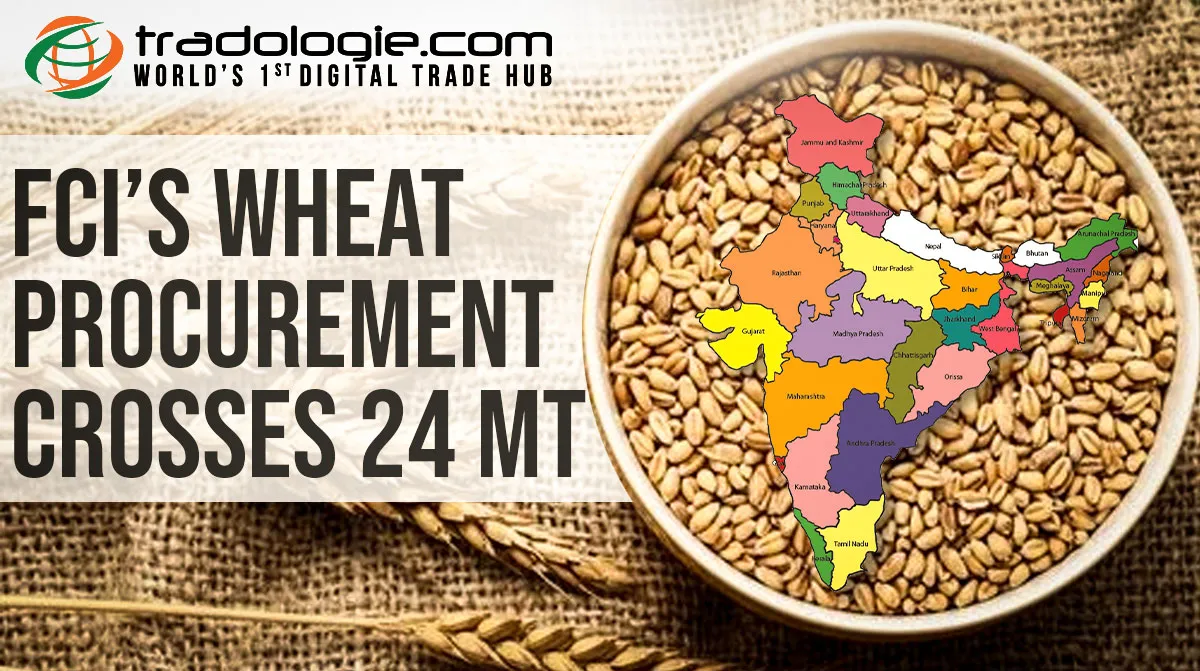
FCI Wheat Procurement Crosses 24 MT, Surpassing The Cereal Stock Threshold Necessary For India Food Security Requirements

By Pravarsh Sharma

May 12, 2023 | 10 Mins

Category - Wheat

Located in Asia, India is the second largest rice and wheat producer in the world. It harvests bulk volumes of rice and wheat every year and is even the leading rice exporter in the world. However, when it comes to wheat, India fails to rank among the top 10 wheat exporters in the world, as a significant portion of wheat produced is consumed domestically only.

Owing to high consumption needs, India contributes a meager 3% of the total global wheat trade. However, the demand for Indian wheat shot up in the aftermath of the Russia-Ukraine war, which forced the GOI to restrict exports of wheat and wheat flour. The GOI remains concerned about domestic wheat supplies so as to ensure that enough grain remains available for fulfilling domestic needs and with the same view, it restricted exports of wheat and wheat flour in May 2022.

Acting on the same belief, the GOI’s grain handling agency procures bulk wheat directly from farmers annually and this time as well, data suggests that the Food Corporation of India (FCI) has so far purchased over 24 million tonnes of wheat to meet domestic needs.

Data and Numbers

As it seems, India’s food stock appears to be rising this year after witnessing a drop last year. A look at the data reveals that the center’s main grain handling agency, the Food Corporation of India (FCI) has so far procured over 24 million tonnes of wheat for distribution to nearly 800 million beneficiaries and to meet contingencies. The FCI’s wheat procurement has crossed the threshold limit for cereal stocks and as procurement continues, experts believe that India is in a sweet spot to meet food security requirements.

Combining wheat procurements with rice procurements, the state-owned granaries hold well above 55 million tonnes of grains which is more than sufficient for meeting the domestic food needs of the country.

State-Wise Contribution

Punjab has been leading the pack with the highest contribution amongst other states. In terms of volume, Punjab has contributed slightly over 11 million tonnes to state-owned granaries and the state has been followed by other major wheat-growing states like Madhya Pradesh and Haryana which have contributed 6.2 million tonnes and 6 million tonnes respectively.

The Bottom Line

Despite being the second largest wheat producer in the world, India fails to rank amongst the leading wheat exporters owing to high consumption needs and to ensure that adequate supplies remain for domestic consumption by procuring bulk volumes of wheat directly from farmers. Centre’s main grain handling agency, the Food Corporation of India (FCI) procures grain on behalf of the GOI and according to data, the agency has so far procured over 24 mt of wheat this season. Combining this, with the volumes of rice, the state’s granaries hold well over 55 million tonnes of grains and with procurement still on, experts believe that the stocks are well-sufficient to meet the domestic needs of the country.

If you are a wheat exporter looking to export bulk wheat or are a wheat importer looking to import bulk wheat, then Tradologie.com is the platform for you. Tradologie has over 600,000 verified buyers and 70,000+ verified suppliers in its network and through the platform, you can connect and conduct bulk trade of food and agro-commodities with ease.

To register as a buyer, click here. To register as a seller, click here

To stay updated with the recent happenings of the agro-trade industry, do follow Tradologie across all social media channels.
Get in Touch

Subscribe Blog and News

Frequently Asked Questions

To import black pepper in bulk, register as a buyer for free on Tradologie.com. Raise your requirement, get access to real-time quotations from trusted bulk black pepper suppliers, negotiate, and complete your deal smoothly.

Buyers can import black pepper in bulk in the following varieties:

MG1 (Malabar Garbled)

TGEB / TGSEB (Tellicherry Grades)

Un-garbled

Vietnamese 500GL / 550GL

Brazilian B1/B2

GL stands for G/L (Grams per Liter), which measures density and quality. A higher GL indicates better quality, helping buyers choose reliable bulk black pepper suppliers.

Standard export moisture is ≤ 13%, ensuring quality for bulk black pepper trade.

25kg / 50kg PP bags

Jute bags

Vacuum packs (premium)

These options make it easy to import black pepper in bulk safely.

Properly stored black pepper can last 18–24 months, maintaining quality during bulk black pepper trade.

Major suppliers include Vietnam, India, Indonesia, Brazil, and Sri Lanka. These regions provide verified bulk black pepper suppliers for global buyers.

Phytosanitary certificate

Fumigation certificate

Certificate of Origin (COO)

Certificate of Analysis (COA)

These ensure smooth and compliant import of black pepper in bulk.

Any KYC-verified Indian entity with IEC, FSSAI, and APEDA certification.

Register, complete verification, post your supply offer, and start receiving buyer inquiries.

Yes. Importers sourcing 13-14 MT or more can register and float inquiries with specific packaging and quality preferences.

Absolutely. Both black and white pepper (whole or powder) can be traded.

USA, India, Germany, UAE, and the Netherlands.

Yes, if they meet the minimum order requirement and KYC guidelines.

Yes, Tradologie.com works with multiple black pepper exporters in Kerala, one of India’s largest spice-producing regions. All suppliers on the platform are KYC-verified, and buyers can connect directly to negotiate pricing and trade terms without any middlemen.

Absolutely. The platform connects buyers to a wide network of black pepper exporters in Chennai, a major hub for spice trade and port-based logistics. Exporters from Chennai offer competitive rates, fast shipment, and consistent quality for global trade.

Yes. Kerala being a key spice belt, Tradologie has a strong network of black pepper suppliers in Kerala offering both organic and conventional varieties. These suppliers cater to bulk buyers, ensuring timely delivery and certified product quality.

As of the latest trade norms, the black pepper import duty in India varies based on origin and trade agreements. To get updated rates and implications for your business, it's recommended to consult customs notifications or work with a licensed customs broker.

While Tradologie primarily connects Indian exporters with global buyers, the platform also helps spices importers in Canada discover certified Indian exporters for bulk black pepper and other spices. Canadian businesses can sign up, post their requirements, and receive direct quotes.

To export black pepper in bulk, register as a supplier on Tradologie.com. You will get access to real-time requirements from verified bulk black pepper importers, negotiate directly with buyers, and finalize your export deals efficiently.

Buyers typically look for:

Density 500GL–550GL

Moisture ≤ 13%

Light berries ≤ 2%

Foreign matter ≤ 1%

Meeting these standards helps export black pepper in bulk successfully.

Cleaned

Graded

Sieved

Free from stones/insects

Proper processing ensures quality for bulk black pepper trade.

Mold

Excess moisture

Fungus-like smell

High foreign matter

Avoiding these ensures smooth transactions with bulk black pepper importers.

Piperine content

Moisture

Total ash

Volatile oil

These tests help buyers verify quality when they import black pepper in bulk.

Need more help?