The Indian wheat market is changing fast in 2026. Are you involved in bulk trade or import-export? If so, tracking daily price changes is a must. It is no longer just an option. Local farmers just want to know the baseline gehu price today. However, large flour mills and corporate buyers must look deeper. They need to study many big economic factors.
Normal market reports only show daily prices. But a good buying plan needs more. You must look at state bonuses, grain quality, and global trade rules. Here is a simple, deep look at India's wheat prices and supply chain today.
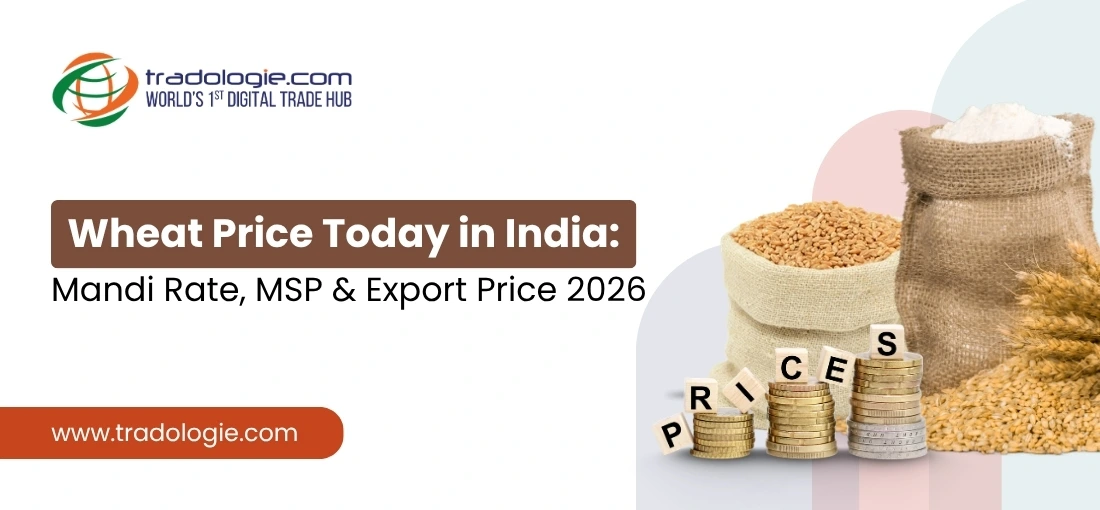
A Look At Gehu Price Today In 2026
The early months of 2026 brought intense competition. Government buyers and private companies are fighting for grain. Crop yield forecasts look mostly positive. This is thanks to more land being planted. AgriWatch shared recent farm data. It shows wheat planting grew to 334.17 lakh hectares in 2026. This is up from 328.04 lakh hectares last year.
Even with more crops, open market prices keep going up. The gehu price today feels the heat from government targets. The Food Corporation of India (FCI) wants to buy a lot. At the same time, private companies have plenty of cash. Right now, private buyers hold about 75 Lakh Metric Tonnes (LMT) of wheat stock.
Daily Wheat Mandi Rate India: State By State
Distance to big city processing centers matters a lot. Transport costs change the final price you pay. To find the real wheat mandi rate India, you must look past the national average. You need to check regional trading hubs. Data from Krushi Kranti shows big price gaps between areas.
| State / Key Market | Wheat Variety | Price Range (₹/Qtl) | Avg Rate (₹/Qtl) | Primary Use |
|---|---|---|---|---|
| UP (Hardoi) | Standard Mill Quality | ₹2,450–₹2,585 | ₹2,500 | Flour mills, biscuits |
| MP (Indore) | Premium Sharbati | ₹4,100–₹5,600 | ₹4,650 | Urban retail, premium atta |
| MP (Daloda) | Standard / Lok-1 | ₹2,350–₹2,600 | ₹2,480 | Industrial milling |
| Rajasthan (Kota) | Standard | ₹2,400–₹2,650 | ₹2,550 | Wholesale distribution |
| Maharashtra (Sinnar) | Low Grade / Feed | ₹1,800–₹2,200 | ₹2,050 | Animal feed, starch |
You must track daily rates across these specific areas. It helps you save on freight costs. It also helps you calculate the final cost at your mill.
Understanding Wheat MSP 2026 And State Bonuses
The government sets a Minimum Support Price (MSP). This acts as a base price for farmers. But the wheat MSP 2026 story is really about state-level bonuses. The central government sets the safe baseline. However, state governments offer extra money to buy local crops.
- Uttar Pradesh: Recent updates show a big push. Local bonuses make their final buying rate an attractive ₹2,585 per quintal.
- Rajasthan: The state offered bonuses up to ₹150 per quintal.
- Madhya Pradesh: They continue to give farmers extra money above the central rate.
What does this mean for bulk traders? You must compete at these higher local prices. You have to pay more to get premium grain before the FCI takes it.
Prices Based On Quality: Premium Vs Standard Wheat
Many reports treat all wheat the same. That is a big mistake. The open market splits prices strictly by grain quality. This changes what the wheat is used for and the profit margins.
- Premium Sharbati: This grows mostly in Madhya Pradesh. It gets huge price bumps. The grain holds moisture well and has a great texture. High city demand pushes prices over ₹5,000 per quintal.
- Standard Mill Quality: This is the main grain for consumer goods. It prices between ₹2,300 and ₹2,600. Companies use it to make standard bread and biscuits.
- Low-Grade/Feed Wheat: This trades closer to ₹1,800. It is often damaged by weather. Buyers use it mainly for animal feed and making starch.
Tracking Wheat Wholesale Price India For Bulk Buyers
Government backup stocks give the market confidence. We are heading into the busy 2026 buying season. Official projections from the government show strong central reserves. By April 1, the FCI pool will hold about 182 LMT of wheat.
This strong supply changes the mood. People are not hoarding out of fear anymore. It is a managed surplus now. Because of this, the wheat wholesale price India should stay stable. We expect to avoid the crazy price spikes of past years. Importers and bulk buyers should watch FCI auctions closely. These open market sales help cool down wholesale prices when they get too high.
How March Weather Changes Wheat Quality
The 2026 harvest is in its final growing stage. Late-March weather changes the math for buyers. Sudden heat waves or surprise rain change the crop mix. They decide how much Sharbati you get versus standard wheat.
A quick heat wave shrinks the grain. This creates more low-grade feed wheat. It also makes high-moisture Sharbati rare and expensive right away. Bulk buyers must watch local weather news closely. Pay attention to Madhya Pradesh and Punjab in April. This helps you adjust your quality bids before the harvest reaches the mandi.
Transport And Freight Costs From Big Hubs
Getting a good mandi rate is only step one. Finding the real final cost means sorting out your transport. Procurement teams work out of big hubs like Ghaziabad, Hapur, or Indore. For them, getting a train to move goods is a big deal.
A standard 42-wagon train is the cheapest way to move bulk grain. But private buyers often face a lack of trains. This happens when the FCI is buying heavily. Also, moving bulk wheat from Northern hubs to ports in Gujarat or Maharashtra costs a lot. You must add this heavy freight fee into your profit math. It is very important when checking if exporting is worth it.
Global Prices And Chicago Board Of Trade
You cannot look at local buying by itself. The Indian government just allowed new export limits. This connects local wheat to global prices. Right now, Chicago Board of Trade (CBOT) May 2026 wheat futures are active. They sit between $5.80 and $6.00 per bushel.
Big global funds support these prices. They use grain to protect money from global conflicts. When CBOT prices go up, exporting looks better. This makes local exporters bid higher. They drive up the local open market rate near port mandis. Corporate buyers must check Chicago prices every day. It helps predict sudden price jumps in the Indian wholesale market.
2026 Export Limits And Global Trade
Global markets are watching India's trade rules closely. A big shift happened in mid-February 2026. The government allowed a fixed amount of wheat to leave the country. They cleared exactly 25 LMT of standard wheat for export. They also allowed 5 LMT of processed wheat products to ship out.
This new rule brings fresh competition. International buyers are back in the Indian market. Now, local bulk traders must change their bids. They have to match global export prices to stay in the game.
mart Planning For Agri-Businesses And MillsS
The 2026 market demands quick thinking. Corporate buying teams must be highly alert. Just reading local news is not enough anymore. It is a weak business plan.
Agri-businesses need to track two big things in real-time. First, watch the FCI stock sales. Second, watch how fast the global export limit is used up. Commercial mills should lock in early contracts for standard wheat. Do this in April and May to avoid late-season price jumps. Balancing local stock with the new 25 LMT export rule is key. It will decide your profits for this year.
Conclusion: Securing Your 2026 Wheat Supply
The 2026 wheat market has managed ups and downs. Bulk traders, millers, and exporters can find success. But you must stop just looking at daily mandi prices. You need a full view of laws, transport, and global prices. Watch the FCI reserves and check state MSP bonuses. Sign early contracts. Doing these things will protect your supply chain from sudden price shocks.
Frequently Asked Questions
What is the average gehu ka rate today in India?
The average open market rate for standard quality wheat currently ranges between ₹2,350 and ₹2,600 per quintal.
What is the effective wheat MSP 2026 including state bonuses?
State bonuses, like those in Uttar Pradesh, push the effective government procurement price to an attractive ₹2,585 per quintal.
Has the Indian government allowed bulk wheat exports in 2026?
Yes, the government officially approved a restricted export limit of 25 LMT for standard wheat and 5 LMT for wheat products.
How does FCI inventory impact the wheat wholesale price India?
The projected 182 LMT central reserve allows the government to utilize open market sales to stabilize prices and prevent inflation.
Why is the Sharbati wheat variety priced so much higher?
Sharbati commands a massive premium, often exceeding ₹5,000 per quintal, due to its superior moisture retention, texture, and high urban demand.