Key Highlights
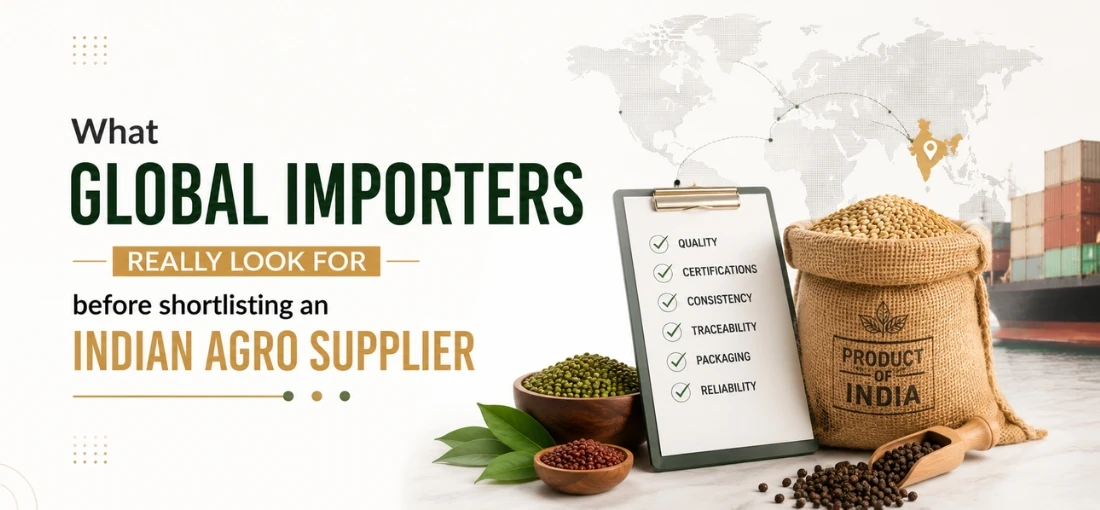
- Global importers shortlist suppliers based on risk, consistency, and compliance—not just price.
- Product purity and variety segregation are among the first screening criteria.
- Certifications such as HACCP, ISO 22000, and FSSC 22000 strengthen supplier credibility.
- Buyers verify IEC, APEDA registration, and business credentials before onboarding suppliers.
- Independent laboratory testing improves buyer confidence and reduces compliance risks.
- Consistent quality across every shipment is often more important than the lowest price.
Introduction:
Securing a preliminary inquiry from an overseas buyer is always an encouraging milestone. However, in the high-stakes world of the international grain and spice trade, there is a massive gulf between a casual email inquiry and actually making it onto a global procurement desk's official shortlist.
Before a corporate buying house signs a contract, they go through a cold, highly systematic elimination process. They don't just look at who can offer the cheapest spot price per ton; they look for who represents the lowest operational risk to their business. Understanding how international buyers select suppliers means looking at your business through the eyes of an overseas auditor who is actively looking for any red flag that might justify cutting you from the running.

This informative piece of blog will tell you how to become a verified agro exporter. What documentations and verifications you need for the same.
The Baseline Anchor: Purity, Varieties, and Technical Alignment
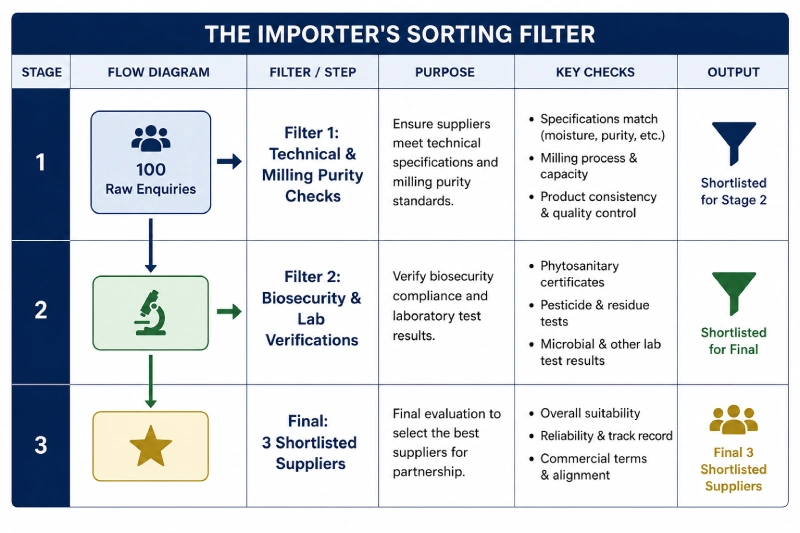
The first elimination round always happens on the processing floor. When a global procurement manager sets out to find reliable Indian agro exporters, they start by assessing whether your processing setup can handle strict identity preservation and variety isolation.
Take a scenario where an export house is pitching to export rice. A novice supplier often assumes that a standard generic grade will suffice. But an experienced international buyer will immediately grill you on your milling machinery. They want to know your Sortex parameters, your broken-grain percentages, and whether your supply chain can guarantee that low-value varieties haven't been blended into a premium Basmati lot. If your facility lacks automated de-stoners or clear length-graders, you will be eliminated before the price negotiation even begins.
This technical vetting becomes even tighter if your goal is to sell dried fruits globally. High-value commodities like raisins, almonds, or walnuts are highly vulnerable to uneven drying. If a buyer notices even a slight variation in seed sizes or color grades across your samples, they know your manual sorting is inconsistent. To an importer, inconsistent sorting at origin translates to immediate consumer complaints at their retail stores on the other side.
The Audit Gate: How Buyers Verify Indian Exporters
You cannot build a reputation as a trusted partner simply by putting a "Quality Guaranteed" badge on your website banner. When international corporate desks run an audit, they rely on a rigorous verification sequence to separate genuine operators from speculative middlemen.
If you want to know how buyers verify Indian exporters, you have to look at their document checklist. They will cross-reference your Import Export Code (IEC) against government trade records, check your registration statuses with bodies like APEDA or Spices Board India, and verify your bank track records through international credit rating agencies like Dun & Bradstreet.
Beyond basic company registration, overseas compliance teams look for specialized food safety blueprints. If your mill floor doesn't run on an active, independently certified HACCP (Hazard Analysis Critical Control Point) system or carry an ISO 22000 / FSSC 22000 certification, most western buying houses are legally barred from even onboarding you as a vendor.
Sourcing Realities: The Operational Verification Blueprint
To protect your trade desk from getting dropped during a background check, your compliance files should match the exact screening steps detailed in the verification roadmap below:

The Essential Indian Agro Supplier Checklist
| Vetting Category | Specific Document or Standard Required | What the Buyer is Secretly Testing | High-Risk Red Flag to Avoid |
|---|---|---|---|
| Corporate Identity | Active IEC, APEDA/Spices Board RCMC, Dun & Bradstreet rating. | Is this a genuine asset-backed exporter or a casual speculative middleman? | Mismatched office addresses or lack of valid state export licenses. |
| Facility Certification | ISO 22000, FSSC 22000, HACCP, or BRC GS approvals. | Does the processing mill follow systematic, verifiable food safety protocols? | Lack of regular third-party facility hygiene audit reports. |
| Technical Purity | Automated Sortex logs, mechanical sieving specs, color-sorting limits. | Can the machinery deliver uniform kernel sizes across consecutive bulk shipments? | High percentage of broken grains or trace field stones in product samples. |
| Biosecurity Baseline | Valid pre-loading Phosphine fumigation ties, clean PQIS history. | Will this cargo clear the destination's plant quarantine gates without an insect hold? | History of cargo rejections due to active weevil or grain borer larvae. |
| Chemical Compliance | Independent gas chromatography lab reports (SGS/Intertek). | Does the crop align with destination-specific Maximum Residue Limits (MRLs)? | Detection of unapproved chemical pesticides or high aflatoxin counts. |
Biosecurity and the Border Clearance Hurdle
If your desk is trying to export spices globally, the entire deal hinges on your ability to clear strict chemical and biosecurity filters. Spices are high-value, high-risk commodities. Importing authorities in the European Union, the US FDA, and Gulf customs desks maintain near-zero tolerance policies for salmonella, E. coli, and heavy metals. They also utilize ultra-sensitive lab testing to scan for mycotoxins like aflatoxins and ochratoxin A.
This is exactly what makes an agro exporter trustworthy in the eyes of a global buyer: your willingness to proactively run independent laboratory tests before the cargo leaves your facility. A top-tier exporter never waits for the destination port to run a test. They bring in external surveyors to pull samples straight from the blending floor, run comprehensive gas chromatography scans, and attach those clean certificates directly to the pre-shipment manifest.
The Tactical Verdict
When you peel back the layers of international grain and spice trade logistics, global importers aren't hunting for miracles. They are looking for boring, unshakeable consistency. They want to know that the cargo inside container number fifty matches the exact quality, moisture, and purity parameters of container number one.
If you want to transition your trading house into the elite bracket of reliable Indian agro exporters, you have to treat international compliance as your primary sales tool. By backing up your pitches with accredited facility certifications, maintaining tight moisture controls at the processing plant, and building a clean, transparent audit trail from the farm to the shipping dock, you eliminate all the operational guesswork for the buyer. You transform your business from a risky, unverified option into the safest, most logical choice on their global shortlisting sheet.
Disclaimer
The information provided is for educational and informational purposes only. Supplier verification procedures, food safety requirements, import regulations, certifications, and buyer expectations may vary depending on the commodity, destination country, and procurement policies of individual importing companies. Exporters should independently verify all compliance and certification requirements before engaging in international trade.




-export-from-india-process--markets-2026.webp "India's Chickpea (Kabuli Chana) Exports: 2026 Market Guide")
-in-agro-trade-how-it-works-types--tips.webp "Letter of Credit (LC) in Agro Trade: How It Works, Types & Tips")
.webp "Shipping Cost Breakdown for Agro Exports")