Key Highlights
- India exported 1.73 million tonnes of spices and spice products in 2025-26.
- Chilli was India's largest individual spice export by value.
- Cumin, turmeric, ginger, cardamom and black pepper are major bulk-trade products.
- Spice oils and oleoresins offer higher-value industrial opportunities.
- Curry powders and spice blends serve food manufacturers and private-label businesses.
- Buyers should match spice form and grade with the intended end market.
- Origin, moisture, cleanliness, pesticide residues and microbiological quality matter.
- Consistent quality across repeat shipments is critical for bulk buyers.
Introduction:
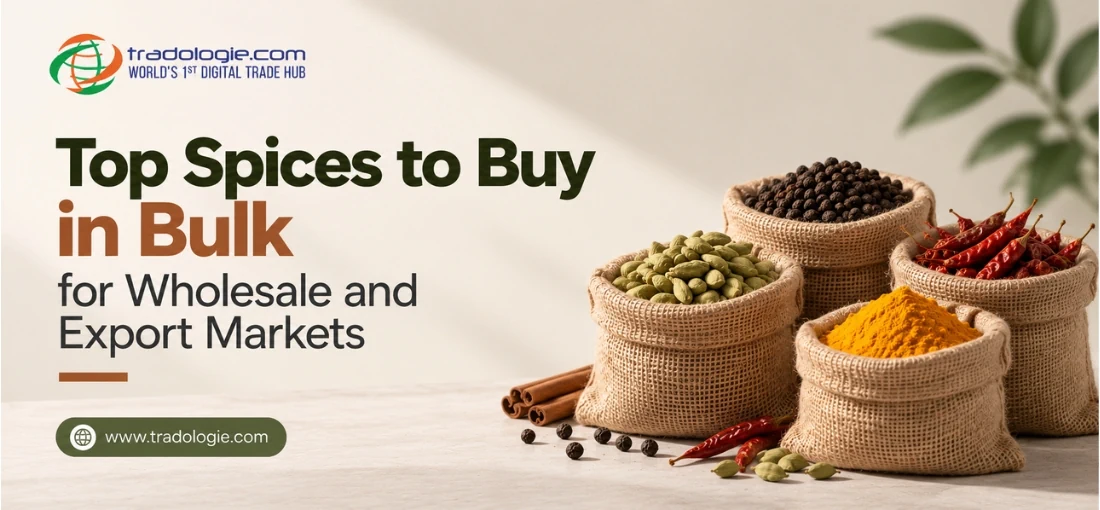
If you want to buy spices in bulk or export them globally, there is no shortage of products to choose from . Chilli, cumin, turmeric, pepper, coriander, ginger and cardamom are all actively traded, but they do not all work the same way in the market. Some are bought by food manufacturers in large quantities, some move through traditional wholesalers, while others are valued more for their grade and aroma than sheer volume.
India gives a good picture of how large this business has become. According to DGCI&S, Calcutta / Ministry of Commerce, India exported 1.73 million tonnes of spices and spice products worth about US$4.43 billion in 2025-26 . Chilli was the biggest individual spice by export value. This was followed by spice oils and oleoresins, cumin, cardamom and mint products.
For someone looking to buy spices in bulk from India or export spices globally, that is a useful place to start. Knowing the international export data of spices from India gives a useful picture. For starting a bulk spice trading business.

Which Bulk Spices Are Worth For Bulk Spice Trading?
There is no single answer because the buyer's business changes the equation. A restaurant distributor may want whole spices, while a seasoning manufacturer could be looking for a powder with a very specific specification.
| Spice | India's 2025–26 Export Quantity | Export Value |
|---|---|---|
| Chilli | 683,681 tonnes | US$1.177 billion |
| Cumin | 196,800 tonnes | US$524.22 million |
| Turmeric | 175,896 tonnes | US$327.20 million |
| Ginger | 146,257 tonnes | US$142.99 million |
| Small Cardamom | 15,050 tonnes | US$413.24 million |
| Black Pepper | 19,806 tonnes | US$137.84 million |
| Coriander | 60,211 tonnes | US$77.04 million |
The table gives a sense of the market, but it does not tell a buyer which spice is automatically the best one. That depends on where the product is going and what happens to it after arrival. However it does tell which product is in demand in the global markets because India alone is the largest spice exporter in the world. The bulk shipments/fulfilled containers moving around the globe of these spices tell a lot about how enormously they are consumed in different food industries.
1. Chilli
Chilli is hard to overlook when talking about Bulk Spices for Export from India. For bulk spices exporters also, red chilies are a high-value spice commodity that has enormous global demand.
DGCI&S data shows that India exported 683,681 tonnes of chilli worth US$1.177 billion in 2025-26. It was the largest individual spice export category by value in the table.
There is a reason the market is so broad. Dried whole chilli can go to traditional spice traders, while crushed chilli and powder are used by sauce manufacturers, food processors, restaurants and seasoning companies.
The variety matters too. Buyers can be looking for a particular heat level, colour or application rather than simply asking for “red chilli.”
2. Cumin
Cumin is another major Indian export and a natural choice for businesses looking to Buy Bulk Spices.
India exported 196,800 tonnes of cumin worth US$524.22 million in 2025-26, according to DGCI&S.
It is used in spice blends, commercial kitchens, packaged foods and processed products, which gives cumin a wide buyer base.
For a wholesaler, whole seed may be the preferred format. A food manufacturer, on the other hand, may want cleaned and ground cumin ready to use.
3. Turmeric
Turmeric is one of the products where India's strength is particularly obvious and is among the most lucrative bulk spices for export.
DGCI&S records 175,896 tonnes of turmeric exports worth US$327.20 million in 2025-26.
Whole turmeric fingers are commonly bought for grinding and processing, while turmeric powder is easier for food manufacturers and retail brands to handle.
And this is one spice where buyers often go beyond the basic question of price. Colour, curcumin content, cleanliness and the intended application can all affect the grade they want.
4. Black Pepper
Black pepper has been part of international trade for centuries, and it remains an important commercial spice.
India exported 19,806 tonnes worth US$137.84 million in 2025-26, according to DGCI&S.
Whole pepper, crushed pepper and ground pepper are the major types of bulk spice for wholesale under black pepper that serve somewhat different customers across different markets if we talk about varieties. Restaurants and wholesalers may prefer whole pepper, while food processors often work with crushed or powdered forms.
Grand View Research identifies pepper as the largest product segment in the global spices market, which gives some perspective on how broad the demand remains.
5. Coriander
Coriander rarely gets as much attention as chilli or cumin, but the trade is steady.
India exported 60,211 tonnes of coriander worth US$77.04 million in 2025-26.
Whole coriander is widely used in spice blends and commercial cooking. Ground coriander is more convenient for food processors and packaged-food companies.
That gives spices wholesale suppliers and global b2b exporters more than one type of buyer to work with.
6. Ginger
Ginger is another interesting bulk product because its applications stretch well beyond traditional spice trading.
India exported 146,257 tonnes worth US$142.99 million in 2025-26.
Dried ginger can go into spice blends, sauces and processed foods, while ginger products also have a place in beverages and other food applications.
For Bulk Spice Buyers , that wider end use can make ginger worth considering alongside the more obvious products.
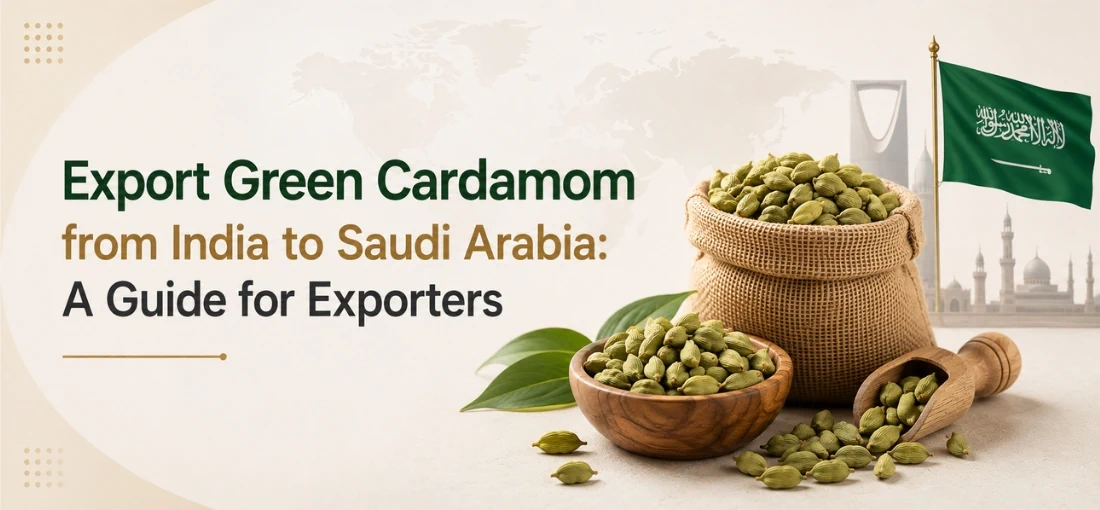
7. Cardamom
Cardamom is a good example of why volume alone does not tell the whole story.
India exported 15,050 tonnes of small cardamom which was worth 413.24 million US dollars in 2025-26. Large cardamom also added another 1,753 tonnes worth 35.52 million US dollars.
Those volumes are nowhere near chilli or cumin, but the value of the product is considerably higher.
Bulk cardamom buyers can be very particular about pod size, colour and aroma. Most importantly the tea and coffee companies, confectionery manufacturers, premium food businesses and traditional spice traders all have their own particular types of preferences.
8. Curry Powder and Spice Blends
Buying spices in bulk does not always mean buying individual raw spices.
There is a sizable market for curry powder, seasoning mixes and other prepared blends. DGCI&S records exports of 104,765 tonnes of curry powder and paste worth US$259.98 million in 2025-26.
Ready-made blends can save time and help maintain the same flavour from one production run to another for food companies.
This is particularly relevant to private-label businesses and manufacturers supplying multiple markets.
9. Spice Oils and Oleoresins
Spice oils and oleoresins are further up the value chain and are mainly relevant to industrial buyers.
India exported 20,730 tonnes of spice oils and oleoresins worth US$528.73 million in 2025-26.
These products are used where a manufacturer needs concentrated flavour or aroma rather than the physical spice itself.
For traditional wholesalers, this may be a specialised category. For ingredient companies and food manufacturers, it can be a significant procurement segment.
10. Fennel and Fenugreek
Fennel and fenugreek are smaller than the major export commodities but have established international markets.
India exported 33,038 tonnes of fennel worth US$47.81 million and 47,069 tonnes of fenugreek worth US$40.50 million in 2025–26.
Both are used in spice blends and food preparation, with demand spread across several regional cuisines.
They can be useful additions to a supplier's portfolio, particularly when buyers are already sourcing other Indian spices.

Buy Bulk Spices According to the End Market
This is probably the part of bulk sourcing that gets overlooked.
A distributor may want whole cumin, coriander and dried chilli because those products can be sold to different customers. A seasoning manufacturer may be more interested in powders. An industrial food company could be looking for oleoresins.
So when businesses buy bulk spices , quantity should not be the only consideration. The specification has to fit the market waiting at the other end.
The same goes for suppliers. Bulk Spice Suppliers who can offer different grades, forms and packaging options may have more opportunities than one selling only a standard product.
What Should Bulk Spice Buyers Check?
Price will always matter, but it is rarely the entire deal.
Bulk Spice Buyers should normally look at origin, grade, moisture, cleanliness, microbiological quality, pesticide residues and the documentation required by the destination market. All the due processes related to certifications and third-party inspections should be followed.
Packaging deserves attention as well. A processor buying several tonnes may want bulk food-grade bags, while another buyer may need packaging that can go directly into retail distribution.
A supplier's ability to maintain the same quality across repeat shipments can be just as important as the first quotation.
Finding the Right Bulk Spice Suppliers
India is an obvious sourcing market for businesses looking for chilli, cumin, turmeric, coriander, ginger and other spices.
But international buyers do not always stay with one origin. Depending on the product, they may compare Indian supplies with Vietnam, Indonesia, Sri Lanka, China, Madagascar and other producing countries.
That is where having access to multiple Spices wholesale suppliers becomes useful. Buyers can compare quality and origin, while bulk spices exporters can get a better chance of finding customers suited to their particular product.
The International Spice Trade Is Getting Broader
The global spice business is no longer limited to traditional wholesale markets.
Restaurants are using more international flavours. Food manufacturers are introducing new seasoning combinations. Retail shelves are carrying products from cuisines that were once considered niche.
Grand View Research estimates the global spices market at about US$8.6 billion in 2025 and projects it to reach US$13.1 billion by 2033. It also identifies the growing consumption of international cuisines as one of the factors supporting the market.
For Indian suppliers, that creates opportunities beyond the familiar trade routes.
Chilli can go into sauces and seasonings. Turmeric can move into food ingredients. Cumin and coriander can become part of prepared blends. Ginger can serve both food and beverage manufacturers.
That is where the real opportunity in Spices for Export lies.
The business is not simply about moving sacks of spices from one country to another. It is about finding the right combination of product, grade, volume and buyer.
For wholesalers, manufacturers and traders involved in Bulk Spice Trading , that is what makes the market interesting.
India already has the production and export base. The next step is connecting that supply with buyers who need it — and who are likely to come back for the next shipment.
Conclusion
The global spice trade offers plenty of room for businesses that know what they are looking for. The right choice for buyer and sellers comes down to the intended use, quality, origin and supply that must be consistent. The opportunity for exporters and Bulk Spice Suppliers lies in reaching buyers whose requirements match the product they can reliably provide. Bulk Spice Trading is likely to remain an active part of global agricultural commerce as international food preferences continue to broaden.
Want to export or import spices in bulk globally? Register as a buyer or seller on Tradologie today.
Disclaimer:
The information provided in this article is for general informational and business-research purposes only. Export volumes, prices, market conditions, regulations and buyer requirements may change over time. Exporters and importers should independently verify the latest trade data, destination-country requirements, product specifications and applicable documentation before entering into a commercial transaction.