India is famous for its rich farming flavors. These unique tastes are in high demand all over the world. This global demand is not a new thing. It actually has very deep roots in history. It began with ancient trade routes thousands of years ago. In the past, foreign merchants traveled huge distances to get these goods. Today, the modern spice industry in India is very organized. Government boards monitor it closely to ensure top quality. Global food brands rely completely on these steady crops. Cooks and wholesale buyers everywhere use them every single day.

Because of this rich past, experts often call India the "Home of Spices." The total Indian spice market is worth billions of dollars every year. If you buy wholesale spices for a business, you must understand this complex market well. Bulk buyers need steady Indian farming to keep their supply chains running. This simple guide covers history, farming areas, and trade details. It will help B2B buyers make smart and profitable import choices.
Complete Indian Spices List
When you buy wholesale spices, you must know your options. You should know their English and Hindi names for easy local deals. You also need to know their plant traits and B2B market value.
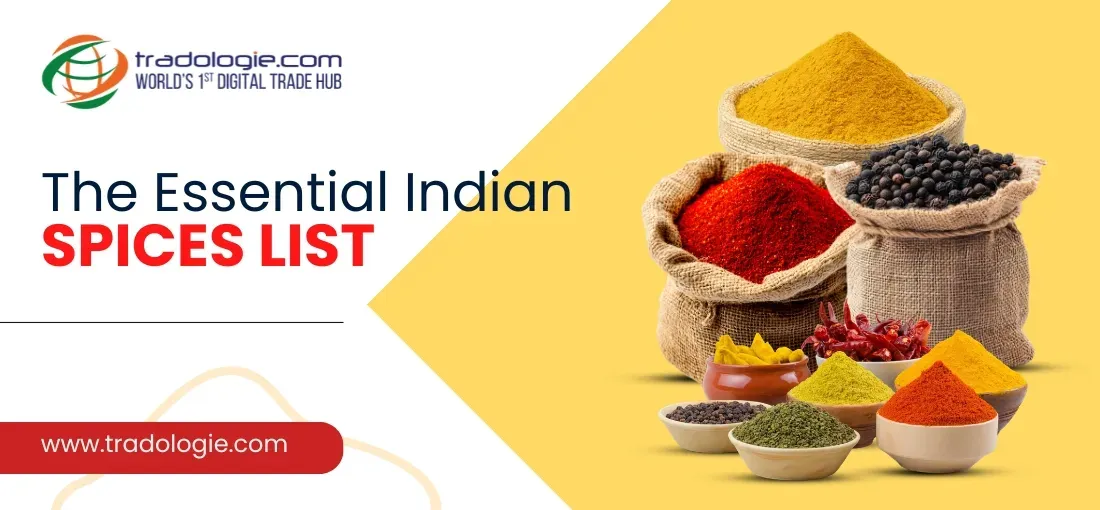
Below is a detailed spices list. It covers exactly 20 important items. These items make up the core of the Indian spices list. They are traded in the global market every single day.
Here are the spices name hindi and english details along with vital trade facts:
-
.webp) 1. Black Pepper (Kali Mirch): People call this the "King of Spices." It is basic to global trade. It has high levels of a compound called piperine. This compound gives it sharp heat. It also decides its market grade. Karnataka and Kerala are the top places to buy heavy berries. Exporters often sell premium B2B grades like Malabar Garbled (MG). Global factories buy it heavily to make oils for the food industry.
1. Black Pepper (Kali Mirch): People call this the "King of Spices." It is basic to global trade. It has high levels of a compound called piperine. This compound gives it sharp heat. It also decides its market grade. Karnataka and Kerala are the top places to buy heavy berries. Exporters often sell premium B2B grades like Malabar Garbled (MG). Global factories buy it heavily to make oils for the food industry. -
.webp) 2. Cardamom (Elaichi): Green cardamom takes a lot of hard human work to harvest. Workers pick it by hand. This manual work makes it a very expensive premium spice. The oil inside the seeds decides its smell and value. Corporate buyers mostly look for the Alleppey Green Extra Bold (AGEB) grade. The bulk cardamom price in Kerala changes daily. Local auction centers set this price strictly.
2. Cardamom (Elaichi): Green cardamom takes a lot of hard human work to harvest. Workers pick it by hand. This manual work makes it a very expensive premium spice. The oil inside the seeds decides its smell and value. Corporate buyers mostly look for the Alleppey Green Extra Bold (AGEB) grade. The bulk cardamom price in Kerala changes daily. Local auction centers set this price strictly. -
.webp) 3. Turmeric (Haldi): India is the top global seller of this bright yellow root. Bulk buyers judge turmeric mostly by its curcumin levels. Curcumin gives the root its famous color. It also gives it strong health benefits. High-yield types like Erode and Nizamabad are famous in the wholesale market. The farming demand for high-curcumin turmeric is growing very fast right now. Medicine and makeup brands want it badly.
3. Turmeric (Haldi): India is the top global seller of this bright yellow root. Bulk buyers judge turmeric mostly by its curcumin levels. Curcumin gives the root its famous color. It also gives it strong health benefits. High-yield types like Erode and Nizamabad are famous in the wholesale market. The farming demand for high-curcumin turmeric is growing very fast right now. Medicine and makeup brands want it badly. -
.webp) 4. Cumin (Jeera): Farmers grow massive amounts of cumin in very dry areas. It is a top Indian export by total weight. The Unjha mandi in Gujarat is Asia's largest physical spice market. This one market heavily controls global cumin prices. Buyers love the seeds for their warm and nutty oils. Food brands use cumin a lot in commercial meat and spice blends.
4. Cumin (Jeera): Farmers grow massive amounts of cumin in very dry areas. It is a top Indian export by total weight. The Unjha mandi in Gujarat is Asia's largest physical spice market. This one market heavily controls global cumin prices. Buyers love the seeds for their warm and nutty oils. Food brands use cumin a lot in commercial meat and spice blends. -
.webp) 5. Coriander (Dhania): Dried coriander seeds move very fast in local wholesale markets. Buyers split them into whole seeds and broken seeds (dal). They are famous for a compound called linalool. This gives them a sweet, lemon-like smell. It forms the main bulk base for almost all commercial curry powders in the world.
5. Coriander (Dhania): Dried coriander seeds move very fast in local wholesale markets. Buyers split them into whole seeds and broken seeds (dal). They are famous for a compound called linalool. This gives them a sweet, lemon-like smell. It forms the main bulk base for almost all commercial curry powders in the world. -
.webp) 6. Red Chilli (Lal Mirch): Red chilli is India's biggest single spice export by volume. The global trade measures chillies using two strict rules. They use ASTA color value for the red look. They use Scoville Heat Units (SHU) for the spicy burn. The famous Guntur Sannam type has a perfect mix of heat and color. The extra-hot Teja type is very popular with global factories. They use it to make pepper spray and spicy food pastes.
6. Red Chilli (Lal Mirch): Red chilli is India's biggest single spice export by volume. The global trade measures chillies using two strict rules. They use ASTA color value for the red look. They use Scoville Heat Units (SHU) for the spicy burn. The famous Guntur Sannam type has a perfect mix of heat and color. The extra-hot Teja type is very popular with global factories. They use it to make pepper spray and spicy food pastes. -
.webp) 7. Cloves (Laung): These are dried flower buds that have not opened yet. They contain very rich oils. The main active chemical is eugenol. Eugenol gives cloves their warm and numbing feel. Commercial buyers grade wholesale cloves very strictly. They sort them carefully by size and clean looks. They reject any batch with broken or headless buds.
7. Cloves (Laung): These are dried flower buds that have not opened yet. They contain very rich oils. The main active chemical is eugenol. Eugenol gives cloves their warm and numbing feel. Commercial buyers grade wholesale cloves very strictly. They sort them carefully by size and clean looks. They reject any batch with broken or headless buds. -
.webp) 8. Cinnamon (Dalchini): The commercial market deals with both true cinnamon and cassia bark. True cinnamon is sweet and breaks easily. India grows premium types in the Western Ghats. But India also imports big amounts of cassia. B2B buyers must test cassia for coumarin levels. Many European import markets strictly limit high coumarin levels.
8. Cinnamon (Dalchini): The commercial market deals with both true cinnamon and cassia bark. True cinnamon is sweet and breaks easily. India grows premium types in the Western Ghats. But India also imports big amounts of cassia. B2B buyers must test cassia for coumarin levels. Many European import markets strictly limit high coumarin levels. -
-2.webp) 9. Nutmeg (Jaiphal): Nutmeg and mace surprisingly come from the exact same fruit. Nutmeg is the hard seed on the inside. Kerala supplies a large commercial amount of this item. It contains a special compound called myristicin. Global baking brands buy it regularly at very high prices.
9. Nutmeg (Jaiphal): Nutmeg and mace surprisingly come from the exact same fruit. Nutmeg is the hard seed on the inside. Kerala supplies a large commercial amount of this item. It contains a special compound called myristicin. Global baking brands buy it regularly at very high prices. -
.webp) 10. Mace (Javitri): Mace is the delicate, red, lacy cover wrapped tightly around the nutmeg seed. It shares the same plant source as nutmeg. However, it offers a lighter and sharper flavor. Makeup makers and premium food brands purchase mace constantly. It always demands a very high premium price on the global market.
10. Mace (Javitri): Mace is the delicate, red, lacy cover wrapped tightly around the nutmeg seed. It shares the same plant source as nutmeg. However, it offers a lighter and sharper flavor. Makeup makers and premium food brands purchase mace constantly. It always demands a very high premium price on the global market. -
 11. Mustard Seeds (Sarson): Mustard is a huge commercial crop. Global traders buy and sell black, brown, and yellow types. The seeds hold a compound called allyl isothiocyanate. This creates a sharp and stinging flavor when mixed with water. B2B traders sell massive volumes of whole seeds. They also crush millions of tonnes every year to make cooking oil.
 -
 12. Fennel Seeds (Saunf): These seeds have a sweet taste like licorice. The main oil causing this taste is anethole. Gujarat completely leads the commercial farming of this crop. B2B buyers purchase huge volumes for the digestion market. They also use it a lot to flavor commercial drinks and herbal teas.
 -
 13. Fenugreek (Methi): This is a very tough winter crop. The seeds have a bitter taste similar to maple syrup. This taste comes from a chemical called sotolon. Bulk buyers trade the hard seeds to make curry powders and commercial pickles. They also trade the dried leaves to flavor rich restaurant gravies.
 -
.webp) 14. Star Anise (Chakra Phool): This pod looks like a beautiful star. It contains very high levels of shikimic acid. Global drug companies actually extract this acid to make anti-viral medicines. Farmers grow it very successfully in Northeast India. Traders ship bulk orders of star anise all across Asia. They use it heavily for both cooking and medicine.
14. Star Anise (Chakra Phool): This pod looks like a beautiful star. It contains very high levels of shikimic acid. Global drug companies actually extract this acid to make anti-viral medicines. Farmers grow it very successfully in Northeast India. Traders ship bulk orders of star anise all across Asia. They use it heavily for both cooking and medicine. -
.webp) 15. Asafoetida (Hing): This is a strong, dried resin. Workers extract it from the roots of Ferula plants. It contains complex sulfur chemicals. These chemicals taste exactly like cooked garlic or onions when you fry them in oil. India used to import all of this resin. Now, India successfully grows it in the cold deserts of Himachal Pradesh. This helps lower the heavy import costs.
15. Asafoetida (Hing): This is a strong, dried resin. Workers extract it from the roots of Ferula plants. It contains complex sulfur chemicals. These chemicals taste exactly like cooked garlic or onions when you fry them in oil. India used to import all of this resin. Now, India successfully grows it in the cold deserts of Himachal Pradesh. This helps lower the heavy import costs. -
.webp) 16. Saffron (Kesar): This is the absolute most expensive farming spice on earth. It takes thousands of hand-picked crocus flowers to make just one gram. Kashmir saffron securely holds a special Geographical Indication (GI) tag. Commercial B2B buyers test saffron using official ISO 3632 rules. They legally check for crocin (color), picrocrocin (flavor), and safranal (smell).
16. Saffron (Kesar): This is the absolute most expensive farming spice on earth. It takes thousands of hand-picked crocus flowers to make just one gram. Kashmir saffron securely holds a special Geographical Indication (GI) tag. Commercial B2B buyers test saffron using official ISO 3632 rules. They legally check for crocin (color), picrocrocin (flavor), and safranal (smell). -
.webp) 17. Bay Leaf (Tej Patta): Indian bay leaves are very different from European laurel leaves. They hold strong oils that smell like cinnamon and clove. Farmers harvest them in massive amounts near the Himalayas. The leaves are very light in weight. Traders export huge shipping containers of these dried leaves. Soup and rice brands buy them constantly.
17. Bay Leaf (Tej Patta): Indian bay leaves are very different from European laurel leaves. They hold strong oils that smell like cinnamon and clove. Farmers harvest them in massive amounts near the Himalayas. The leaves are very light in weight. Traders export huge shipping containers of these dried leaves. Soup and rice brands buy them constantly. -
.webp) 18. Carom Seeds (Ajwain): These tiny seeds have a sharp and bitter taste. They taste a lot like thyme. This is because they hold very high levels of thymol. Global buyers value thymol for its strong germ-killing and digestion benefits. Gujarat and Rajasthan grow this crop a lot. Global health markets value commercial ajwain very highly.
18. Carom Seeds (Ajwain): These tiny seeds have a sharp and bitter taste. They taste a lot like thyme. This is because they hold very high levels of thymol. Global buyers value thymol for its strong germ-killing and digestion benefits. Gujarat and Rajasthan grow this crop a lot. Global health markets value commercial ajwain very highly. -
.webp) 19. Dry Ginger (Saunth): Drying the fresh ginger root makes its heat much stronger. The drying process changes the chemicals inside to make them sharper. India confidently leads global ginger farming. Factories process premium types for worldwide buyers. They often grade the best ones as Cochin ginger. The commercial baking and tea industries buy dry ginger in massive amounts.
19. Dry Ginger (Saunth): Drying the fresh ginger root makes its heat much stronger. The drying process changes the chemicals inside to make them sharper. India confidently leads global ginger farming. Factories process premium types for worldwide buyers. They often grade the best ones as Cochin ginger. The commercial baking and tea industries buy dry ginger in massive amounts. -
.webp) 20. Nigella Seeds (Kalonji): Many people wrongly call these black onion seeds. They actually have a peppery taste like oregano. The seeds hold a powerful health compound called thymoquinone. It is a tough crop from North India that survives well without water. Global B2B demand is going up very fast. Drug buyers want it constantly to make immunity supplements.
20. Nigella Seeds (Kalonji): Many people wrongly call these black onion seeds. They actually have a peppery taste like oregano. The seeds hold a powerful health compound called thymoquinone. It is a tough crop from North India that survives well without water. Global B2B demand is going up very fast. Drug buyers want it constantly to make immunity supplements.
The Origin of Indian Spices and Trade History
We must look at the past to understand the modern export market. The origin of Indian spices is a very interesting ancient story. It began long before early people even wrote things down.
We can look at the Indus Valley Civilization for solid proof. Old findings clearly show people used natural flavors very early on. They grew crops like cardamom around 3000 BC. Many costly spices originated in India. These local crops completely changed global economics.
For thousands of years, India was the main center of world trade. Arab and Persian traders controlled the early land routes. They moved huge shipments of black pepper and dry ginger. They used camels to cross dry land for many months at a time. These goods finally reached the Roman Empire. Romans loved them a lot. They often traded pure gold just to get premium Indian spices.
Later, European countries badly wanted a direct sea route. They wanted to skip the land middlemen to make more profit. This strong desire started the Age of Discovery. In 1498, a Portuguese explorer named Vasco da Gama reached Calicut. This event started hundreds of years of fierce sea trade fighting. That specific history is still important today. India remains the absolute top country for growing commercial spices.
Spices Production in India State Wise
International buyers often ask where exact crops grow. India has a very mixed weather system. Because the weather changes so much, different areas grow completely different crops. You absolutely must know these farming zones. It helps you find the best spices manufacturers in India.
We can look at government data from the Ministry of Agriculture. Madhya Pradesh proudly sits as the largest producer of spices in India by total weight. It grows massive farming amounts of commercial garlic, coriander, and fenugreek. However, other special states lead in high-value cash crops.
- Turmeric Output: Corporate buyers often ask about the highest turmeric producing state in India. Maharashtra and Telangana comfortably share this title. They supply huge, steady amounts of turmeric to the global market.
- Dry Seed Regions: Rajasthan and Gujarat face very hot and dry weather. They are the absolute top jeera producing states in India. They also grow the most commercial fennel, carom seeds, and mustard.
- Premium Coastal Markets: Kerala is famous in history as the true spice state of India. It has a very helpful wet coastal climate near the hills. The Kerala spices market is famous worldwide. It produces high-value black pepper, nutmeg, and cardamom.
Analyzing the Spice Industry and Spices Export From India
The local buyer demand inside India is extremely strong. But the export market truly shows India's farming power. The Spices Board of India tracks all these official trade numbers very carefully.
The exact figures for spices export from India are simply massive. In recent years, yearly export earnings easily stay around $4 billion USD. India regularly ships bulk goods to more than 200 countries around the world. Top steady buyers include China, the USA, Bangladesh, and the UAE. Red chilli, cumin, and turmeric make up the biggest part of this huge volume.
There is also a major shift happening right now. It is a highly profitable shift toward value-added products. Smart buyers now want strong spice oils and exact extracts. They do not just want to buy raw whole seeds anymore. Global food factories heavily depend on Indian extraction plants. Therefore, the absolute need to find a verified, trusted spices exporter is higher today than ever before.
Regulatory Compliance, HSN Codes, and the Spices Board of India
Moving bulk farming products across borders needs strict paperwork. International buyers and sellers must strictly follow global trade laws. Quality control is the absolute top goal in the modern B2B spice industry.
Bulk global shipments must aggressively pass strict international health tests. Exporters must legally test for bug sprays, dirty limits, and mold. Indian businesses rely heavily on government boards to manage these legal exports. Traders regularly use the official Spices Board login to file their export papers. They use the secure Indian Spices Board login portal to get required health papers.
The official Spices Board headquarters sits in Kochi, Kerala. This government board legally checks that all outgoing exports are safe. They promise that Indian farming products meet the highest global quality standards.
Using the correct Harmonized System of Nomenclature (HSN) codes is also a strict rule. Most spices fall under Chapter 09. Proper and exact code use is vital. It ensures that your shipping containers easily pass international customs without any costly delays. You also need a valid Importer-Exporter Code (IEC) to trade legally around the world.

Streamline your global trade paperwork right now with these helpful tools:
- 👉 [See complete HSN Code List]
- 👉 [HSN Code Finder Tool]
- 👉 [See Complete IEC code list]
Sourcing Wholesale Spices Safely with Tradologie
The modern farming supply chain is often very hard to track. Buying wholesale spices can be surprisingly difficult for global brands. Prices change very quickly based entirely on monsoon rain patterns. Farm harvest numbers directly and instantly change the spot market pricing. Global buyers must watch these local physical markets very closely. For instance, tracking the live cardamom price today is vital for smart buyers.
To safely manage this rapid price change, the world's smartest buying teams use Tradologie.com.
Tradologie is the world's top next-generation B2B portal for global farm trade. We directly connect foreign bulk buyers with verified spices manufacturers in Gujarat, Delhi, Mumbai, and Kerala.
By using Tradologie for your bulk orders, you completely skip the local market middlemen. You get direct and clear access to the actual factory owners. Our platform features a special live reverse-bidding system. You talk about B2B prices in real-time directly with many suppliers at the exact same time.
Furthermore, every single registered supplier on Tradologie passes strict legal paper checks. We secure your bulk payments safely. We organize the complex export paperwork for you. We also ensure your delivery arrives on time.
Maybe you need a shipping container of Guntur red chilli. Maybe you need bulk Tellicherry black pepper. Either way, Tradologie makes your global import trade much safer, faster, and highly profitable.