Key Highlights
- India exported 2.15 million tonnes of fresh vegetables in 2024-25.
- Onion remains India's largest vegetable export product.
- Potatoes have strong demand across retail, foodservice and processing.
- Green chilli and okra have established international demand.
- Gherkins offer opportunities in processed and private-label markets.
- UAE, Nepal, Bangladesh, UK, Oman, Malaysia and Qatar are major destinations.
- Fresh vegetables require careful grading, packing, handling and logistics.
- The right export opportunity depends on buyer demand, shelf life, sourcing and freight costs.
Introduction:-
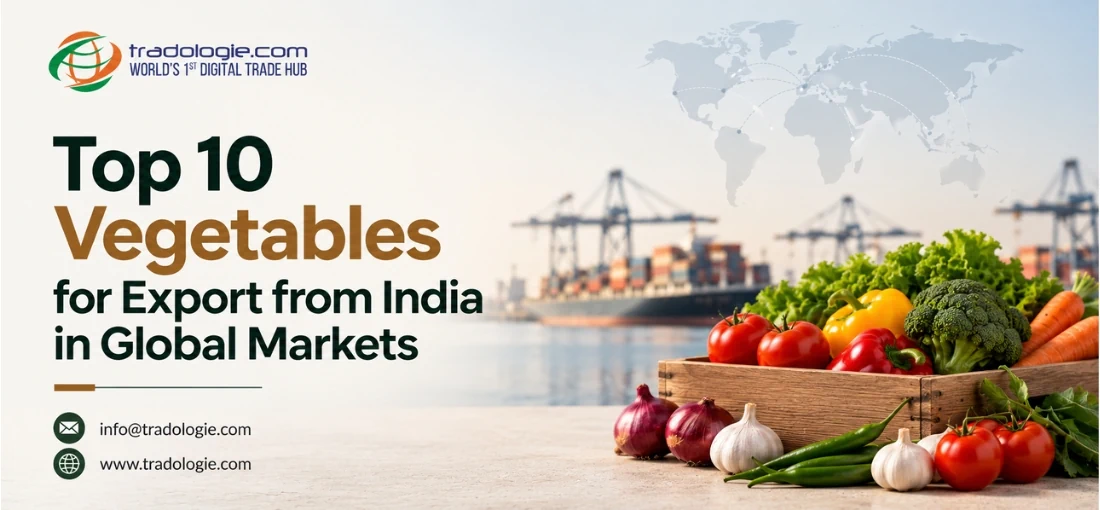
When people talk about the top vegetables for export from India , onions and potatoes usually come to mind first. But India's export basket is much wider than that. Tomatoes, green chillies, okra, mixed vegetables, gherkins and several other products are already finding buyers overseas. India's large production base, different growing seasons and proximity to the Gulf and South Asian markets give exporters plenty to work with.
India exported 2.15 million tonnes of fresh vegetables worth about US$894 million in 2024-25, according to the official data of APEDA. The exports of fresh vegetables other than onion were 888,363 MT in the following year, which were valued at US$362.87 million. The UAE, Nepal, Bangladesh, the UK, Oman, Malaysia and Qatar were among the leading destinations.
The numbers are useful, but they don't tell the whole story. Every vegetable has a different kind of market. Some are bought in large quantities by wholesalers, some go directly to foodservice, while others work better as processed products.

Top Vegetables For Export From India And Their Destinations
1. Onion
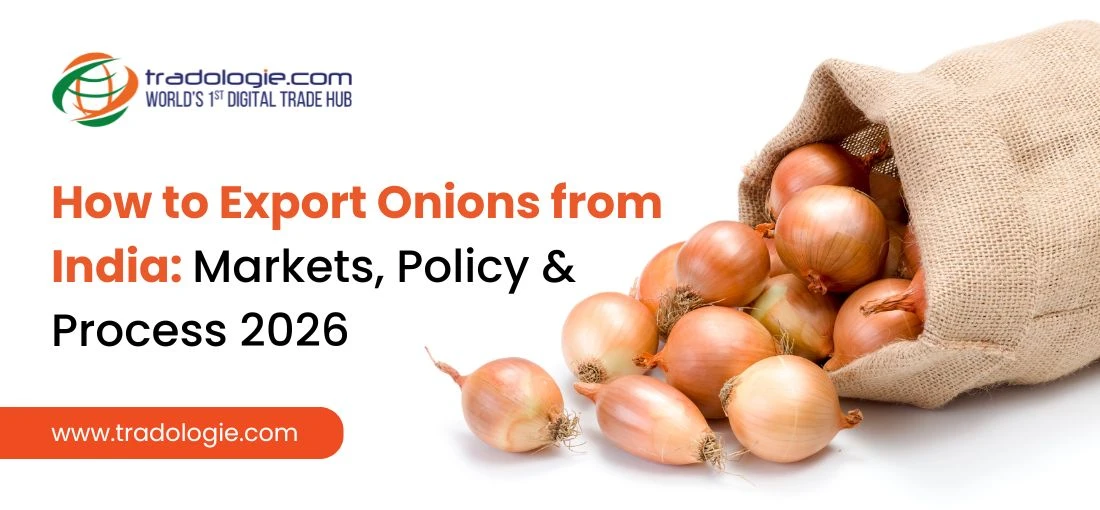
Onion remains the heavyweight of India's vegetable export trade. There is a straightforward reason for that: practically every major food market consumes it.
India exported about 1.15 million tonnes of fresh onions worth US$453.95 million in 2024-25, according to APEDA and DGCIS. Bangladesh, Malaysia, the UAE, Sri Lanka, Nepal and Kuwait were among the major destinations.
Indian onions are available in several varieties and are harvested across different regions and seasons. For an exporter, that makes sourcing easier than it may appear from outside.
2. Potato
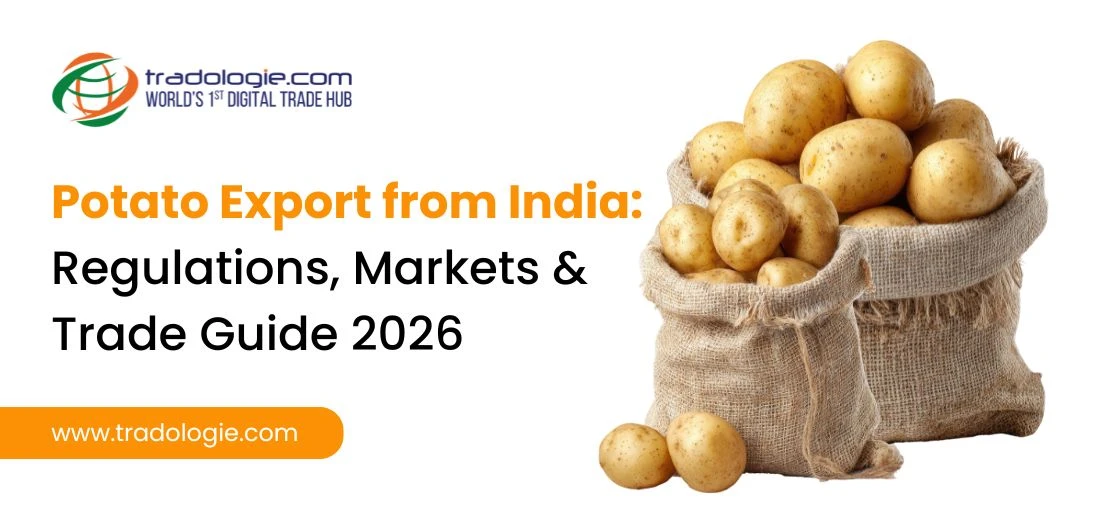
Potatoes have one of the broadest markets among the top vegetables exported from India . They are bought for household consumption, restaurants, hotels and food processing.
India is also one of the world's largest potato producers. APEDA lists potatoes among the vegetables that contribute significantly to the country's export basket.
The interesting part is that the opportunity does not stop with fresh potatoes. Flakes, starch, chips and other processed products open another route for Indian suppliers.
3. Tomato
Tomatoes have a more demanding supply chain than onions or potatoes because freshness becomes a bigger concern once the product is moving across borders.
Even so, India has a strong production base and established trade with nearby markets. The UAE and other Gulf countries are particularly relevant because a significant share of their fresh produce requirement is met through imports.
For exporters, the variety, maturity stage and packing method can matter almost as much as the price.
4. Green Chilli
Green chilli is one of the more interesting Indian vegetables for international markets . It has a ready customer base in South Asian and Middle Eastern cuisine and is used by households, restaurants and food businesses.
APEDA includes green chilli among the products contributing significantly to India's vegetable export basket. It also identifies Green Chilly & Capsicum as one of its focus products for export development.
This is not a product where an exporter can afford to treat quality as an afterthought. Colour, freshness, size, shelf life and pesticide residue compliance all come into the conversation.
5. Okra
Okra has a smaller market than onions or potatoes, but it has a loyal one. It is particularly popular in South Asian, Middle Eastern and African cuisines.
India has a major advantage here: APEDA notes that India is the world's largest producer of okra.
The export opportunity is therefore less about finding a product India cannot produce and more about getting good-quality produce into markets where buyers are willing to pay for consistency.
6. Cauliflower
Cauliflower is grown across several parts of India and is already familiar to buyers in neighbouring and Gulf markets.
It is also a vegetable where logistics can make or break a shipment. The product needs careful handling from harvesting through grading, packing and transportation. A shipment that looks perfectly good at the farm gate can lose value quickly if the cold chain or handling is poor.
That makes reliable post-harvest operations particularly useful for exporters entering this segment.
7. Cabbage
Cabbage may not attract as much attention as chilli or onion, but it has a dependable food market. It is used by households, restaurants and foodservice businesses and is relatively easy to source in India.
For nearby destinations, the economics can be attractive because shorter transit times give exporters more flexibility. This is one reason cabbage can feature among the best vegetables for export from India when the destination market is within a manageable shipping distance.
8. Beans
Fresh beans appeal to a somewhat more specific group of buyers so to say. This literally means that restaurants, hotels, supermarkets and ethnic-food distributors, in other words HORECA, are among the potential customers.
India produces several varieties, giving exporters room to target different markets instead of selling one standard product everywhere.
The challenge is consistency. Buyers looking for fresh beans generally want the same size, appearance and quality from one shipment to the next. That requires better sorting and packing at the exporter level.
9. Cucumber and Gherkins
Cucumber and gherkins offer something different from the usual fresh-vegetable trade.
India has developed a strong processed gherkin industry, supplying preserved products to overseas food companies. APEDA includes cucumber and gherkins within its processed-vegetable category.
This is useful for exporters because processed products are not tied to the same short shelf-life pressures as fresh produce. Contracts can also be more structured, particularly when the buyer is a food manufacturer or private-label business.
10. Mixed Vegetables
Mixed vegetables are another part of India's export basket that is easy to overlook. They can be sold fresh, frozen or processed, depending on the market and buyer.
APEDA identifies mixed vegetables alongside onions, potatoes, tomatoes and green chilli as important contributors to India's vegetable export basket.
The buyer base can include foodservice companies, distributors and processors. For exporters already handling several products, mixed vegetables can also fit naturally into an existing supply operation.
Top Vegetables Exported from India: Where Is the Demand?
India does not depend on one overseas market for its vegetables. The Gulf is important, but so are neighbouring countries and selected European and Asian destinations.
The UAE stands out in particular. APEDA's 2024-25 data shows that UAE accounted for 14.61% of India's fresh vegetable exports. This makes it the second-largest destination right after Bangladesh.
Nepal and Bangladesh benefit from proximity, while the UK and European markets can be attractive for exporters that are capable of complying with stricter quality and residue requirements.
This is where the top vegetables exported from India start looking different from one market to another. A product that works extremely well in Dubai’s vibrant market may not have the same commercial potential in the markets of London.

Best Vegetables for Export from India: What Should a New Exporter Choose?
There is no universal answer.
Onions and potatoes are easier to understand because they have large, established markets. Green chilli and okra can be attractive where ethnic-food demand is strong. Gherkins make more sense for exporters with access to processing and contract manufacturing. Tomatoes, cabbage and cauliflower can work well for bulk vegetable exports from India when the destination is close enough that it can keep transit under control.
So, when looking at the best vegetables for export from India , the right product is usually the one where sourcing, shelf life, buyer demand and freight costs fit together.
Indian Vegetables for International Markets Need More Than Supply
India has no shortage of vegetables. The harder part is getting the product from farm to overseas buyer in the condition promised.
Grading, sorting and packaging need to happen properly. Exporters may also need to deal with phytosanitary certification, pesticide residue limits, traceability requirements, approved packing facilities and all sorts of those norms and legal stuff depending on the destination.
APEDA's export framework reflects this shift toward better post-harvest handling and market-specific compliance. Its current export focus includes products such as potato, green chilli and okra, while its broader vegetable programme covers a much wider range.
For Indian vegetables for international markets , this is becoming increasingly important. Overseas buyers are not simply asking, “How much can you supply?” They also want to know how consistently you can supply it.
Vegetable Export Opportunities from India
There is still plenty of room for growth. India has a huge production base, established export routes and access to more than 200 countries and regions through its wider agricultural export network.
The opportunity may be in a large commodity such as onion, or in a more specialised product such as okra, green chilli or processed gherkins. It may also come from serving a particular buyer rather than an entire country.
That is probably the most practical way to look at vegetable export opportunities from India. The goal is not to export everything. It is to find the vegetable, market and buyer combination that makes commercial sense.
India already has the production. What matters now is how efficiently that supply can be connected with the right international market.
Want to export or import vegetables in bulk globally? Register as a buyer or seller on Tradologie today.
Disclaimer:
The information provided in this article is for general informational and business-research purposes only. Export volumes, market conditions, destination requirements and regulatory standards may change over time. Exporters should independently verify the latest market data, phytosanitary requirements, pesticide residue limits, documentation and destination-specific regulations before entering into a commercial transaction.