Key Highlights
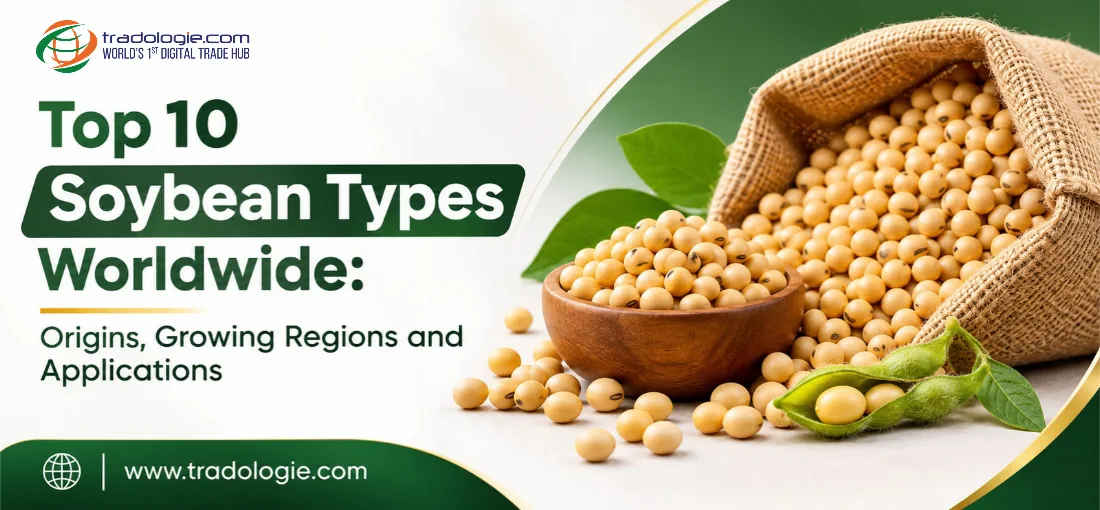
- The top 10 soybean types worldwide include yellow, black, green, brown, red, small-seeded yellow (natto), large-seeded yellow, high-protein yellow, high-oil yellow and non-GMO yellow soybeans.
- Yellow soybeans dominate global bulk trading because of their applications in soybean oil, soybean meal, animal feed and food processing.
- Black and green soybeans are popular in specialised Asian food markets, while high-protein and high-oil soybeans are selected for specific industrial and processing applications.
- Brazil, the United States, Argentina, China and India are among the major soybean-producing countries.
- Brazil led global soybean exports in 2024, with approximately US42.94 billion in export value, followed by the United States at US 24.57 billion.
Introduction :
Soybeans are amongst the most valuable crops in the world for supplying vegetable oil, animal feed, food and plant protein products. There are various types of soybean globally that can be produced, including yellow, black, green, brown or red soybeans. Some varieties are also specifically cultivated for commercial use.
The most commonly grown and traded soybean types worldwide include yellow, black, green, brown and red soybeans. However, there are many commercial varieties of soybean globally. As yellow soybeans are the most common type of soybean produced internationally, the coloured varieties remain popular in East Asian markets.
Understanding the leading soybean types can help growers, processors, exporters, and importers. Although some soybeans can be used for the production of soybean oil and animal feeds, they may not be the most suitable type of bean when looking to use them for tofu, soy milk or fermented products. Other factors to consider include their intended applications and nutritional content. So look beyond the appearance of the seeds.
We will examine the ten most important types of soybean globally.

Types of Soybeans: Top 10 Soybean Types Worldwide
What Are the Different Varieties of Soybean?
Soybeans belong to the Glycine max species. They can come in a variety of colours including yellow, black, green, brown and red/reddish browns. This is due to the pigments present in the seed coat.
However, there are other factors to consider when choosing which type of soybeans you want to buy for commercial purposes. Seed size, protein, oil content and genetic makeup will determine the type of soybean you need.
A high protein soybean would not necessarily be a variety of a different colour. This is a commercial type with specific nutritional characteristics. Non-GMO soybeans can also be yellow.
Top 10 Soybean Types Worldwide
1. Yellow Soybeans - The Leading Commercial Variety
Yellow soybeans are the most commonly grown and traded variety of soybean worldwide. They have a yellow or pale yellow seed coat. They are primarily used for oil extraction, soybean meal, and food processing.
Most commercial soybeans cultivated in large quantities in countries such as Brazil, United States and Argentina are yellow soybeans. They are highly valued for their oil and protein content.
Main countries grown in: Brazil, United States, Argentina, China, India, Paraguay.
Features: Yellow seed coat. Suitable for a wide range of processing applications. Contains useful oil and protein.
Uses: Soybean oil, Soybean meal, Animal feed, Soy flour, Tofu, Soy milk, Protein concentrates.
As these soybeans serve both the vegetable oil and animal feed industries, they are highly popular in international trading. As they are widely available, they remain the first choice.
Main countries grown in:
Black soybeans have a dark seed coat, containing natural pigments. They are traditionally cultivated in East Asia, mainly China, Japan, and Korea.
They are often grown for specialised food applications. As they have a distinctive appearance, they can be used for traditional dishes, fermented products and specialty soybeans.
Main countries grown in: China, Japan, South Korea.
Features: Black seeds, Natural pigments, Often used in traditional foods.
Uses: Fermented black soybeans, Black soybean paste, Soups, Roasted snacks, Soy milk, Traditional foods.
Black soybeans are highly valued in East Asian food markets. The pigments in their seed coat make them suitable for specialty products. They also have a good protein content.
Green soybeans are a type of soybean commonly associated with edamame, which are vegetable soybeans. These are usually harvested before the beans have fully matured and while the pods and beans are still green.
The crop is especially popular in Japan, China and other East Asian countries. They are cultivated for the seed size, taste, texture, and flavour of the soybeans.
Main countries grown in: China, Japan, Taiwan, South Korea, United States.
Features: Green and immature. Usually larger than grain soybeans.
Uses: Frozen edamame, Boiled soybean snacks, Salads, Soups, Ready meals, Plant based foods.
Green soybeans are gaining popularity in international frozen food markets. They are commercially valuable as they need to have quality pods, well-sized seeds, good taste and be harvested at the correct time. They also need to retain their freshness.
4. Brown Soybeans - Traditional & Specialty Foods
Brown soybeans have brown seed coats, ranging from light brown to dark reddish brown. They can often be found in traditional soybean germplasm. They are cultivated for specialty food applications in parts of East Asia.
They have pigments due to the natural compounds present in the seed coat. They can vary in seed size, taste and processing requirements.
Main countries grown in: China, Japan, South Korea.
Features: Brown or reddish brown seed coat. Can vary depending on the variety.
Uses: Traditional soybeans, Fermented foods, Roasted snacks, Soy flour, Specialty foods.
They are not as popular in international bulk trading as yellow soybeans. However, they remain important in specialty food markets.
5. Red & Reddish Brown Soybeans - Coloured Germplasm
These are not as common as other types of soybean globally . They have seed coats that can range from reddish brown to darker red. They are important in soybean breeding programmes.
They demonstrate the diversity of genetic traits in soybeans. They are cultivated in agricultural collections.
Main countries grown in: China, Japan, Specialty areas.
Features: Reddish or reddish brown seed coat. Varies depending on variety.
Uses: Traditional foods, Specialty soybean products, Research.
These should not be confused with red kidney beans. They belong to the soybean species and have very different processing and nutritional properties.
6. Small Seeded Yellow Soybeans - Natto Beans
Natto beans are usually small seeded yellow soybeans. They are selected for their use in producing natto.
They need to have the appropriate seed size, water absorbency, and texture for the fermentation process. Smaller seeds are commonly preferred so the fermentation process can take place evenly.
Main country grown in: Japan.
Features: Small seeds. Have the appropriate texture and processing characteristics.
Uses: Most commonly used in dishes that are related to Natto.
They are an excellent example of how the intended use of the soybean can influence which type you choose. They are commercially valuable as they possess the right properties for fermentation.
7. Large Seeded Yellow Soybeans - Tofu & Soy Milk
These are widely used in food processing. They are popular in markets where tofu, soy milk, and other soybean products are key staple foods.
They have been selected for the appropriate seed size, protein content, water absorbency, and processing requirements. Depending on the variety, they can deliver different textures and outputs.
Main countries grown in: China, Japan, South Korea, United States.
Features: Larger seeds. Selected for food grade requirements. Suitable for processing.
Uses: Tofu, Soy milk, Soy curd, Soy flour, Plant based foods.
When purchasing food grade soybeans, buyers often look for the protein content. They also examine the appearance of the seeds, broken seeds and moisture content. These factors can affect how efficiently they process.
8. High Protein Yellow Soybeans - Food & Protein Processing
These have been bred for food manufacturers and protein ingredient producers.
Whilst commodity soybeans are still valued for their protein content, these have been specifically bred to deliver higher protein content.
Main countries grown in: United States, Brazil, China, Parts of Europe.
Features: Higher protein content. Varies depending on variety.
Uses: Soy protein concentrate, Soy protein isolate, Textured vegetable protein, Soy flour, Plant based meat alternatives.
These are valuable as the plant based food industry has expanded. Manufacturers want to ensure they obtain the required protein content from their soybeans. This means variety selection and quality testing will be important.
10. Non-GMO Yellow Soybeans - Specialty Food & Feed
These are traditional soybeans that have not been genetically modified. They are cultivated in many countries to meet the requirements of food manufacturers, retailers, and customers who prefer non-GMO products.
They can look similar to genetically modified yellow soybeans. However, they are identified through their certification and documentation along the supply chain. They should also undergo testing.
Main countries grown in: United States, Canada, Europe, Parts of Asia.
Features: Non-GMO. Appropriate certification.
Uses: Tofu, Soy milk, Soy flour, Specialty food ingredients, Non-GMO animal feed.
They often enter specialised markets. Buyers will want the soybeans to have an identity preserved supply chain, and will require certification. This can influence costs.

Soybean Variety Comparison
| Type of Soybean | Colour/Type | Main Countries Grown In | Main Uses |
|---|---|---|---|
| Yellow | Yellow | Brazil, US, Argentina, China | Oil, Meal, Food Processing |
| Black | Black | China, Japan, South Korea | Traditional foods, Fermentation |
| Green | Green (Immature) | China, Japan, Taiwan, US | Edamame, Frozen foods |
| Brown | Brown | China, Japan, South Korea | Specialty Foods, Traditional Foods |
| Red | Red/Reddish Brown | East Asia, Specialty areas | Specialty Foods, Breeding |
| Natto | Usually yellow (Small seeded) | Japan | Fermented foods |
| Large Seeded Yellow | Yellow (Large seeded) | China, Japan, US | Tofu, Soy milk |
| High Protein Yellow | Yellow (High protein) | US, Brazil, China | Protein concentrates, Protein isolates |
| High Oil Yellow | Yellow (High oil) | Brazil, US, Argentina | Soybean oil, Soybean meal |
| Non-GMO Yellow | Yellow (Production status) | US, Canada, Europe | Specialty food & feed |
Note: This is not 10 different species of soybean. Yellow, black, green, brown, and red are colours of the seed coat. Natto, large seeded, high protein, high oil and non-GMO are commercial or processing types. One variety can have more than one type.
Main Soybean Growing Countries Worldwide
There are only a few major soybean growing countries. However, they are cultivated in many countries across the globe. Factors to consider when assessing how much can be produced in each region include climate, soil, farming methods, seed technology and processing.
Brazil
Brazil is the biggest producer of soybeans in the world. The main areas include Mato Grosso, Parana, Goias and Rio Grande do Sul. They have large-scale farming operations and export facilities, making the country a major soybean supplier.
They are primarily used for crushing. They supply both domestic and international markets with soybean oil and high protein meals. China is particularly important.
United States
The United States is another major soybean producing country. They are widely cultivated in the Midwest. Important states include Illinois, Iowa, Minnesota, and Indiana.
They supply domestic crushing facilities, food manufacturers, and international markets. They also produce specialty food grade soybeans.
Argentina
Argentina has a well-established soybean industry. They are primarily cultivated in the Pampas area. They are particularly important for soybean crushing.
They have a large processing industry which plays an important role in the international vegetable oil and animal feed industry.
China
China is one of the largest consumers of soybeans in the world. They also produce soybeans. They are primarily cultivated in the North East of the country including Heilongjiang, Jilin, and Inner Mongolia.
They are used for traditional food processing. They are particularly important for markets requiring black soybeans, food grade yellow soybeans and other specialty types.
India
Soybeans are primarily produced in Madhya Pradesh, Maharashtra, and Rajasthan. They are important for domestic oil extraction and soybean meal. They play an important role in the edible oil and feed industry.
The domestic market can be influenced by monsoon conditions, prices, crushing requirements, and international edible oil markets.
Worldwide Soybean Trade Volume (WITS)
Soybeans are one of the most important oilseeds traded globally. They are in demand for vegetable oils, high protein animal feeds, and food processing.
According to the World Integrated Trade Solution (WITS), using data from UN Comtrade, Brazil and the United States were the top two soybean exporting countries in 2024. Using HS Code 1201 (soya beans, whether or not broken).
| Country | Value (2024) | Quantity (2024) |
|---|---|---|
| Brazil | US$42.94 Billion | Not shown in World Partner record. |
| United States | US$24.57 Billion | 52.33 Million MT |
| Paraguay | US$3.17 Billion | 7.99 Million MT |
| Canada | US$2.49 Billion | 5.13 Million MT |
| Argentina | US$1.81 Billion | 4.15 Million MT |
Note: Source: World Bank WITS. Data from UN Comtrade. HS 1201. 2024.
Brazil exported around US 42.94 billion worth of soybeans.This places the country at the top of the export list.The United States exported US 24.57 billion worth of soybeans.
Paraguay, Canada, and Argentina all played an important role in the international soybean trade. This illustrates the importance of South and North American soybean producers.
China was particularly important for Brazilian soybeans. Around 72.87 million metric tonnes were exported to China in 2024. This was valued at around US$31.50 billion.
Understanding the Trade Data
The data refers to whole or broken soybeans. It does not include soybean oil or meal which are classified under different HS codes. The reason Brazil’s total quantity is not shown under the World Partner record does not mean they did not export any. It simply means the figure is not displayed.
What Influences the Value of Different Soybean Types?
When looking to buy soybeans internationally there are more factors to consider than just the colour and country of origin. Their intended applications will influence which type you need.
- Protein: Protein is a key consideration for food manufacturers and animal feed producers. Selecting the appropriate protein content will help with producing soybean meal, protein concentrates etc.
- Oil: Crushing facilities will assess the oil content. This will influence how much oil can be extracted.
- Moisture: Excessive moisture can create storage issues, cause deterioration, and create problems during transport. Most buyers will look for the appropriate moisture levels.
- Seed size & appearance: Food grade buyers may look for uniform seed size, colour, and a low proportion of broken/discoloured seeds.
- GMO: If you need non-GMO soybeans you may want them to have an identity preserved supply chain. Make sure they have the appropriate certification and testing.
- Food safety: Ask for the relevant lab reports. Make sure they comply with the requirements for pesticides, contaminants, and microorganisms.
- Export Documentation: Make sure they have the appropriate export documentation. This should include the commercial invoice, packing list, certificate of origin, certificate of analysis, Bill of Lading, and any documents required for the destination.
- Capacity: How much they can supply, loading port, packaging, when they can ship, and whether they can fulfil repeat orders.
- Contract: Who they are contracting with, payment details, inspection requirements, and agreed Incoterms.
Importers should also examine the customs requirements, food regulations, labelling requirements, and import duties for the destination country. The requirements will vary depending on the market.
Conclusion
There is a wide range of soybean types produced globally. Yellow soybeans are the most popular in international bulk trading due to their applications in oil extraction, animal feeds, and food processing. Black, green, brown, and red soybeans are used in more specialised markets. They are often used for traditional food processing and specialty agriculture.|
Disclaimer
Soybean production, export values, market rankings and commercial specifications may change over time. The soybean categories discussed include seed-colour classifications as well as commercial and processing types; they do not represent ten separate botanical species. Trade figures are based on HS Code 1201 and should not be confused with soybean oil or soybean meal exports, which fall under separate classifications. Buyers and exporters should verify the latest trade data, product specifications and destination-country import requirements before entering into a transaction.