The Role of Soybean in Supporting the Global Protein Supplement Industry
Key Highlights:
- Global Market Size: Soybean trade stood at $92.9 billion in 2023, reinforcing its role in global protein supply chains.
- Production Stability: Global soybean production reached 371.17 million metric tons in 2023, ensuring consistent supply for processors and bulk buyers.
- Protein Market Growth: The soy protein market is projected to grow from $10.99B (2025) to $14.19B (2030), at a 5.25% CAGR.
- B2B Opportunities: Increasing demand from sports nutrition, functional foods, and animal feed industries is driving new opportunities for soybean exporters and suppliers.
- Sustainability Focus: Industry emphasis on traceable, sustainable sourcing is reshaping procurement strategies among global buyers.
- Future Trends: Rising adoption of textured and hydrolyzed soy proteins is unlocking growth in meat alternatives and ready-to-eat segments.
Introduction:
If there is one agricultural commodity that has decisively shaped the global protein supplement industry and its economy, it is Soybean. Soybean remains an indispensable product for food, feed, and industrial sectors, correspondingly as a cornerstone of the world's plant protein supply. Today, it robustly supports a burgeoning protein supplement industry that is reshaping dietary patterns and developing new opportunities for global soybean exporters.
The scale of this influence is pretty much evident. For instance, in 2023 alone, the global soybean trade value stood immensely at an estimated $92.9 billion. This exquisitely testifies to its enduring role in the global commodity trade sector, and most importantly, the protein sector. From Brazil's vast plantations to the processors of Shandong, China, soybean traders and processors have been instrumental in meeting the escalating demand for high-quality plant-based proteins.
What Makes Soybean a Powerhouse for Protein?
At its core, soybean's strength lies in its nutritional completeness and cost efficiency. With a protein content of roughly 36-38%, soybeans rival animal-based protein sources in amino acid profile and digestibility. This makes them especially attractive for supplement manufacturers seeking scalable, plant-based ingredients.
Today's soy protein market is segmented into isolates, concentrates, and textured/hydrolyzed forms. Soy protein isolates alone account for approximately 33% of market share, as they offer the high purity and versatility required in sports nutrition and functional foods. Processors, ranging from mid-size soybean trading companies to large integrated players, have streamlined extraction techniques to deliver consistent protein quality to global supplement brands.
China's Shandong province, for example, processes nearly 70% of the world's protein isolates, reinforcing Asia's strategic dominance in this value chain. Meanwhile, investments such as Perrigo's $170 million expansion in the United States underscore the sector's ongoing push for capacity building and innovation.

A Glimpse at Global Soybean Production
The foundation of this value chain rests on a resilient production ecosystem. While annual yields fluctuate with weather and market cycles, global soybean production has shown sustained strength:
- 2017:359.52 million metric tons
- 2018: 344.81 million metric tons
- 2019: 335.94 million metric tons
- 2020:355.87 million metric tons
- 2021: million metric tons
- 2022: million metric tons
- 2023: 371.17 million metric tons
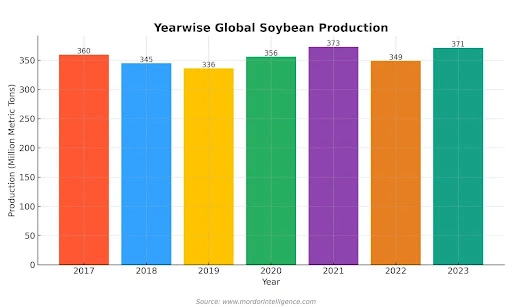
Brazil, the United States, and Argentina remain dominant producers, collectively contributing nearly 70% of output. India has steadily grown its domestic capacity as well, with states like Madhya Pradesh and Maharashtra leading cultivation. This robust supply landscape enables soybean exporters and processors to ensure steady flows to the protein supplement industry.
The Demand for Plant-Based Protein Supplements
As consumer preferences pivot toward healthier and more sustainable diets, soy protein continues to secure its position in sports nutrition, meal replacements, and functional food products. Notably, the global soy protein market is projected to expand from $10.99 billion in 2025 to $14.19 billion by 2030, at a CAGR of 5.25%.
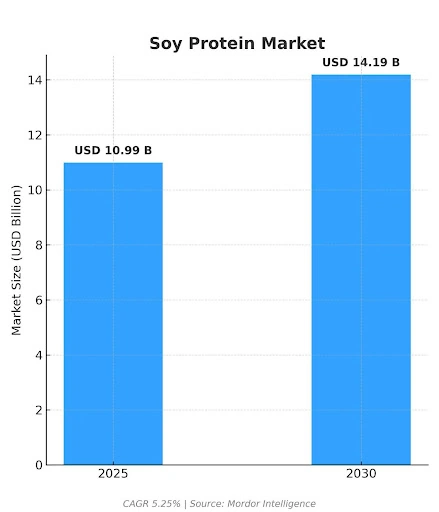
This expansion is more than a response to lifestyle shifts; it reflects deeper structural changes in supply chains and sourcing strategies. Flexitarian and vegan dietary patterns in Europe and North America, coupled with expanding middle-class consumption in Asia-Pacific, are creating new avenues for soybean suppliers to engage global supplement manufacturers.
In the animal feed segment alone, soy protein retains commanding relevance—accounting for roughly half of the soy protein market share in 2024. This feed-forward link between livestock nutrition and human protein demand further solidifies soybean's role in the larger protein economy.
Sustainability: Is Soybean a Future-Proof Protein Source?
For soybean to retain its strategic position, sustainability must move from promise to practice. Deforestation concerns, water resource management, and GMO debates have compelled soybean processors and bulk buyers alike to invest in certified sourcing and traceable supply chains.
Asia-Pacific's working-age population, which reached 3.2 billion in 2023, continues to drive protein demand. Meeting this at scale necessitates efficiency gains and environmental stewardship. Many major soybean traders now deploy technologies to optimize land use, reduce water consumption, and advance regenerative farming practices.
For soybean trading companies, sustainability is no longer a compliance box; it's a differentiator in B2B procurement negotiations. Bulk soybean buyers increasingly prioritize suppliers who can demonstrate verified sustainability credentials alongside competitive pricing.
Future Trends in Soybean Protein for Supplements
Looking ahead, the soy protein segment is set for both expansion and specialization. Textured and hydrolyzed soy proteins, for instance, are projected to grow at around 6% CAGR through 2029, largely driven by the surging popularity of meat alternatives and ready-to-eat applications. For soybean processors, this opens clear incentives to diversify product portfolios beyond traditional isolates and concentrates.
Innovation pipelines focus heavily on enhancing bioavailability, improving sensory attributes, and developing non-GMO and organic variants that align with premium health and wellness positioning. Simultaneously, the supplements segment—particularly sports nutrition—is evolving rapidly, supported by record-high participation in fitness activities and a broader shift toward fortified foods.
Geographically, North America remains a powerhouse for soy protein consumption, propelled by strong policy support and sophisticated food and beverage industries. However, markets in Asia-Pacific and Latin America continue to gain traction, driven by urbanization, rising disposable incomes, and evolving consumer tastes.
Conclusion
In conclusion, the global black pepper trade offers immense opportunities for B2B bulk black pepper importers and exporters due to its steady demand, premium value, and diverse industrial uses. Understanding market size, key exporters and importers, HS codes, and popular varieties can help businesses make informed trade decisions while leveraging the potential of this “black gold” in the international spice market.
As sustainability pressures and evolving consumer trends converge, the sector's leaders—whether processors or bulk soybean buyers—must align operational efficiency with responsible sourcing. Those who do will shape not only their balance sheets but the future of global protein supply itself.




.webp "Agro Export Documentation Checklist (IEC, GST, FSSAI)")
.webp "Types of Pulses Around the World: Benefits, Producing Countries pulses food and Uses")