Key Highlights
- India exports over 1.7 million MT of spices annually.
- IEC, CRES, and FSSAI registration are mandatory to start.
- Merchant exporting is a low-investment way to enter the business.
- Verified B2B platforms help connect with genuine overseas buyers.
- Quality testing and steam sterilization improve export success.
- Value-added spices offer higher profit margins than raw spices.
Introduction:
Ever looked at the sheer volume of spices moving through Indian ports and wondered what it takes to grab a piece of that action? It's an easy dream to fall for. India ships over 1.7 million metric tons of spices across the globe every single year, bringing in over 4 billion dollars in international trade. Whether it's bright red chillies out of Guntur or cumin from Gujarat, people everywhere are hungry for Indian flavor.
But if you turn on YouTube, half the self-proclaimed business gurus make it sound like you just buy a sack of turmeric at a local mandi, slap a shipping label on it, and watch the cash roll in.
In the real world? It doesn't work like that at all.
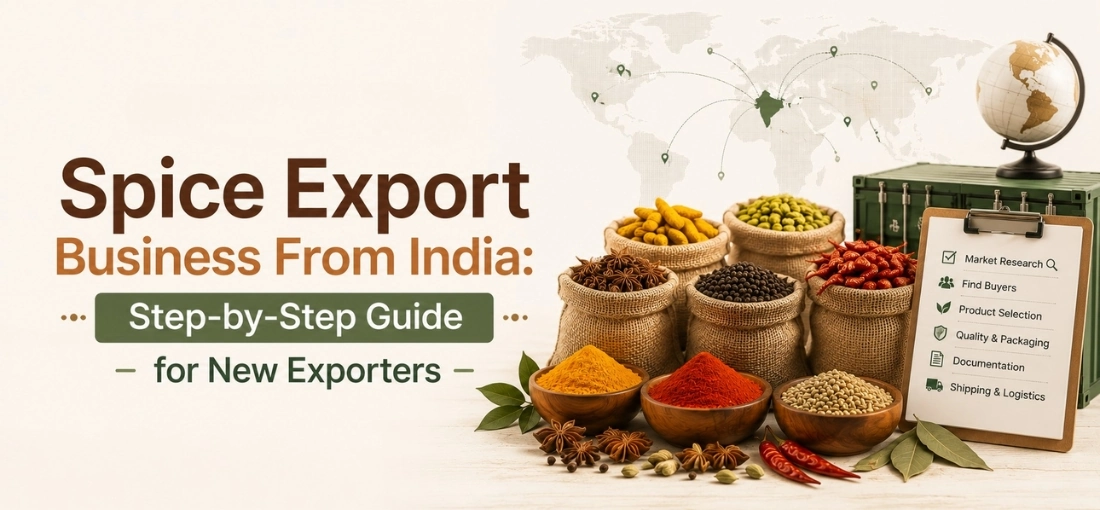
Between endless legal paperwork, tough international food safety rules, and hunting down foreign buyers who won't disappear when the final invoice is due, launching an agro commodity export firm takes actual legwork. If you're serious about getting into the trade, here is how the whole thing really works from day one.
Keep reading this informative piece of law, if you want to export spices in bulk , it will provide you all the vital information you need to start your business.

Setting Up the Legal Framework (Without Skipping Steps)
Before you even glance at spice samples or call up suppliers, you need to set up a legitimate business entity. Foreign trade banks and overseas customs agents won't take you seriously if you operate out of a casual personal account.
Most new bulk spices exporters start by setting up a Private Limited company or a Limited Liability Partnership (LLP). If you plan on taking on business partners or pitching for investor capital down the road, a Private Limited structure gives you the most flexibility. But even if you decide to keep it simple with a sole proprietorship to test the waters, make sure you set up a dedicated current bank account that handles foreign currency transactions effortlessly. You’re going to need it for wire transfers and Letters of Credit.
Once the company is officially registered and you have your PAN and GST numbers, you hit the mandatory licensing phase. And trust me, you cannot skip any of these.
First, head over to the DGFT portal and grab your spice exporter registration foundational code—your Importer Exporter Code, widely known as the IEC. This ten-digit code acts as your company's passport for international trade—without it, your cargo won't clear Indian customs.
Right after that, you need to secure your Certificate of Registration as an Exporter of Spices, or CRES, through the Spices Board of India. Under Indian law, trading or exporting any scheduled spice without a valid CRES is strictly illegal.
Lastly, apply for a Central FSSAI License through the food safety portal. Don't settle for a basic state-level food registration; exporting food products overseas requires central-level authorization proving your handling or storage setup meets national hygiene standards.

Merchant Exporter vs. Setting Up Your Own Factory
Once your paperwork is clean, you have a big operational choice to make: are you going to start as a merchant trader or a manufacturer exporter?
If you're starting out with limited capital to export spices in bulk , working as a merchant exporter is usually the smartest path. You don't need to drop millions on grinding machinery or steam sterilization lines. Instead, you source raw spices directly from major agricultural auction yards—like the massive Unjha market for cumin or Nizamabad for turmeric—and hire third-party processing plants to do the cleaning, sorting, or powdering for you. It keeps your overhead costs extremely low while you learn how the market moves.
On the flip side, starting as a manufacturer means setting up a dedicated facility with your own automated cleaning and steam lines. Sure, the machinery requires heavy capital upfront, but owning the processing line gives you complete power over batch purity. That kind of quality control gives you huge leverage when pitching picky buyers in Europe or North America who reject shipments over tiny defect rates.
How Do You Actually Land Legitimate Overseas Buyers?
Ask ten new exporters where they get stuck, and nine of them will point to finding reliable global spice buyers . It's easily the hardest part of starting out, especially when you are trying to filter out bad actors and non-payers.
Cold emailing randomly scraped trade leads rarely pays off these days. A much more reliable move is getting your product catalog listed on an active B2B spice marketplace. Serious bulk spice importers actively search those platforms to source vetted Indian exporters, which gets your offer in front of people who are already in buying mode.
It also pays to go where buyers gather in person—events like Gulfood in Dubai or the World Spice Congress. You learn more about what bulk spice buyers actually need over a quick ten-minute chat at a trade booth than over months of cold messaging. Outside of trade shows, you can also check buyer-seller registries run by the Spices Board or reach out directly to the trade desks inside Indian embassies overseas.
And here is a golden rule to protect your money: never ship a container on pure goodwill. Always demand either an irrevocable Letter of Credit at sight or a solid advance payment structure, like 30% upfront and 70% against proof of dispatch. On top of that, sign up for trade credit insurance through the Export Credit Guarantee Corporation of India, or ECGC. If a buyer suddenly goes bankrupt or defaults on payment after the container leaves port, ECGC covers the vast majority of your financial loss.
Quality Checks and Chemical Pitfalls to Watch Out For
Unlike dry hardware or manufactured goods, food cargo is constantly at risk of spoiling on the water if storage conditions drop even a little bit. Heat and moisture inside a container can turn an entire shipment moldy before it even reaches port.
That is why you should never load a shipment until an accredited lab tests your batch and issues a complete Certificate of Analysis. Port inspectors at your destination will thoroughly scan incoming spice containers for pesticides, heavy metals, mold spores, and bacteria like Salmonella.
Another area where new bulk spice exporters get caught off guard is microbial treatment. A lot of suppliers use Ethylene Oxide gas because it's cheap and kills bacteria fast. But European ports and several other markets test heavily for EtO and will reject entire shipments if they find even micro-traces. If you are shipping into regions with strict chemical bans, don't take chances—spend the extra money on steam sterilization. A rejected container overseas will quickly wipe out your profits once you factor in return shipping and destruction costs.
What Do Realistic Margins Look Like?
Plenty of newcomers jump into trade expecting 40 or 50 percent returns right away. But if you are dealing in raw, unprocessed commodities like whole cumin or coriander seeds, the reality is that profit margins are tight—usually landing somewhere around 5 to 15 percent depending on crop season fluctuations.
The real money lies in value addition. If you process those same raw spices into certified organic powders, custom masala blends, or essential oil extracts, your margins can easily climb past 25 or 30 percent.
Building a lasting trade business isn't about hitting a home run on your very first container. It comes down to getting your licensing right, staying strict on lab testing, locking down safe payment terms, and delivering clean products every single time. Stick to those fundamentals, and the volume will grow naturally over time.
Disclaimer
The information provided in this article is for educational and informational purposes only. Export regulations, licensing requirements, food safety standards, and international trade policies may change over time. New exporters should verify the latest DGFT, Spices Board of India, FSSAI, and destination-country regulations before starting an export business.

.webp "Top 10 Health Benefits of Cinnamon ( Daal Chini )")