
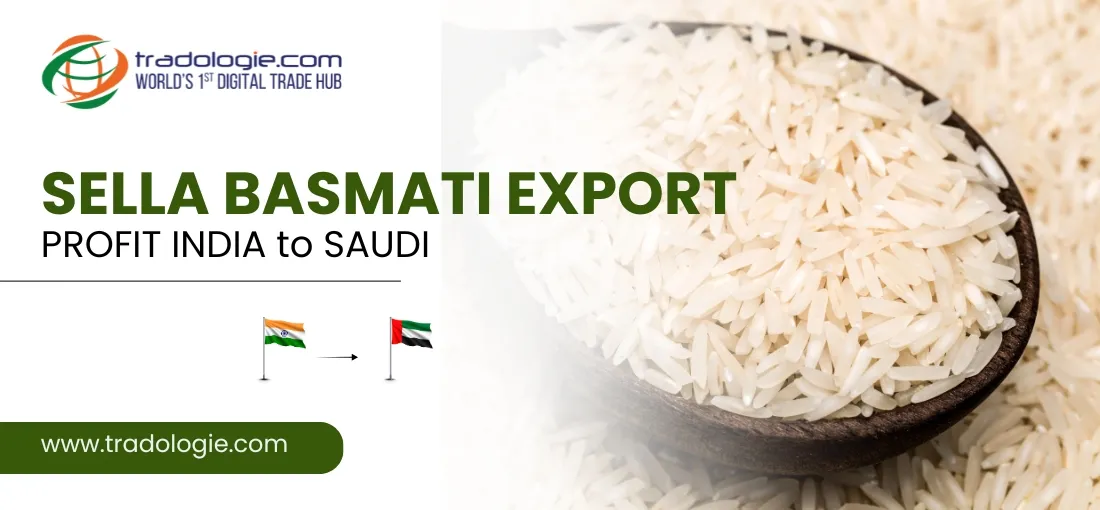
The global farming trade relies on specific routes. The flow of Sella Basmati rice from India to Saudi Arabia is one of the strongest. This specific grain is a huge deal for bulk exporters. It offers high volume and high value. Sella is also known as parboiled Basmati. It has become a basic need in the Middle East. It is a true culinary must-have.
However, you cannot just ship raw paddy from Indian farms to the Jeddah Islamic Port. Turning that paddy into a profitable CIF (Cost, Insurance, and Freight) delivery takes careful planning.
This guide breaks down the whole process. We will look at the money, the farming, the competition, and the trade rules.
The Math Behind the Grain: Costs and Margins
Making money in bulk farming exports is all about tiny details. Your profit is the gap between two numbers. The first number is your buying price at the local mandi (market). The second number is your final selling price to the Saudi buyer.
Net profit margins usually sit between 6% and 12%. This depends on how smoothly you run your business.
Here is a simple look at the costs. This is for exporting one metric tonne (MT) of 1121 Golden Sella Basmati:
| Cost Component | Estimated Cost (USD/MT) | Percentage of Total Cost |
|---|---|---|
| Raw Paddy Procurement & Transport | $600 - $650 | ~60% |
| Milling, Parboiling & Processing | $120 - $150 | ~14% |
| Packaging (e.g., 40kg PP bags) | $30 - $40 | ~3% |
| Inland Freight & Port Handling (FOB) | $50 - $70 | ~6% |
| Ocean Freight (India to Jeddah/Dammam) | $80 - $120 | ~10% |
| Insurance & Certifications | $15 - $25 | ~2% |
| Exporter Gross Margin | $80 - $150 | ~5% - 15% |
Source context: Generalized industry averages derived from Indian bulk agricultural export benchmarks and historical port data.
Why Saudi Arabia Runs on Sella Basmati
Basmati rice brings a lot of money into India. Yet, the Sella type is the real star in Saudi Arabia. Why is this the case?
The answer is simple. Traditional Saudi dishes, like Kabsa and Mandi, need a very strong rice. The grains must survive long cooking times. They cannot break apart. They also cannot get sticky.
Sella Basmati goes through a special boiling process. This locks the starch inside the grain. As a result, the rice gets incredibly strong. Saudi buyers love this. They buy massive amounts of 1121 and 1509 Golden and White Sella. This creates a steady demand for exporters. The market does not drop easily. Therefore, traders can lock in safe, long-term deals.
From Paddy to Parboiled: The Farm-Level Reality
Making a profit starts right at the farm. The best long-grain rice grows mostly in Punjab, Haryana, and Western Uttar Pradesh. The top types are Pusa 1121, 1509, and the newer 1718.
Turning raw paddy into export-ready Sella takes money and energy. Here is how the process works:
- First, workers soak the raw paddy.
- Next, they steam it under high pressure.
- Finally, they dry the grains before milling.
This process makes the grain hard. It also pushes healthy vitamins from the outer layer into the center. This makes the rice healthier.
From a business view, this process is pure gold. Normal raw basmati loses 15% to 20% of its grains to breakage during milling. Sella processing drops this loss to just 5% to 10%. More whole grains mean more profit for the exporter.
Keeping the Rice Safe: Moisture, Molds, and Transit Risks
Moving rice from the mill to the port is a risky journey. Threats from nature are everywhere. In just a few days, biological issues can completely wipe out your profits. Therefore, export-grade Sella rice needs to be perfectly dry. You have to keep the moisture level tightly controlled. It must stay strictly between 12% and 13%.
Why does this exact number matter so much? It comes down to the weather on the water. Ships travel through the Arabian Sea and the Red Sea. The air in these areas is packed with heavy humidity. When rice is too wet, trouble starts. Dangerous molds, known as aflatoxins, will begin to grow. Once this happens, the entire batch is ruined.
Along with staying dry, the rice must stay clean. Strict cleaning rules are an absolute must. Exporters rely on pest-control chemicals. Two common choices are Aluminum Phosphide and Methyl Bromide. Workers apply these treatments at the very end of the packing process. They do this right before sealing the heavy shipping containers closed. Taking this step ensures bugs cannot take over during the trip.
There is one final hurdle to clear. Exporters have to secure special paperwork. These are called Phytosanitary Certificates. Indian farming officials issue these important documents. Having this certificate proves the shipment is healthy and clean. It gives a green light long before Saudi inspectors ever open the doors.
Need help with export documentation?
Don't let missing paperwork or incorrect classification codes delay your shipment at the Jeddah port. Find exactly what you need to clear customs smoothly: [See complete HSN Code List]
The Big Numbers: How Much Rice Are We Actually Moving?
We need to look closely at the data to understand the true size of this market. The numbers involved are simply massive. An agency called APEDA tracks these shipments. Their data shows India exports an incredible amount of Basmati rice. The yearly total reaches over 4.5 million metric tonnes (MT).
Within this global market, Saudi Arabia stands out. They are consistently a top-tier buyer. In fact, they absorb about 20% to 25% of that massive total. In real weight, that equals more than 900,000 MT every single year. There is even better news for Sella producers. Sella is the preferred choice for this region. Over 70% of the Basmati shipped to Saudi Arabia is the Sella variety.
Bulk traders look at these facts and see a huge market. However, they also see a highly crowded field. Competition is fierce everywhere you look. To win the game, you have to trade in giant volumes. Successful exporters do not move small loads. They ship out thousands of tonnes every single month. To carry this weight, they rely on massive break-bulk ships. Sometimes, they use hundreds of standard containers instead.
Moving goods at this massive scale unlocks a major advantage. It allows exporters to demand much cheaper freight rates from shipping lines. Keeping shipping costs low is the ultimate goal. It is the best way to protect hard-earned profit margins.
Following the Money: Currency Risks and Getting Paid
Bulk trade profits are not just made in the fields. They are made in the finance office.
Saudi buyers often ask for extra time to pay. They might want 60 to 90 days. A lot can go wrong during that waiting period. The biggest risk is currency changes. Imagine the US Dollar to Indian Rupee rate shifts by just 5%. That tiny swing can wipe out a normal profit margin. A winning deal can turn into a total loss before the money even arrives.
Smart exporters fight this risk. They use forward contracts to lock in exchange rates. This is called Forex hedging. They also protect themselves from bad buyers. They ask for strict Letters of Credit (LC). Alternatively, they use a rule called Documents Against Payment (DP). This means the buyer cannot get the rice until they actually pay for it.
Government Rules and Red Tape
You have to follow the rules to play the game. Government laws are a massive part of bulk trade.
The Indian government often sets a Minimum Export Price (MEP) for Basmati rice. They do this to keep enough food inside India. It also stops cheap rice from being sold under a fake Basmati label. Recently, the MEP has bounced between $950 and $1,200 per MT. Exporters must watch these numbers daily. A sudden jump in the MEP can ruin a cheap Sella contract overnight.
Saudi Arabia has its own strict rules. The Saudi Food and Drug Authority (SFDA) checks everything. They are very strict about chemical bug sprays. If a shipment has too much pesticide, the SFDA will reject it instantly. Because of this, exporters cannot just buy blind. They must work directly with farmers to ensure safe and clean growing methods are used.
Who Actually Buys the Rice in Saudi Arabia?
Saudi Arabia is a huge country. Different regions want different things.
Golden Sella is very popular. People love its yellow color and unique taste. It is perfect for big party meals. White Sella is different. It sells steadily because people eat it every single day at home.
When you ship in bulk, you sell to other businesses (B2B). You do not ship tiny 1kg bags. Instead, you pack the rice in big 10kg, 20kg, or 40kg sacks. These sacks are made of jute or woven plastic.
The buyers are located in cities like Riyadh, Jeddah, and Dammam. These buyers do two things. First, they supply giant food companies that feed Hajj and Umrah pilgrims. Second, they put the rice into their own branded bags to sell in local stores.
What Could Go Wrong? Future Risks to Watch
The India-Saudi Sella trade is very strong. However, it still faces big outside threats.
Political fights near the Red Sea can cause huge problems. They make shipping costs and insurance prices skyrocket. This eats right into the exporter's profits. Climate change is another huge fear. Bad monsoon rains in Northern India can ruin a whole year's crop.
Smart export companies are preparing for the worst. They do not rely on just one shipping company. They lock in their money rates early to avoid currency shocks. They also invest money directly into the farms. By controlling everything from the dirt to the Saudi port, exporters stay safe. They protect their money from a very wild global market.
Ready to scale your Basmati exports?
The India-Saudi trade lane is highly lucrative for those who move fast and partner right. Connect with verified bulk buyers and reliable global suppliers today to secure your margins:
[Buyer Registration] | [Seller Registration]
Frequently Asked Questions
Q: Why does Saudi Arabia prefer Sella Basmati?
A: Its parboiling process hardens the grain, making it perfect for long-cooking traditional dishes like Kabsa without breaking or turning sticky.
Q: What is the average profit margin for this trade?
A: Net profit margins typically range from 6% to 12%, depending heavily on local procurement costs, ocean freight, and currency exchange rates.
Q: What is the mandatory moisture level for shipping?
A: Sella must be strictly dried to a 12% - 13% moisture level to prevent mold and aflatoxins during the humid sea transit.
Q: Who is India’s biggest global competitor?
A: Pakistan. While India controls 65% to 70% of the Basmati market, Pakistan holds the remaining 30% to 35% and competes fiercely on price.
Q: What is the Minimum Export Price (MEP)?
A: It is a government-set price floor (historically bouncing between $950 and $1,200 per MT) used to ensure domestic food security and regulate trade.
Q: How do exporters handle currency and payment risks?
A: They use Forex hedging (like forward contracts) to lock in exchange rates and require strict Letters of Credit (LC) to guarantee payment.



.webp "Rabi Crops List 2026 — Complete Guide with Producing States, Season and Examples")
-(2).webp "Top High Demand Herbal Commodities for Export 2026 Market Guide")
.webp "How to Build a Global Network of Agricultural Importers & Exporters")