
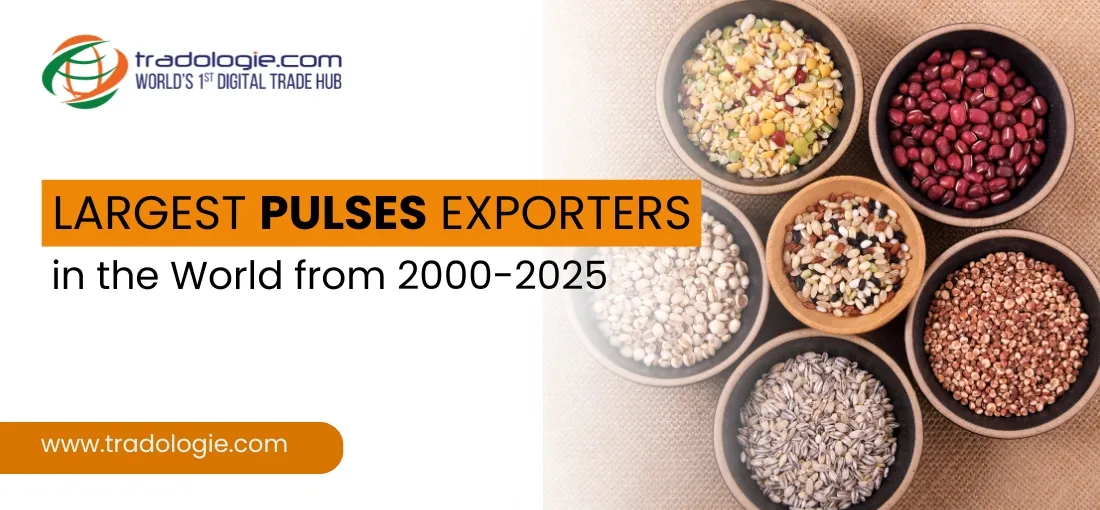
The economy of farming around the world has changed a lot in the last 25 years. This is especially true for the field of pulses that are high in protein. We're talking about beans, lentils, dry peas, and chickpeas.
The trade in these crops grew quickly between 2000 and 2025. It changed from small, local trades to a huge, global market. People around the world think differently about food security these days. At the same time, there is a huge demand for protein from plants. Because of this, people who work in farming need to know how this business works. Traders and lawmakers need to know these things too in order to do business smoothly in the global market.
Top Pulses Exporters (2000-2025)
First, we need to look at the top global suppliers. We must do this before looking at the weather and economic trends that shape the market. The data below covers a 25-year period. It comes from the USDA Foreign Agricultural Service and FAOSTAT. Over this time, a few specific nations have clearly led the way in exports.
Table 1: Largest Pulses Exporters in the World (Historical & 2025 Projections)
| Exporting Nation | Primary Commodities | Global Market Share (Est.) | Strategic Trade Role |
|---|---|---|---|
| Canada | Lentils, Dry Peas | 35% - 45% | The clear leader in volume. It is also a pioneer in processing these crops into plant-based proteins for export. |
| Australia | Chickpeas, Lentils | 15% - 20% | A key supplier during the off-season. It uses highly advanced, machine-operated ports. |
| Myanmar | Black Gram, Pigeon Peas | 8% - 12% | A traditional powerhouse. It supplies South Asia through land and sea routes. |
| United States | Dry Beans, Lentils, Peas | 7% - 10% | A diverse exporter of high-value crops. It focuses on the Americas, Europe, and markets demanding high quality. |
| Russia/Türkiye | Dry Peas, Chickpeas | 5% - 8% | Fast-growing sources in the Black Sea area. They act as major transit and processing hubs for the Middle East and North Africa. |
| India | Specific Chickpeas/Lentils | Varies (3% - 5%) | The ultimate market driver. It plays a dual role as the world's largest consumer and a key exporter of specific types. |
1. Macro-Trends Driving the Global Pulses Trade
A huge amount of pulses moves across the oceans today. This massive movement has major effects on the world. The OECD-FAO Agricultural Outlook shared some interesting numbers about this. From 2010 to 2020, the global trade of pulses grew by about 3% every year. It reached over 92 million metric tons in total.
By 2025, a growing world population continues to support these large numbers. There is also a huge shift toward eco-friendly diets in Western countries. This change forced the whole industry to upgrade. In the past, workers simply put bags of crops into the bottom of ships. Now, companies use advanced, massive bulk containers and giant cargo ships.
2. North America’s Dominance and the Processing Boom
Canada and the United States have kept their export numbers high. But they have also changed exactly what they sell to the world. Over the last ten years, the alternative meat industry has grown fast. Because of this, dry peas are no longer just a simple food item. They are now a highly desired raw material for factories.
Let's look at the Global Trade Profiles 2025. This report shows that Canada ships over 4.2 million tons of pulses every year. This creates more than US$1.6 billion in revenue. However, Canada doesn't just ship raw peas anymore. A large amount goes to local processing plants instead. These plants pull the protein out of the peas to sell overseas. This strategy adds a lot of extra value to the crops. It helps North America make the most profit in the global supply chain. It also protects traders when the prices of basic crops drop too low.
3. Australia and the Oceanic Export Strategy: Navigating Weather
Australia plays a special role in this global market. It grows crops during the opposite season of the Northern Hemisphere. This allows Australia to step in when other countries run out of supply. The country's farming industry focuses heavily on two main regions. These are the Middle East and the Indian subcontinent, which constantly need more pulses.
However, Australia's success depends heavily on the weather. Strange climate events control how much extra crop the country has to sell. Here is how weather impacts the trade:
- El Niño and La Niña: These global weather patterns decide if there will be extra crops to export.
- Droughts: During severe dry spells, Australian chickpea exports can drop sharply. This causes prices to shoot up in the countries that need them.
- Good Rainfall: When it rains well, Australia can capture up to 23% of the global chickpea export market. This is worth over US$357 million.
When times are good, Australia moves these crops very fast. They use highly advanced, machine-run ports in cities like Brisbane and Adelaide.
4. The Asian Corridor: India's Market-Making Dynamics
You cannot understand the pulse trade without looking at Asia. The Indian subcontinent is especially important. India is quite unique, and it basically sets the prices for the whole world. It plays three major roles at the exact same time:
- It is the world's largest producer. It grows about 24% of the global supply.
- It is the biggest buyer, or importer, of pulses.
- It is also a very smart and strategic exporter.
For farming business experts, India is the main driver of the market. India often buys massive shipments from Canada and Myanmar. It does this to make up for local shortages. Yet, at the exact same time, it exports specific types of chickpeas and lentils. In fact, India holds about 15% of the global export market for these specific varieties. It mainly sells them to Indian communities living in other countries.
If you want to trade here, you must pay close attention. You need to know how much crop India expects to grow locally. You also need to watch the monsoon rains closely. These two factors decide exactly how India will act in the global market each year.
5. Geopolitics and Tax Volatility in Farm Trade
Weather is the biggest unpredictable factor in farm trade. Global politics is easily the second biggest. Between 2000 and 2025, the pulses market faced massive shocks from tax changes. The global trade of these crops reacts very strongly to new government rules. Often, countries announce these changes with almost no warning.
We saw a perfect example of this in the late 2010s. Major buying countries suddenly set strict limits on how much could be imported. They also added very high taxes on imported goods. They did this to protect their own local farmers. Sometimes, these import taxes can jump from 0% all the way to 60%. This can happen in just a few months.
Because of this danger, large exporters must be very smart. They have to plan their finances carefully. They must lock in contracts ahead of time. They also need to predict global political moves. If they fail to do this, they could end up with millions of dollars of crops stuck at foreign ports.
6. The Black Sea Disruption: Emerging Origins
The map of pulse exporting countries grew a lot between 2015 and 2025. The Black Sea region became a major player. Russia led this new movement. Türkiye also played a huge role as a massive processing and shipping hub. Together, they shook up the usual pricing rules around the world.
They did this by planting a lot more dry peas. The region quickly changed from a small supplier into a very powerful one. They started supplying large amounts of crops to Asia and the Middle East. This challenged the grip North America had on global prices. It was especially noticeable in buying countries that cared heavily about finding the lowest cost.
7. Logistics, Ocean Freight, and Bulk Handling Realities
At the end of the day, trading pulses globally is all about logistics. Moving these crops physically requires very careful planning. If you are not careful, moisture can easily ruin the crops during the long ocean trips.
The years after 2020 brought some very rare and extreme challenges to shipping. These are often called "black swan" events. The cost to ship goods across the ocean went up and down wildly. There were also terrible shortages of shipping containers. On top of that, ports became incredibly backed up and crowded.
These issues changed how companies make money when shipping cheap, bulk goods. Today, successful exporters are not just selling pulses anymore. They are really selling trust and reliable shipping lines. Exporters must lock down long-term deals with shipping boats. They also have to become experts in moving massive amounts of goods safely. In fact, mastering logistics is now just as important as growing a good crop.
Conclusion and Strategic Trade Resources
The story of the top pulses exporters from 2000 to 2025 shows a clear pattern. This industry grew up from small regional farms. It is now a main pillar that keeps the world fed. Certain nations climbed to the very top of this global trade. They did this by combining modern farming science with smart processing plants. They also built incredibly strong, reliable ports.
For traders and sellers, keeping a good profit is not easy anymore. It requires a very deep understanding of broad economic changes. You must also study climate data carefully. Most importantly, you have to follow international customs rules perfectly.
To ensure your bulk agricultural shipments are accurately classified and navigate global customs seamlessly:
👉 See complete HSN Code List 👉 HSN Code Finder Tool 👉 See Complete IEC code list
.webp "How to Build a Global Network of Agricultural Importers & Exporters")