
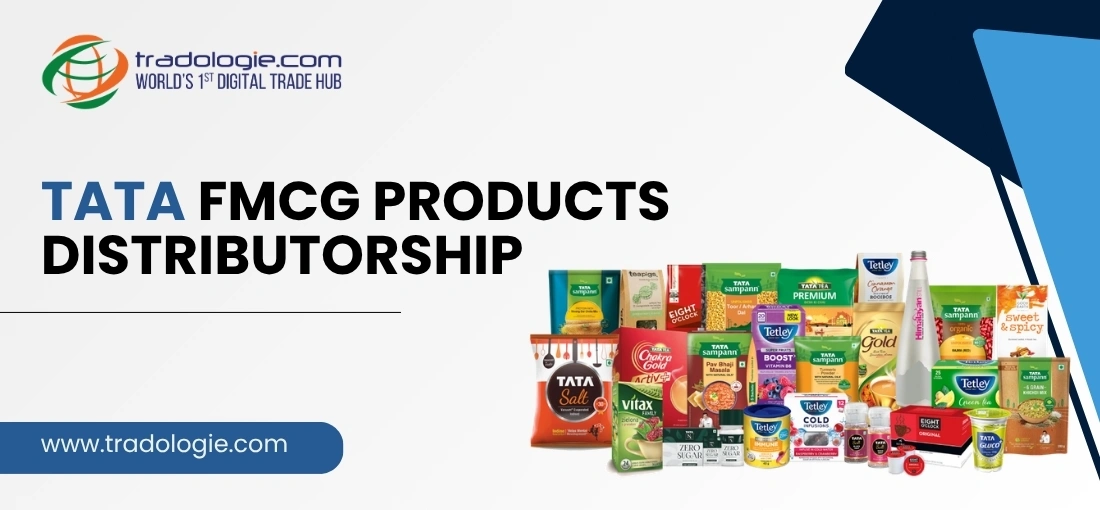
Want to become a Tata FMCG distributor? You have to apply online. Go to the official Tata Consumer Products Limited (TCPL) website. You can also get in touch with regional sales managers directly.
To get a real contract, you have to follow strict rules. You need to have worked in FMCG before. You also need to put in between ₹60 Lakhs and ₹2 Crores. You also need a commercial warehouse with 500 to 700 square feet of space. Applicants must send in clear paperwork. This includes your PAN card, GST registration, and bank statements that have been certified.
Mapping out the territory is part of the standard approval process. It also includes a physical audit of the warehouse. It usually takes 3 to 6 weeks to finish this whole thing. You get a contract if you do well. This lets you sell everyday items and high-end drinks in your area.
How to Apply for a Tata FMCG Distributorship: A Simple Guide
Getting a distributorship with Tata Consumer Products Limited (TCPL) is a smart business move. It lets you enter a massive, well-run supply chain. Tata's network reaches over 275 million Indian homes. It also supplies 4.5 million retail shops.
The company recently reported huge revenues of over ₹17,600 crore. This is a highly profitable space for B2B investors and bulk traders. There is always strong consumer demand. Furthermore, the Tata brand name is deeply trusted across the country.
How the Supply Chain Works and Who to Contact
The corporate website is the official starting point. However, the best way to get a distributorship is often through direct networking. Successful distributors usually contact regional staff directly. This helps them find empty territories quickly.
First, you must understand the FMCG supply chain flow:
- Company Depot
- CFA (Carrying and Forwarding Agent)
- Super Stockist
- Urban/Rural Distributor
- Retailer
As a new applicant, you will likely apply to be a Rural or Urban Distributor. Therefore, you should contact the state-level Area Sales Manager (ASM). You could also approach the regional Super Stockist.
Before you reach out, make sure you meet the basic rules:
- Industry Experience: You must have a proven background in FMCG distribution or B2B bulk trade.
- Available Cash: You need enough money to keep your business running. You must also be able to offer 7 to 15 days of credit to big retail shops.
- Clean Record: You must not have a history of unpaid debts. You should also have no major business lawsuits against you.
Product Categories and Expected Profit Margins
A good distributor must manage many different types of products. This means you need different zones in your warehouse. For example, dry goods must be kept away from cold drinks. Knowing the product types helps you guess your future profits.
- Beverages: This includes Tata Tea, Tetley, and Eight O'Clock Coffee. These sell in huge numbers and bring in steady cash.
- Foods and Staples: This covers Tata Salt and Tata Sampann. It includes whole spices, pulses, and India's top iodized salt.
- Snacks and Ready-to-Eat: Tata Soulfull falls here. It offers healthy, millet-based cereals for city shoppers.
- Drinks and Hydration: Brands like NourishCo, Himalayan water, and Tata Gluco+ need fast delivery.
What are the profit margins?
Margins change based on the area and your business size. High-volume daily items like Tata Salt offer lower margins. These are usually between 3% and 5%. However, they guarantee fast cash flow. On the other hand, premium items offer better returns. Products like Tata Soulfull or Tetley Green Tea can give you margins of 8% to 12%.
Money, Space, and Technology Requirements
Tata expects its partners to have strong delivery setups. The amount of money and space you need depends on your target area. Most importantly, modern distribution relies heavily on technology.
Distributors must use special software called a Distributor Management System (DMS). This software handles automated billing. It tracks your stock in real-time. It also plans the best routes for your delivery trucks. This keeps your daily sales data synced directly with the main Tata company.
| Requirement Category | Minimum Need | Business Purpose |
|---|---|---|
| Warehouse Space | 300 - 500 sq. ft. | Safe, pest-free storage. Needs separate areas for dry goods and drinks. |
| Office Space | 150 - 200 sq. ft. | Used for daily paperwork, running DMS software, and staff meetings. |
| Security Deposit | ₹2 Lakhs - ₹5 Lakhs | Changes by area. It acts as refundable security money given to Tata. |
| Working Capital | ₹60 Lakhs - ₹2 Crores | Used to buy 10 to 30 days of stock. Also covers credit given to retailers. |
| Transport Fleet | 1-2 Delivery Vehicles | Needed for daily, on-time deliveries to local shops and supermarkets. |
Important Documents Needed to Apply
Checking your paperwork is the very first step. Make sure all these documents are scanned. They must also be legally signed before you apply.
- Business Registration: Your Certificate of Incorporation, Partnership Deed, or Proprietorship papers.
- Tax Documents: Your active GST Registration certificate and your Company PAN Card.
- Identity Proof: The Aadhaar Card and PAN Card of the main business owners.
- Financial Proof: Certified bank statements from the last 6 months. You also need IT returns for the past 3 years. A letter from your bank showing financial health is also required.
- Property Documents: The rent agreement or ownership papers for your warehouse and office.
Step-by-Step Guide: Online vs. Offline Application
You need to know the difference between applying on the internet and applying in person. This makes the process much smoother.
How to Apply Online:
- Step 1: Go to the official Tata Consumer Products website.
- Step 2: Click on the 'Partner With Us' or 'Contact Us' page.
- Step 3: Fill out the distributor form carefully. Clearly state how much money you can invest. Also, state the city or area you want.
- Step 4: Submit your business profile. Then, wait for the regional team to review it and call you.
How to Apply Offline (Better Success Rate):
- Step 1: Find the nearest TCPL regional office. You can also look for the nearest major CFA warehouse.
- Step 2: Book a face-to-face meeting with the Area Sales Manager (ASM) or Regional Sales Manager (RSM).
- Step 3: Hand them your business folder in person. Make sure to talk about your current retail connections. Also, highlight your warehouse space and your readiness to use their DMS software.
Approvals, Timelines, and Assigned Areas
After you apply, the company checks everything carefully. A team will visit your proposed warehouse. They will check the total size. They will look at how clean it is. They will also see if large delivery trucks can easily park and unload there.
The whole checking process usually takes 3 to 6 weeks. After that, the company will assign you a specific area. This is strictly controlled.
Depending on how crowded the market is, Tata might give you an exclusive territory . This means you are the only distributor allowed to sell in a certain pin code. Or, they might give you a non-exclusive territory . This happens a lot in big, busy cities. These rules are clearly written in your final contract. This stops distributors from stealing each other's customers.
Growing Your Business with Bulk Trade Platforms
Some distributors want to grow beyond local shops. Expanding into the bulk trade of farm goods is a huge opportunity. When you plan your supply chain, using global B2B platforms is very helpful.
A platform like Tradologie is a great example. It helps distributors import and export basic farm goods easily. Tradologie lets you talk directly to global factories and farmers. It cuts out extra middlemen.
If you handle a large amount of FMCG goods, these platforms are very useful. They offer clear prices and safe payment methods. They help you buy large amounts of food staples easily. This is a great match for a big local distribution business.
Farming Roots and Global Trade Facts
Tata's success comes from its strong farming network. Brands like Tata Sampann work directly with farmers. They focus heavily on Good Agricultural Practices (GAP).
Legumes and pulses are great for the environment. Data from the Harvard T.H. Chan School of Public Health supports this. They note that these crops release much less greenhouse gas than other plants. This fits perfectly with global green goals.
Also, trade data shows Tata exports huge amounts of goods globally. For example, shipping records show the company sends massive 22,800-kilogram loads of black tea to the UK. Understanding this global trade is important for local sellers. It proves that the products sitting in your warehouse meet the absolute highest global quality standards.
Frequently Asked Questions (FAQs)
How do I apply online for a Tata FMCG distributorship?
You can apply by visiting the 'Contact Us' section on the official Tata Consumer Products website. Fill out the form, share your business details, and state your investment budget.
Who should I contact for local distributorship openings?
The best way is to contact the Area Sales Manager (ASM) at the nearest Tata regional office. You can also ask an existing regional super-stockist about empty pin codes.
Will I be the only distributor in my area?
It depends. Your area can be exclusive or non-exclusive. This depends on how crowded the city is. It also depends on whether you are selling mass-market salt or premium teas.
How much total money do I need to start?
You need between ₹60 Lakhs and ₹2 Crores. This money pays for warehouse rent, security deposits, delivery trucks, and the cash needed to buy your daily stock.
What are the expected profit margins for Tata products?
Profit margins vary by category. High-volume staples like Tata Salt offer 3% to 5%, while premium products like Tata Soulfull or Tetley Green Tea yield higher returns of 8% to 12%.



.webp "How to Get ITC FMCG Distributorship in India: Aashirvaad, Sunfeast & Bingo Products")