Key Highlights
- Britannia is one of India's oldest FMCG brands , founded in 1892.
- Popular products include Good Day, Marie Gold, Tiger, Little Hearts, and Britannia cakes.
- Starting a Britannia distributorship typically requires ₹8 lakh to ₹20 lakh investment.
- Distributors usually need 500-1,000 sq. ft. warehouse space and delivery logistics.
- Distributor profit margins generally range between 4% and 8% in the FMCG sector.
- Application involves contacting Britannia regional offices, submitting business details, and signing a distribution agreement.
Introduction
Some brands don't just sell products; they quietly become part of people's childhood.
For many Indians, Britannia is one of those names.
School tiffin boxes carrying packs of Little Hearts.
Evening tea accompanied by Good Day biscuits.
The familiar taste of Marie Gold that somehow appears in almost every household at some point.
The thing is, these memories stretch across generations. Parents who grew up eating Britannia biscuits often end up buying the same brands for their children years later.
But behind those everyday moments sits something much larger; a massive FMCG distribution system.
Because getting millions of biscuit packets onto store shelves across India doesn't happen by chance. It happens through a network of distributors, wholesalers, and retailers working quietly in the background.
And that's exactly where the opportunity begins for entrepreneurs interested in a Britannia distributorship .
If you've ever considered entering the FMCG distribution business, let's take a practical look at how to get Britannia distributorship , what the investment may look like, and how the application process usually unfolds.
A Quick Look at Britannia's Legacy
Britannia is not just another food company in India. The brand's magnificent history goes back to at least more than a complete century if you don't know in case.
Founded in 1892, the company has grown into one of India's largest food brands, particularly in the biscuit and bakery segment.
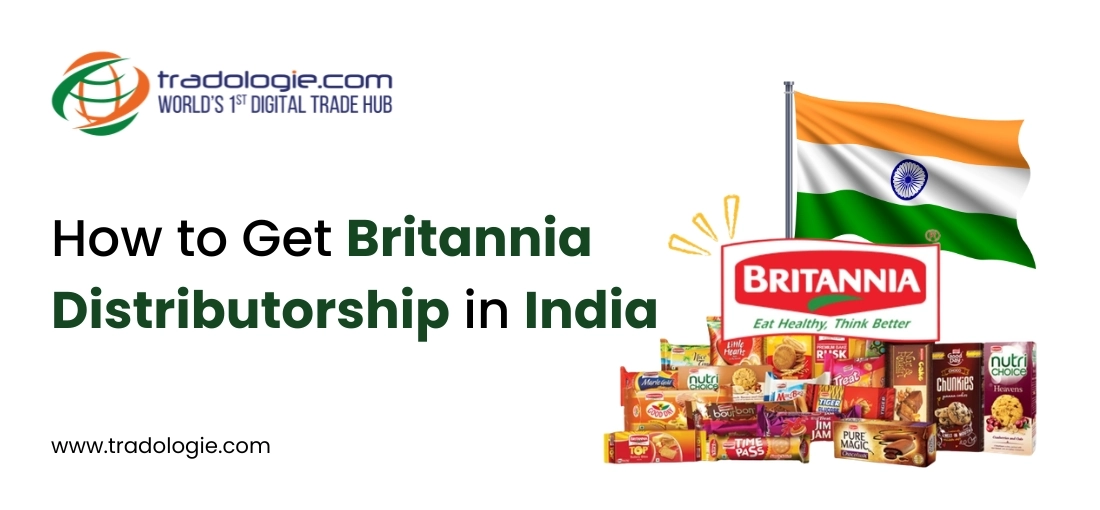
Over the years, Britannia has introduced several well-known products such as:
- Good Day biscuits
- Marie Gold
- Little Hearts
- Tiger biscuits
- NutriChoice range
- Britannia cakes and breads
You'll notice something interesting about these products. And that is most of them fall into the category of daily or frequent consumption items. That literally means retailers need to restock them regularly.
Which naturally creates strong demand within the FMCG distribution network and a profitable bid to become a Britannia distributor.
Why FMCG Distribution Is a Stable Business
The thing about FMCG products is that they move quickly through the market.
A pack of biscuits may sit on a shop shelf for only a few days.
Snack items often sell even faster.
And grocery stores constantly reorder popular brands.
Retailers therefore depend heavily on local distributors to maintain steady supply.
A distributor typically supplies products to:
- kirana stores
- supermarkets
- small wholesalers
- local grocery retailers
Once these relationships develop, orders tend to become regular. That's why FMCG distribution businesses often rely more on volume and consistency than on large profit margins.
Investment Required to Get Britannia Distributorship
The answer to how to get Britannia distributorship is incomplete before knowing the investment required. So, let's talk about the practical side; the investment.
Truth be told, the exact investment depends on the city, market size, and distribution territory. But generally speaking, starting a Britannia distributorship may require an investment somewhere between ₹8 lakh and ₹20 lakh.
This investment usually includes:
- distributor security deposit
- warehouse or storage space
- initial inventory purchase
- delivery vehicles or logistics setup
- working capital for regular stock supply
The thing is, FMCG distributors need enough stock to supply retailers consistently. Running out of products too often can disrupt retailer relationships.
So maintaining adequate inventory becomes an important part of the business.
Space and Infrastructure Requirements to Get Britannia Distributorship
So, what about the overall infrastructure needed to get Britannia Distributorship?
Well, a Britannia distributor generally operates from a warehouse or storage facility which is typically around 500 to 1,000 square feet depending on the territory.
Unlike dairy distribution, biscuit and bakery products usually do not require cold storage, which makes storage easier.
However, distributors still need:
- organized storage racks
- proper inventory management
- delivery vehicles or vans for supply
Because once a distributor begins supplying dozens of retailers across a city, logistics efficiency becomes extremely important.
Profit Margin in Britannia Distribution
Now comes the question most people quietly calculate; the margins.
In the FMCG industry, distributor margins are usually moderate but steady.
For biscuit and packaged food products, distributor margins often fall between 4% and 8%, depending on the product category and promotional schemes.
For example:
- high-volume biscuit products may have moderate margins
- premium products sometimes offer slightly higher margins
- company incentives or schemes may increase overall profitability
The thing about FMCG distribution is that earnings often come from sales turnover.
A distributor supplying hundreds of shops regularly can generate strong monthly revenue through consistent product movement.
Basic Requirements to Become a Britannia Distributor
Now if you're wondering about eligibility, the requirements are generally straightforward.
Companies like Britannia usually look for distributors who have:
- sufficient working capital
- warehouse infrastructure
- delivery logistics capability
- basic business experience in trading or distribution
The thing is, distribution is less about academic qualifications and more about operational efficiency and retailer relationships.
Distributors who build strong networks with local retailers often grow their business faster.
Application Process for Britannia Distributorship
Now let's talk about the application process.
Many people assume it's complicated, but in reality it follows a fairly familiar pattern.
First, you typically contact Britannia's regional sales office or distribution team and express your interest in becoming a distributor.
After that, well… you essentially submit your distributorship proposal.
Pretty much the usual routine in most FMCG supply partnerships.
You'll usually share details about:
- your business background
- warehouse or storage facilities
- city or distribution territory
- investment capacity
Once the company reviews the information, they may evaluate the market potential and discuss territory allocation.
If everything aligns with their distribution plans, the next step usually involves finalizing the distributor agreement and placing the initial stock order.
And that's when the distribution business actually begins.
Can Online B2B Platforms Help in Finding Distribution Opportunities?
Now here's something that's becoming increasingly common in today's trade ecosystem.
Many entrepreneurs explore online B2B trade platforms to discover supplier partnerships, dealership opportunities, and distribution networks.
These platforms often connect:
- manufacturers
- distributors
- wholesalers
- bulk buyers
The thing is, they function as digital marketplaces for business networking.
Such platforms can still help entrepreneurs explore broader FMCG supply chain opportunities, while major FMCG distributorships like Britannia are typically finalized through direct company channels,
Final Thoughts
The thing about Britannia distributorship is that it sits within one of India's most active consumer markets — packaged foods.
Biscuits, cakes, and snack products continue moving steadily through the retail market. Grocery stores restock them frequently, and consumers keep buying them regularly.
That consistent demand creates opportunities for distributors who can manage supply efficiently.
Of course, success depends on things like logistics management, retailer relationships, and steady stock availability.
But once the distribution network begins to run smoothly, the business can become quite stable.
Sometimes the products that remind people of their childhood are also the ones quietly moving through thousands of store shelves every single day.
Disclaimer: The information provided in this article is for general informational purposes only. Investment costs, profit margins, infrastructure requirements, and the application process for a Britannia distributorship may vary depending on company policies, location, and time. Readers are advised to verify the latest details directly with Britannia Industries Ltd. or its authorized representatives before making any financial or business decisions.