Key Highlights
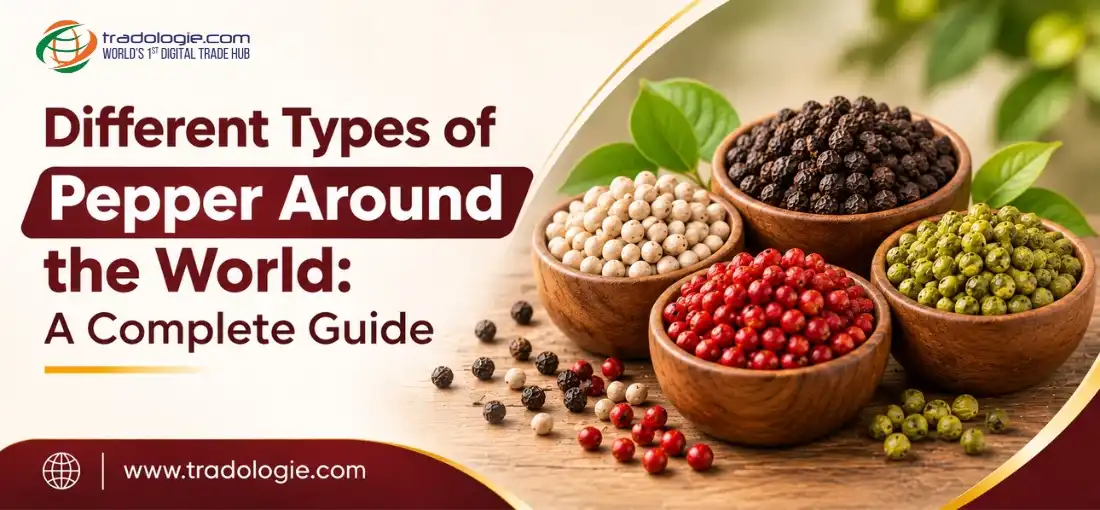
- The 10 different types of pepper around the world include Black Pepper, White Pepper, Green Pepper, Red Peppercorns, Tellicherry, Malabar, Lampong, Sarawak, Muntok White Pepper and Brazilian Black Pepper.
- Black, white, green and red peppercorns come from the Piper nigrum plant but differ in harvesting maturity and processing methods.
- Vietnam, Indonesia, Brazil, India, Sri Lanka and Malaysia are important pepper-producing and exporting countries.
- The global pepper market was estimated at approximately US$1.63 billion in 2025, based on its estimated 18.9% share of the global spices market.
- Indonesia and Brazil led whole dried pepper exports in 2024, while India was the leading exporter of crushed or powdered pepper.
Introduction
Pepper is one of the most widely traded spices internationally. There are a number of different types of pepper available, including whole black, white, green and specialty regional varieties.
Understanding the different varieties of pepper around the world is important to understand what is available. The most common types of pepper include black pepper, white pepper and green pepper. All of these have different uses; black pepper is very commonly used in seasoning mixes and food items. White pepper is a popular choice due to its light colours. Green pepper has a more fresh and mild taste.
The pepper market is a significant sector of the spice market. In 2025 the global spices market was worth around US $ 8.6 billion.The market is forecast to be worth US 13.1 billion by 2033. Pepper accounted for an estimated 18.9% of the market's revenue in 2025. Applying this share to the overall market valuation gives an indicative pepper segment value of approximately US$1.63 billion. This is a calculated estimate, not a separately reported market valuation.
Types of Pepper Overview
There are a number of different varieties of pepper. However not all are from the same family.
Black, white, green and ripe red pepper are all true peppercorns. These are all derived from Piper nigrum. The difference in types are mostly down to how ripe the berries are and how they are processed.
Other types of pepper such as Sichuan pepper and pink peppercorns are derived from other plants. They are commonly referred to as pepper due to their taste and uses.
It is also important to understand that chilli peppers (Capsicum) are not peppercorns. Dried chillies and chilli powders are categorised in their own trade classifications.

10 Different Types of Pepper
1. Black Pepper - India, Vietnam & Brazil
Black pepper is one of the most commonly traded and used peppers. It is derived from unripe green berries. These are then dried to produce the dark, wrinkly skin.
Black pepper can be found in whole form, cracked and powdered.
- Origins and Location - India, Vietnam, Indonesia, Brazil, Sri Lanka & Malaysia.
- Characteristics - Strong pungent taste, strong aroma, dark wrinkly and high levels of piperine.
- Uses - Seasoning mixes, meat products, soups, sauces, marinades, packaged food items and restaurant food.
Vietnam is a leading exporter however Brazil, Indonesia and India are also significant contributors.
2. White Pepper - Indonesia, Vietnam & Malaysia
White pepper is derived from ripe peppercorns. The outer skin is removed using a process called ‘retting’ or other processes to leave just the light coloured seed.
White pepper has a different taste to black pepper and is popular for food items which do not want specks of colour.
- Origins and Location - Indonesia, Vietnam, Malaysia, India & Brazil.
- Characteristics - Light creamy/white to grey colour, earthy aroma and has a sharp taste.
- Uses - White sauces, soups, mashed potato, meat products, seafood items, seasoning mixes.
White pepper from Muntok in Indonesia is a recognised variety.
3. Green Pepper - India, Vietnam & Madagascar
Green pepper is derived from unripe berries. Special methods are used to preserve the berries without losing their green colour.
Unlike dried black pepper, green pepper is often freeze dried, dehydrated, brined or other preserving methods.
- Origins and Location - India, Vietnam, Madagascar, Brazil and other tropical countries.
- Characteristics - Fresh taste, mild aroma and green depending on processing.
- Uses - Sauces, gourmet food, seafood, meat products, specialist seasoning mixes and packaged food.
Green pepper is commonly available in dried, freeze dried and brined. You should specify which type you require.
4. Red Peppercorns - India, Brazil & South East Asia
Red peppercorns are derived from ripe berries. They are from the Piper nigrum plant but are not the same as dried red chillies commonly used in Indian and Asian dishes.
The colour and taste will depend on the maturity of the berries and how they are preserved/dried.
- Origins and Location - India, Brazil, Vietnam and other tropical countries.
- Characteristics - Red colour, fruity taste and has a different taste to black pepper.
- Uses - Gourmet seasoning, specialist sauce, premium spice mix and decorative.
Ripe peppercorns are not as commonly traded in bulk. You should check if the product is really ripe Piper nigrum or another product called red pepper.
5. Tellicherry Pepper - India
Tellicherry pepper is a recognised type of black pepper. It comes from the Malabar Coast of Kerala, India. It is usually picked from larger ripe berries. It is valued for its large size, aroma and taste.
Tellicherry pepper is not a different type of pepper but a premium type.
- Origins and Location - Kerala especially from the traditional Malabar pepper growing area.
- Characteristics - Large peppercorns, dark colour, strong aroma and rich taste.
- Uses - Premium retail, gourmet seasoning, specialist spice mix, restaurants and food.
Tellicherry pepper is a good choice if you need premium whole black peppercorns.
6. Malabar Pepper - India
Malabar pepper is a traditional type of black pepper from the Malabar region of Kerala. This is a well recognised type of pepper in the international market.
It is derived from Piper nigrum and is available in a number of different grades.
- Origins and Location - Kerala and other areas of the Western Ghats in India.
- Characteristics - Strong aroma, pungent taste and typical black pepper
- Uses - Whole peppercorns, powdered pepper, seasoning mixes, sauces, meat products and food.
Malabar pepper is a key export from India.

7. Lampong Pepper - Indonesia
Lampong pepper is a well recognised type of black pepper from the Lampung region of Southern Sumatra.
It is valued for its pungent taste and strong aroma. It can be used in a variety of food items.
- Origins and Location - Lampung Province, Sumatra, Indonesia.
- Characteristics - Dark peppercorns, strong pungent taste and strong aroma.
- Uses - Powdered pepper, seasoning mixes, sauces, meat products, packaged food items and food manufacturing.
Lampong pepper is a recognised regional type.
8. Sarawak Pepper - Malaysia
Sarawak pepper is grown in Sarawak. This is a state in Borneo. It is well known for having a thriving pepper industry.
Black and white pepper is produced.
Sarawak pepper is a good choice if you are looking for pepper from Malaysia.
- Origins and Location - Sarawak, Malaysia especially traditional pepper growing areas.
- Characteristics - Unique aroma, pungent taste and available in different grades.
- Uses - Premium whole peppercorns, powdered pepper, food manufacturing, seasoning mixes and specialist retail.
9. Muntok White Pepper - Indonesia
Muntok white pepper is a recognised specialist product from Bangka Island in Indonesia. It is derived from ripe peppercorns with the outer skin removed.
It is well recognised for white pepper.
- Origins and Location - Bangka Island, Indonesia.
- Characteristics - Light colour, unique aroma and sharp taste.
- Uses - White pepper powder, sauces, soups, seafood items, processed foods and premium seasoning.
Muntok white pepper is an important specialist product in Indonesia. You should check the moisture, colour, density, cleanliness and other requirements.
10. Brazilian Black Pepper - Brazil
Brazilian black pepper is an important type of pepper. It is mainly produced in Northern Brazil. Pará is an important area in Brazil.
Brazil has a thriving export industry with whole and processed pepper.
- Origins and Location - Pará & Espiritu Santo, Brazil.
- Characteristics - Pungent taste, dark colour and available in different grades.
- Uses - Whole peppercorns, powdered pepper, industrial seasoning, sauces and packaged food.
Brazilian pepper is an important export with Brazil being one of the leading exporters of dried whole pepper (HS Code 090411).
Other Pepper Products Around the World
In addition to the main Piper nigrum pepper there are a number of other types of pepper.
| Type of Pepper | Plant Source | Main Origins | Uses |
|---|---|---|---|
| Pink Peppercorns | Schinus | Brazil, Peru & other South American areas | Gourmet seasoning, sauces & specialist. |
| Sichuan Pepper | Zanthoxylum | China | Chinese cuisine, spice mixes & sauces. |
| Long Pepper | Piper longum | India & South East Asia | Traditional spice mixes & specialist foods. |
| Cubeb Pepper | Piper cubeba | Indonesia | Specialist seasoning & traditional foods. |
| Grains of Paradise | Aframomum melegueta | West Africa | Seasoning, drinks & specialist spice mixes. |
These are not Piper nigrum and are different plants. They may have different customs classifications.
Most Common Types of Pepper
| Type of Pepper | Main Origin | Colour | Main Use |
|---|---|---|---|
| Black Pepper | Vietnam, India & Brazil | Black | Food manufacturing & seasoning. |
| White Pepper | Indonesia & Vietnam | White/Grey | Sauces, soups & processed foods. |
| Green Pepper | India, Vietnam & Madagascar. | Green | Gourmet foods & specialist sauces. |
| Red Peppercorns | India & Brazil | Red | Premium seasoning & specialist. |
| Tellicherry Pepper | India | Dark Brown/Black | Premium whole peppercorns. |
| Malabar Pepper | India | Black | Food manufacturing & retail. |
| Lampong Pepper | Indonesia | Black | Powdered peppers & industrial seasoning. |
| Sarawak Pepper | Malaysia | Black/White | Premium & commercial seasoning. |
| Muntok White Pepper | Indonesia | White | Food manufacturing & specialist. |
| Brazilian Black Pepper | Brazil | Black | Bulk & food manufacturing. |
Global Pepper Market
Pepper is an important product within the global spices market. By 2033 the market had reached around US 8.6 billion in 2025 and is projected to grow to US 13.1 billion.
In 2025 pepper had an approximate market revenue of 18.9% which makes it the largest product within the report. This means it had an approximate market value of US$1.63 billion.
This figure shows the pepper segment of the global spices market. It does not represent the total value of all peppers. This is an estimate.
There are a number of reasons for the market:
- Food Manufacturing - Pepper is widely used in sauces, seasoning mixes, processed meats, snack foods, ready meals and packaged foods.
- International Cuisines - With increasing demand for global cuisines pepper is becoming more popular in restaurants, food service and home cooking.
- Food Manufacturing - Whole, crushed and powdered pepper are used by food manufacturers.
- Premium Products - There is an increasing demand for specialty products such as Tellicherry, Malabar and Muntok.
- Bulk Purchases - Large food manufacturers and spice manufacturers require consistent supplies of pepper with certain moisture, density, cleanliness and pungency.
Global Pepper Trade
Peppers are traded internationally in a number of ways depending on if they are whole, crushed or powdered.
Black and white pepper are classified under HS 0904.
- HS 090411 - Dried Pepper (excluding crushed or powdered). This will largely be whole dried peppercorns.
- HS 090412 - Pepper (crushed or powdered).
This information will be useful for importers, exporters and bulk pepper suppliers.
Top Exporters of Whole Dried Pepper - HS 090411
According to World Bank WITS the top exporters of dried pepper (excluding crushed or powdered) in 2024 were:
| Exporter | Value (2024) | Quantity (2024) |
|---|---|---|
| Indonesia | US$300.73 million | 53.95 million kg |
| Brazil | US$278.29 million | 59.66 million kg |
| Sri Lanka | US$166.89 million | 25.26 million kg |
| Germany | US$61.70 million | 9.78 million kg |
| India | US$55.62 million | 8.99 million kg |
| Netherlands | US$38.34 million | 5.74 million kg |
| Cambodia | US$34.54 million | 7.30 million kg |
| Malaysia | US$28.35 million | 4.38 million kg |
| Mexico | US$24.92 million | 3.33 million kg |
| China | US$20.54 million | 3.60 million kg |
Source: World Bank WITS, UN Comtrade, HS 090411, 2024.
Indonesia and Brazil were the top 2 exporters by value. Germany and Netherlands are also listed as they are involved in international processing and exporting. This does not represent the top exporters from within the country.
Top Exporters of Crushed or Powdered Pepper - HS 090412
Processed pepper will be exported from countries with a thriving spice industry. Countries with good processing, grinding, packaging and distributing facilities will be prominent.
| Exporter/Region | Value (2024) | Quantity (2024) |
|---|---|---|
| India | US$56.66 million | 10.80 million kg |
| European Union | US$42.50 million | 5.87 million kg |
| Netherlands | US$36.93 million | 5.43 million kg |
| Germany | US$35.14 million | 4.48 million kg |
| United States | US$33.19 million | 3.91 million kg |
| France | US$21.31 million | 3.40 million kg |
| Spain | US$13.05 million | 2.85 million kg |
| China | US$13.02 million | 1.77 million kg |
Source: World Bank WITS, UN Comtrade, HS 090412, 2024.
The European Union is a region so should not be added to the total.
India has a large role with crushed and powdered pepper. They have a thriving spice processing industry so can supply whole and value added pepper.
Key Markets for Pepper Imports
According to WITS, the key markets for pepper imports in 2024 were:
- Whole Dried Pepper - HS 090411. The United States imported around US 360.84 million.The European Union imported US 306.41 million. India imported US$260.77 million.
- Crushed or Powdered Pepper - HS 090412. The United States was the most reported importer with around US million.The European Union imported US $ 77.34 million and the United Kingdom at US$45.55 million.
North America and Europe are key markets for international pepper suppliers. India is a key market for whole dried peppers.
Notes: HS 090411 & 090412 are for dried peppers. This does not represent the total pepper market as there are other pepper like spices, extracts, oleoresins and other items. The export values represent gross exports.
What to Consider When Buying Pepper in Bulk
When purchasing pepper in bulk it is important to ensure you are getting the right type. There are a number of factors that can impact the value of your consignment including quality requirements, processing, origin, shipping and requirements for the destination.
Consider the below:
- Type of Pepper - Are you looking for black, white, green or specialist regional peppers such as Lampong, Malabar or Muntok?
- Moisture Content - Too much moisture can cause mould to grow.
- Density - This is an important factor for whole peppercorns.
- Piperine - Piperine helps give pepper its pungent taste. Depending on the use you may want to request lab results.
- Foreign Matter - Check for any dust, stone, stalks, insects etc.
- Light Berries - Too many light berries can impact the grade.
- Salmonella - Check for any Salmonella or other relevant bacteria.
- Pesticides - Ensure the pepper meets the requirements of the destination regarding pesticides, heavy metals and other contaminants.
- Processing - Is the pepper whole, cracked, powdered, steamed, sterilised or otherwise processed?
- Documentation - Depending on the destination you will require the commercial invoice, packing list, certificate of origin, phytosanitary certificate, certificate of analysis and bill of lading.
- Import Requirements - Check what the customs classification is, import duty, food safety requirements, labelling requirements and any inspections.
When purchasing in bulk you should also check how much stock the supplier has available, what crop year it is from, what port it will be loaded from, what the shipping schedule is, payment terms and what Incoterms have been agreed.
Finding Reliable Bulk Pepper Exporters & Suppliers
The global pepper market can include growers, local collectors, processors, exporters and large spice distributors. These can vary greatly.
When looking for bulk pepper exporters you should consider what range of products they can supply, where they source from, what processing they carry out, their experience with exporting and whether they can supply consistent quality.
When looking for bulk pepper suppliers you should ensure they can supply the correct type, grade, quantity and documentation.
Having a structured approach to purchasing pepper in bulk will help reduce the risk of receiving inconsistent quality, incorrect product, delayed deliveries and missing documentation.
Conclusion
There are a number of different types of pepper in the world including black, white, green and specialist regional types such as Tellicherry, Malabar, Lampong, Sarawak and Muntok. Whilst many are derived from the same plant they are processed differently and therefore have different grades, origins and tastes creating different markets.
The global pepper market shows that Indonesia, Brazil, Sri Lanka, India and others play an important role in the supply chain. Understanding the differences between the types of pepper, HS codes and quality requirements will help when considering your suppliers.
As food manufacturers and spice manufacturers
Complete the unfinished conclusionFix repeated market drivers
Disclaimer
Market valuations, export rankings and trade figures are based on the sources and reporting periods referenced in this article. The estimated US$1.63 billion pepper market value is calculated from the reported share of the global spices market and is not a separately published valuation. HS codes 090411 and 090412 cover dried whole and crushed or powdered pepper respectively, not the entire market for pepper-related products. Buyers and exporters should verify current trade data, product specifications, food safety standards and destination-country import requirements before entering into a commercial transaction.