Key Highlights
- Perishable agro exports require an uninterrupted cold chain from farm to destination.
- Different commodities require different temperature and humidity settings.
- Pre-cooling is critical before loading produce into reefer containers.
- Fresh vegetables, spices, and frozen foods each have unique storage requirements.
- Digital data loggers improve temperature monitoring and traceability.
- Cold chain failures can lead to spoilage, quality loss, and shipment rejection.
Introduction:
Let's be honest—shipping high-value food stuff like fresh greens, whole spices, or frozen ready-meals out of India is nothing short of a high-stakes race against the clock. If you're moving bulk grains or pulses, a delay of a day or two at the port terminal isn't the end of the world. But with perishables? A single glitch in your cooling setup will ruin a whole container of green chillies before the cargo ship even clears the harbor.

When you decide to scale up and master the chaotic world of perishable agro product export logistics, tracking down an overseas buyer is actually the easy part. The real nightmare is keeping a completely unbroken, chilled environment running from the moment the crop hits the sorting shed until it lands at a port on the other side of the world.
Getting a real grip on the specific cold chain requirements for food exports isn't just about blowing cold air into a metal box and hoping for the best. You have to actively fight unpredictable tropical heat waves, manage tricky handovers between reckless drivers and port terminals, and keep your thermal settings perfectly aligned with brutal international food safety laws.
Keep reading this informative piece of blog as it will give you all the vital information on what is a cold chain in food exports and how to comply with it.
Every Food Category Plays by Different Rules
You can't just treat a shipment of fresh okra the same way you handle frozen fruit pulp. It sounds obvious, but trying a one-size-fits-all approach with a temperature-controlled supply chain for exports is the fastest way to get a cargo insurance claim thrown out. Every single crop has its own biological personality and thus needs different cold chain export planning.
Fresh Greens and the Chilled Strategy
When it comes to vegetable export logistics from India, your absolute biggest headache is the crop's own biology. Things like bitter gourd, okra, and green chillies don't stop breathing just because you harvested them. They consume oxygen, create internal heat, and throw off moisture and ethylene gas while sitting in the dark.
To keep them from rotting, you have to lock the reefer container down between 2°C and 7°C. Go even a fraction lower, and you end up with chilling injuries that turn the skins completely black. Let it slip above 10°C, and you're basically inviting mold to throw a party.
Humidity matters just as much. You need to keep it hovering between 85% and 95% so the vegetables don't dry out and wrinkle up like leather. And here’s the kicker—the fresh air vents on the container must stay partially open. Seal them up to "save energy," and the accumulated carbon dioxide will suffocate and rot the cargo before you hit international waters.

Processed and Frozen Goods
For heat-and-eat meals, frozen snacks, or fruit concentrates, you throw the fresh playbook out the window. Meeting processed food export requirements is all about stopping every single bit of microbial and biological activity.
Your target here is a deep freeze at -18°C or colder. Period. Since frozen cargo isn't breathing or making its own heat, you keep those reefer vents slammed shut. Your only job is circulating sub-zero air around the outer edge of the cargo block to repel the ambient heat bleeding through the metal container walls.
High-Value Spices
People rarely think about refrigeration when talking about dried seed spices, but intense tropical transit routes can ruin a premium lot in a heartbeat. High-value items like green cardamom, black pepper, or natural herbal extracts face massive risks when the weather gets brutal.
If you pack a standard dry container onto a ship crossing hot maritime zones, the internal temperature can easily cross 50°C. That kind of heat literally bakes the spices. It dries up their volatile oil content and kills the distinctive smell that you're being paid for.
That's exactly why smart exporters pay extra for a cool container setup maintained between 10°C and 15°C. Keeping things cool and dry stops Aspergillus mold in its tracks—which is the main culprit behind high aflatoxin rejections at European and US custom checkpoints.
The Logistical Journey: Getting It From Farm to Ship
If you are trying to map out how to export perishable foods from India without losing your mind, you need to dissect every single handover point. If any link in this chain drops the ball, your entire investment goes straight into the dumpster.
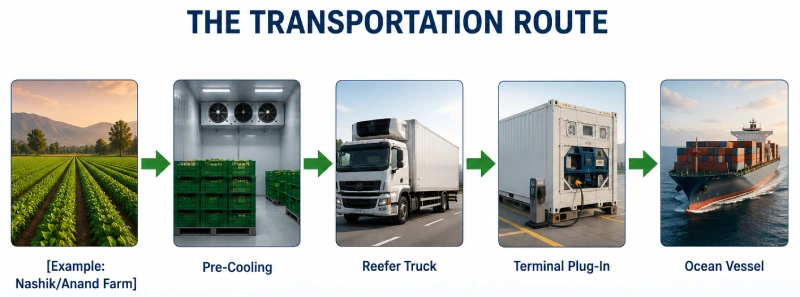
The clock starts ticking the exact second the produce leaves the soil. You cannot just take warm vegetables straight from a hot field in Nashik or Anand, throw them into a refrigerated truck, and expect things to go well. Reefers are built to maintain a temperature, not to pull it down from scratch. The cargo has to go through a specialized pre-cooling unit—like a heavy forced-air system or a hydro-cooler—to strip away that ambient field heat before it ever gets loaded.
Once you've got the heat out, you need bulletproof cold storage and refrigerated transport for exports to handle the long highway run to coastal gateways like Mundra or Nhava Sheva. Do yourself a favor and place digital data loggers deep inside the cargo blocks. These tiny sensors keep a non-stop, unalterable record of temperature changes and GPS coordinates. If a driver turns off the cooling unit at a dhaba to save fuel, you’ll have the proof right there on your dashboard.
The second that truck rolls into the port terminal, ground teams have to swap the reefer’s power source from the truck’s portable generator set over to the port's electrical grid. Then, once it's craned onto the vessel, it plugs directly into the ship's central power lines. Modern container lines use automated remote tracking to watch return-air temperatures every single minute, making sure your goods stay perfectly stable across thousands of miles of ocean.
Key Operational Parameters for Export Shipments
| Cargo Category | Temperature Target | Humidity Level | Vent Position | Main Risk Factor |
|---|---|---|---|---|
| Fresh Vegetables | 2°C to 5°C | 90% to 95% | Partially Open | Dehydration, yellowing, and ethylene buildup |
| Frozen Processed Foods | -18°C or colder | Not Applicable | Completely Closed | Thawing, texture loss, and bacterial growth |
| Premium Seed Spices | 10°C to 15°C | Below 60% | Completely Closed | Loss of volatile oils and aflatoxin development |
The Tactical Verdict
Building a dependable trade line for temperature-sensitive cargo takes a mix of paranoia and absolute operational discipline. The export houses that win consistent, long-term contracts with global supermarket chains do not look at shipping as a basic administrative chore. They treat their cold chain as a core business asset.
When you enforce strict pre-cooling protocols at the source, use digital data loggers to monitor your logistics providers, and select shipping lines with modern reefer fleets, you take the guesswork out of the entire journey. Protecting your agricultural cargo from the domestic field all the way to the foreign port ensures your shipments arrive exactly as intended—fresh, compliant, and highly profitable.
Disclaimer
The information provided is for educational and informational purposes only. Temperature settings, humidity levels, cold chain specifications, and food safety requirements may vary depending on the commodity, destination country, buyer requirements, and shipping conditions. Exporters should verify all regulatory, logistical, and quality requirements before exporting perishable agro products internationally.