
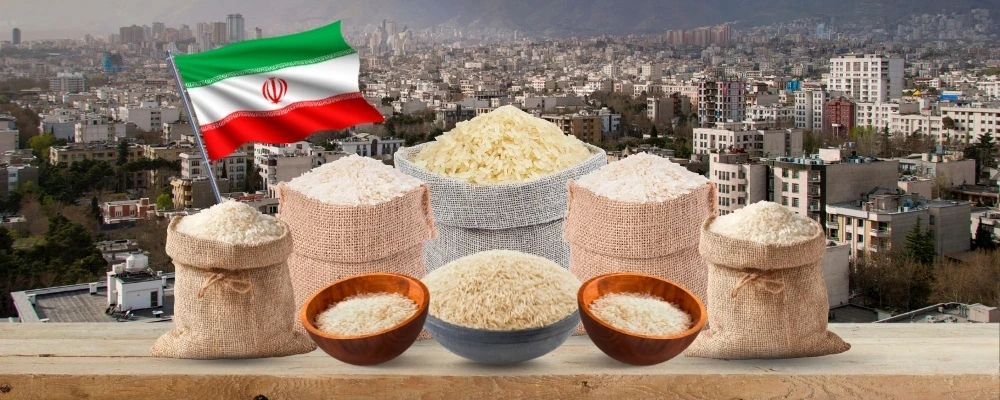
If you've been in the basmati trade for some time, you'll notice Iran is always part of the conversation. The country consumes a lot of rice, but local production is limited. Water shortages and farming constraints make it difficult to scale. Because of this, imports remain the backbone of supply. Demand also stays fairly steady. It is not driven by trends. It is more cultural and habit-based. Rice is part of everyday eating, and this is true specially in the traditional Arabian dishes that are prepared during gathering and occasions and the reason why b2b rice buyers in Iran place bulk import orders.
In 2024, Iran brought in roughly around $700 million worth of rice. That keeps it among the serious buyers in the global market. For exporters, this is not a small or occasional opportunity. It is a steady and high-potential space where volumes can scale once the relationship is built. What stands out is the sourcing pattern. India alone supplied almost the entire requirement, while other countries played only a marginal role. This shows how dependent the market is on Indian basmati. In fact, after Saudi Arabia, Iran remains one of the largest buyers. For bulk rice exporters, this creates a clear opportunity. Once a buyer is comfortable with quality and supply, they usually continue for years rather than shifting frequently.
In practical trade, Iran mainly imports long-grain and aromatic rice. The country has a strong preference for basmati, especially in urban and premium segments. At the same time, some non-basmati and price-sensitive varieties also move depending on the season and domestic crop. Most of the trade happens under the same HS category, but rice buyers in Iran clearly differentiate based on aroma, grain length, and cooking behaviour.
Here is how the import structure broadly looks:
| Rice Type | HS Code |
| Basmati Rice (including 1121, 1509, 1718) | 100630 |
| Parboiled / Sella Basmati Rice | 100630 |
| White Basmati Rice | 100630 |
| Non-Basmati Long Grain Rice | 100630 |
| Husked (Brown) Rice | 100620 |
| Broken Rice (limited volume) | 100640 |
| Paddy / Rough Rice (small niche segment) | 100610 |
From a ground reality point of view, this market works because the demand is not temporary. Rice consumption in Iran is high and deeply connected with food habits. Local production still falls short, so the country keeps depending on imports every year. This situation has been consistent for a long time. For exporters, this means regular movement rather than chasing short-term opportunities.
Another thing you'll notice is the strong preference for basmati. Iranian buyers are particular about aroma and cooking quality, especially in urban and premium segments. This creates better margins compared to many volume-driven markets. Once a buyer is comfortable with quality and supply, they usually continue long term rather than switching every season.
Scale is also an advantage. Most rice importers in Iran work in bulk and plan their purchases in advance. This helps exporters manage production and logistics better. There are payment and currency issues at times, but most regular suppliers already understand the cycle and plan accordingly. That is why, even with fluctuations, Iran continues to stay an important and workable market for basmati exporters.
In real trade, shipments into Iran usually move through a few practical routes. Rice buyers in Iran don't think too much about theory. They mostly choose the port that makes inland movement easier and reduces delays.
In real trade, port choice is rarely fixed. It changes based on freight, inland movement, and buyer preference. Suppliers who stay flexible usually find it easier to close deals.
The biggest problem in the Iran market is not demand. It is access. Many exporters struggle to reach genuine bulk buyers or waste time through multiple intermediaries. Tradologie solves this by giving direct and structured access to serious rice importers in Iran.
Here's how it works in practice:
This approach helps exporters move faster, build long-term supply, and grow in the Iran market with more confidence.
Want to export rice in bulk to Iran? Register as a seller on Tradologie.com today and start connecting with verified bulk buyers. Negotiate directly, build long-term supply, and grow your presence in this high-potential basmati market.
Connect with Us
We use cookies
We use cookies to enhance site functionality, improve user experience, analyze website performance, and deliver relevant content in accordance with our Cookie Policy.
We use cookies
Essential Cookies
Essential cookies are strictly necessary for Tradologie.com to operate properly. They enable core functionalities such as security, session management, network stability, and cookie consent preferences. These cookies do not collect personal data and cannot be disabled.
| Name | Vendor / Service | Purpose | Expiry | Privacy Policy |
|---|---|---|---|---|
| ASP.NET_SessionId | Tradologie.com / ASP.NET | Maintains secure user session across pages. | Session | https://privacy.microsoft.com/ |
| __RequestVerificationToken | Tradologie.com | CSRF protection for forms. | Session | https://www.tradologie.com/privacy-policy/ |
| cookie_consent | Tradologie.com | Stores consent preferences so the banner does not reappear. | 1 year | https://www.tradologie.com/privacy-policy/ |
| lang_pref | Tradologie.com | Stores preferred language. | 6 months | https://www.tradologie.com/privacy-policy/ |
| cf_clearance | Cloudflare | Confirms visitor passed bot checks; protects site. | 1 year | https://www.cloudflare.com/privacypolicy/ |
| __cf_bm | Cloudflare | Distinguishes bots from humans. | 30 minutes | https://www.cloudflare.com/privacypolicy/ |
Analytics Cookies
We use analytics cookies to gather anonymous, aggregated information about how visitors interact with Tradologie.com. This helps us improve the site, measure the success of content and services, and prioritize performance fixes.
| Name | Vendor / Service | Purpose | Expiry | Privacy Policy |
|---|---|---|---|---|
| _ga, _gid, _gat | Google Analytics (GA4) | Measure sessions, users, and pageviews. | 2 years / 24 hours / 1 minute | https://policies.google.com/privacy |
| _clck, _clsk | Microsoft Clarity | Records anonymized clicks, scrolls and sessions to improve UX. | 1 year / 1 day | https://privacy.microsoft.com/clarity |
| _pk_id.*, _pk_ses.* | Piwik PRO | Tracks sessions and returning users. | 13 months / 30 minutes | https://piwik.pro/privacy-policy/ |
| mf_user, mf_* | Mouseflow | Heatmaps and anonymous session replays for UX analysis. | 3 months / Session | https://mouseflow.com/privacy/ |
| stg_fired_* | CookieInformation / Tag Manager | Records tag firing events and campaign measurement. | Session | https://cookieinformation.com/privacy-policy/ |
| _clsk | Microsoft Clarity | Session aggregation for statistical reporting. | 1 day | https://privacy.microsoft.com/clarity |
| mf_user | Mouseflow | Aggregated session identifiers for reporting. | 3 months | https://mouseflow.com/privacy/ |
Functional Cookies
Functional cookies allow the website to provide enhanced usability and personalization. They store preferences such as language, region, chat settings, and login details for a smoother browsing experience. Disabling these cookies may limit certain features.
| Name | Vendor / Service | Purpose | Expiry | Privacy Policy |
|---|---|---|---|---|
| user_lang / lang | Tradologie.com | Remembers chosen language. | 1 year | https://www.tradologie.com/privacy-policy/ |
| timezone_pref | Tradologie.com | Stores timezone preference for display. | 6 months | https://www.tradologie.com/privacy-policy/ |
| remember_user | Tradologie.com | Keeps logged-in state when chosen. | 30 days | https://www.tradologie.com/privacy-policy/ |
| livechat_session | Tawk.to | Maintains chat session state. | Session | https://www.tawk.to/privacy-policy/ |
Marketing
Marketing cookies are used to deliver advertising that is relevant to you and to measure the effectiveness of our marketing campaigns across platforms such as Google, LinkedIn, Meta and Microsoft. These cookies are set only with your consent.
| Name | Vendor / Service | Purpose | Expiry | Privacy Policy |
|---|---|---|---|---|
| IDE, test_cookie | Google / DoubleClick | Ad delivery, frequency capping, remarketing. | 1 year | https://policies.google.com/technologies/ads |
| _gcl_au, _gcl_aw, _gcl_dc | Google Ads | Conversion tracking and ad click linking. | 3 months / 90 days | https://policies.google.com/privacy |
| 1P_JAR, NID, ANID, AEC | Personalization and ad preferences. | 30 days / 6 months / 13 months | https://policies.google.com/privacy | |
| YSC, VISITOR_INFO1_LIVE | YouTube (Google) | Tracks video engagement and ad metrics for embedded videos. | Session / 6 months | https://policies.google.com/privacy |
| _fbp, fr | Meta / Facebook Pixel | Targeting and conversion measurement for Facebook/Instagram ads. | 3 months | https://www.facebook.com/policy.php |
| li_gc | Stores cookie consent flag for LinkedIn services. | 6 months | https://www.linkedin.com/legal/privacy-policy | |
| li_sugr | LinkedIn Ads | Store cookie match of a user's identity for ads/retargeting. | 90 days | https://business.linkedin.com/marketing-solutions/ads |
| bcookie, lidc, UserMatchHistory, AnalyticsSyncHistory | LinkedIn Insight Tag | Advertising analytics, retargeting, and audience matching. | 1 month - 2 years | https://www.linkedin.com/legal/cookie-policy |
| _uetsid, _uetvid | Microsoft Ads (Bing) | Remarketing and ad performance tracking on Microsoft network. | 1 day / 13 months | https://privacy.microsoft.com/advertising |