
From the bustling commercial centers in Jakarta, through the extensive distribution networks across Java and Sumatra, Indonesia has a thriving rice importer community. This group imports massive cargo that fuels the economy and helps feed the ever-increasing population of the archipelago.
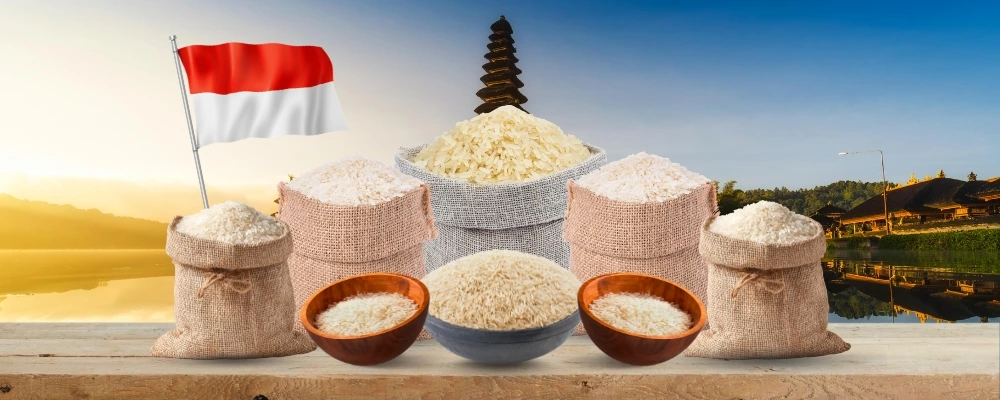
Rice importers in Indonesia primarily source massive quantities of premium white rice, standard fragrant varieties, and broken rice from the broader Southeast Asian region and the Indian subcontinent. It is very profitable to supply Vietnam rice importers in Indonesia, as well as those sourcing from Thailand. Furthermore, the volume of rice export to Indonesia from India and Pakistan continues to grow to meet domestic demand.
Connect with Indonesia's biggest rice importers to grow your agricultural export business. This will give you access to one of Southeast Asia's most stable and high-volume consumer markets. Whether you want to sell to private mid-size distributors, big food processing plants, or state-backed logistics networks, it's important to build relationships with verified buyers in Java's main trade zones and beyond.
Indonesia is often one of the most popular destinations for rice consumption and trade on the Asian continent, driven by the imperative need to ensure national food security. In a population of more than 275 million, the baseline consumption of this staple grain is absolutely astounding. The commercial food infrastructure of this dynamic market is largely dependent on steady imports to fill the ongoing gaps in domestic yields, which are frequently limited by shifting climate patterns like El Niño and shrinking arable land.
Depending on local harvest conditions and global market prices, rice importers in Indonesia regularly bring in millions of Metric Tonnes annually, making the broader network of rice buyers in Indonesia highly active and essential for market stability. In current trade cycles, this represents a multi-billion dollar opportunity in global agricultural trade.
For the top Indonesian rice importers, Jakarta-based ports play a foundational role in the logistics ecosystem. Operating as the nation's premier commercial hub and primary consumption base, buyers in western Java handle the vast majority of import volumes. They function as the ultimate distribution gateway, pushing cargo out to provincial wholesalers and institutional buyers across the thousands of islands. Consequently, Indonesian rice importers are exceptionally strategic partners for global exporters seeking dependable, high-volume contracts.
Furthermore, this is a rapidly expanding market for commercial-grade procurement. B2B rice importers in Indonesia procure bulk grain to supply local noodle manufacturers, institutional caterers, and the vast informal retail sector. Tradologie remains one of the leading business development platforms providing direct access to the most active rice buyers in Indonesia and other global markets.
A staple of Indonesian culture and the country's economy is rice. Popular dishes like Nasi Goreng, which are eaten by millions of people every day, primarily contain rice. The high level of local farming intensity does not help Indonesian rice farmers meet the high demand. Any dedicated rice importer in Indonesia has a good chance to profit from a diverse supply of rice.
The market depends heavily on international channels for standard and premium white rice, meaning dedicated rice buyers in Indonesia are critical for keeping retail markets stabilized against inflation. This grain is transported in extremely well-organized supply chains after it lands and turns into a valuable commodity. It is utilized heavily every day in strong traditional markets (pasar traditional), organized modern retail chains, and the expansive HORECA (hotel, restaurant, and café) sectors.
A robust network of private importers and state enterprises enables this extensive distribution. For knowledgeable exporters, it is very easy to interact with the real rice buyers Indonesia hosts in this dynamic market. You can negotiate bulk orders directly with these verified, licensed buyers on Tradologie.
Beyond direct retail consumption, the country also functions as an active processing and livestock market. The nation absorbs substantial international shipments, making broken rice buyers in Indonesia highly active. Once imported, this raw material undergoes commercial utilization. Nearby manufacturing facilities transform the grain into consumer goods like rice vermicelli (bihun), while feed mills heavily process it to formulate essential nutrition for the country's massive poultry and aquaculture industries. More than just a standard buyer, Indonesia serves as a highly strategic, high-frequency anchor for global agricultural exports into Southeast Asia.
Jakarta and the densely populated island of Java are, without a doubt, the most important places for Indonesia's rice trade. If exporters want to get big contracts, they need to know how strong this economic zone is.
By establishing relationships with the active Java-based rice importers, you are essentially partnering with high-capacity traders who already have the warehousing and logistics infrastructure in place to move your export order.
Whether dealing with a state enterprise or a private Indonesian rice importer, these businesses manage a highly stratified supply chain. They procure specific grades of grain to satisfy the distinct preferences of varying consumer classes and commercial industries.
Premium and Specialty Rice
A soft, fluffy texture after cooking, a particular grain length, and a pleasant aroma are the primary qualities that Indonesian consumers seek in specialty and premium rice.
Functional and Health-Oriented Rice
These varieties cater to both traditional agricultural diversity and emerging urban health trends.
Broken and Standard Non-Basmati Rice
This represents the high-volume "workhorse" category of the Indonesian agricultural import and commercial market, focusing heavily on affordability, state reserves, and industrial utility.
Important port infrastructure and maritime logistics hubs are essential to the Indonesian rice import ecosystem. This guarantees the absorption and distribution of large agricultural shipments over a wide, dispersed geographic area.
Tradologie's reliability and technological competence within the agro-trade sector can exponentially scale your bulk rice business. As one of the rare platforms dedicated exclusively to food commodities, exporting rice through our network offers distinct advantages:
Ready to expand the buyer base for your rice export business in one of Southeast Asia's most robust and consistent consumer markets? Book your free demo with us today and see for yourself how simple and efficient it is to network with verified rice importers in Indonesia and transform digital inquiries into massive purchase orders.
Join Tradologie - the smarter way to expand internationally.
Buyers are large-scale institutional procurers, regional distributors, state-backed logistics agencies, and major FMCG chains, with orders typically requiring a minimum of one full cargo container or bulk vessel charter.
Exporters secure orders by bidding competitively on live procurement requests through B2B platforms like Tradologie, finalizing contracts directly with verified buyers.
Payments are strictly secured through Letters of Credit (LC) or secure escrow accounts provided by platforms like Tradologie, releasing funds only upon successful, verified shipment.
Indonesia imports massive volumes of standard 5% to 25% broken white rice for mass consumption and state reserves, alongside premium fragrant varieties, and 100% broken rice specifically utilized for livestock feed and noodle manufacturing.
Exporters can bypass traditional brokers by utilizing vetted digital trade networks like Tradologie to gain direct, real-time access to verified Indonesian procurement teams and major private distributors.
The market is heavily driven by state-owned enterprises managing national food security, alongside large private trading houses and major regional distributors that possess the capital and infrastructure to clear and warehouse bulk shipments.