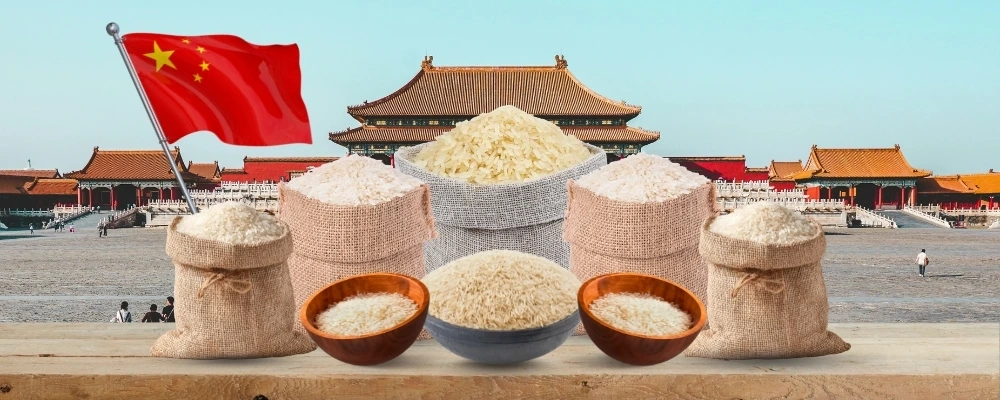
Export Rice in Bulk To Trusted Rice Importers in China
Rice importers in China primarily source specialty fragrant rice, standard non-basmati, and massive quantities of broken rice from Southeast Asia, making rice export to China from India highly lucrative.
Expand your rice business to the world's most high-volume consumer market. Whether you are looking for a massive state-owned enterprise or a private rice importer in China, connecting with verified buyers in Guangzhou's busy trade zones is crucial.
China continues to rank among the world's top importers of rice even though it is the world's largest producer. With a startling population of more than 1.4 billion, the nation's food manufacturing industry is expanding quickly. In order to cover gaps in domestic yields, this dynamic market's thriving commercial food infrastructure mainly depends on particular imported rice profiles.
The country routinely imports between 2.5 million to 4 million Metric Tonnes of rice annually, depending on domestic harvest conditions and strategic reserve requirements. In recent trade cycles, China accounted for over $1.5 billion in global rice import value.
For China rice importers, Southern ports play a central role in this trade ecosystem. As the region's main consumption base for rice, southern buyers handle the majority of import volumes through the Pearl River Delta while also serving as a distribution gateway for inland provinces. This makes Chinese rice importers exceptionally strategic partners for global exporters looking to secure massive, high-volume contracts.
It is also a leading market for industrial-grade rice procurement. B2B rice importers in China procure raw materials to sell to local snack manufacturers, breweries, and feed mills. Tradologie is among the leading business development platforms that provides the most active rice buyers in China and other global markets.
Why Is Exporting Rice to China Profitable?
Rice serves as a highly critical commodity within China's food and industrial supply ecosystem. High absolute consumption naturally drives a large portion of this demand. Strategic national stockpiling further amplifies this continuous need. Domestically, the nation produces enough staple rice to ensure basic food security. However, this local supply has distinct limitations. This reliance creates a massive opportunity for specialty rice importers in China to secure these culinary varieties. It also depends heavily on international markets for the cost-effective broken rice required in manufacturing. Once imported, this grain becomes a fundamental staple across multiple sectors. It sees heavy daily use in institutional procurement, HORECA supply chains, and organized retail.
A well-established network of existing rice importers within the country successfully facilitates this widespread distribution. Engaging this market is highly accessible for exporters. You can negotiate orders directly with these genuine buyers on Tradologie.
Beyond direct consumption, the nation also functions as a massive processing hub. The country actively absorbs vast international shipments, making broken rice buyers in China incredibly active. Once imported, this raw material undergoes extensive transformation. Manufacturing facilities convert the grain into popular products like noodles and traditional rice wine. It is also heavily processed to create essential animal feed. In the end, this dynamic makes the country more important on the world stage. China is not just an importer that buys things. Rather, it operates as a highly strategic engine for global agricultural processing.
Why Southern China Is Central to Chinese Rice Trade
Without a doubt, Guangdong province in southern China is the center of the world's rice trade. If exporters wish to secure large contracts, they must comprehend this regional dominance.
- Strategic Infrastructure: Shenzhen and Guangzhou, with their deep-water ports, account for the majority of incoming cargo. Their highly computerized customs procedures enable quick turn-around times for vessels, resulting in lower demurrage costs.
- Geographical Advantage: The proximity of Southern China to the main rice exporters in Southeast Asia is unexpected. Because of the strategic proximity, exporters can establish highly responsive supply chains, which reduces ocean freight costs and times.
- Industrial Hub: Guangdong province supplies raw agricultural products to thousands of food processing centers in the Pearl River Delta. This massive manufacturing hub requires constant high-volume supply chains, which brings the exporters a lot of money on a regular basis.
- Massive Baseline Consumption: In Southern China, rice is without a doubt the staple food, unlike in the northern provinces. Due to the rigid baseline demand created by this cultural preference, premium imported aromatic varieties will always have a retail market.
- Robust Financial Ecosystem: Cities like Guangzhou and Shenzhen are major global financial hubs. Because local importers have better access to deep trade finance, Letters of Credit (LCs) for large orders are issued quickly and consistently.
- Business-Friendly Environment: Highly simplified trade regulations are provided by regional free trade zones and special economic zones (SEZs). Exporters benefit directly from lower tariff quotas, faster cargo inspections, and fewer bureaucratic delays.
- Established Network: With decades of experience, Southern Chinese importers have strong connections to national food service companies, feed mills, and retail chains. For new market entrants, their knowledge of China's stringent phytosanitary regulations and import quotas is invaluable.
Making connections with Southern China rice buyers entails collaborating with high-capacity traders who possess the infrastructure necessary to increase your export volume throughout the whole domestic manufacturing sector.
What Are The Types of Rice Commonly Imported in China?
Rice buyers in China and Shenzhen manage a complex supply chain. They source specific types of grain to meet the needs of different customers. This includes luxury shops, busy restaurants, and large factories.
Specialty and Fragrant Rice
Excellent taste and quality are the main priorities for specialty rice buyers in China.
- Jasmine Rice: This rice smells sweet and feels soft, which people love. It looks expensive, so high-end grocery stores often sell it. It is a popular choice for high-end restaurants.
- Basmati Rice: People know this rice for its long grains and unique smell. While it is a smaller market, it is growing fast. More people in cities now want it for Indian and Middle Eastern cooking.
- Japonica (Short/Medium Grain): Even though China grows its own, it still buys high-quality versions from overseas. These imports are used mostly by sushi shops and for high-end East Asian dishes.
Functional and Health-Oriented Rice
These types are used for specific health trends or traditional food production.
- Glutinous (Sticky) Rice: China imports huge amounts of this from Southeast Asia. It is the main ingredient for snacks like zongzi and dim sum. It is also essential for making traditional rice wine.
- Parboiled Rice: This variety is becoming a favorite for big catering companies. It stays firm and does not get sticky after cooking, while also lasting longer on the shelf, and gives a higher volume per bag.
- Colored Rice (Brown, Black, Red): This is a fast-growing, high-profit area. Healthy shoppers in big cities want these nutrient-dense grains. They are willing to pay more for unpolished, "superfood" varieties.
Broken and Standard Non-Basmati Rice
This is the "workhorse" category of the import market. It focuses on high-volume utility and cost-efficiency for large-scale operations.
- 100% Broken Rice: Broken rice importers in China procure these grains in massive quantities due to their low price point. The industrial sector is the primary consumer here. It is used extensively for animal feed, the production of rice noodles, and commercial brewing.
- 5% to 25% Broken White Rice: This serves as the standard affordable option for mass consumption. It is the go-to choice for state reserves and large-scale institutional procurement. For most commercial applications, it provides the ideal balance between low cost and acceptable quality.
What Are the Major Ports in China for Rice Shipments?
Highly integrated rail and road logistics networks, as well as unmatched port infrastructure, support China's rice import ecosystem. This ensures the smooth handling of bulk agricultural shipments from major exporting countries to local buyers.
- Port of Shenzhen: Many major importers prefer receiving shipments here. It ranks among the world's largest and most efficient ports. The facility easily handles massive bulk vessels. Deep inland connections accelerate cargo movement directly to local processing factories.
- Port of Guangzhou (Nansha): This facility excels at advanced agricultural bulk handling. It features massive on-site warehousing capacity. It facilitates large-scale imports specifically for industrial processing. It also supports crucial regional food security stockpiling across Southern China.
- Port of Shanghai: This sprawling facility serves as the primary gateway for the eastern seaboard. It directly supplies the economically vital Yangtze River Delta. The port easily supports massive consignment sizes. Quick inland distribution guarantees stable supplies reach the heavily populated central provinces.
- Port of Tianjin: This is the absolute critical gateway for Northern China. It supplies massive northern metropolises, including Beijing. The port manages significant agricultural bulk quotas. It specifically caters to a distinct regional market with its own unique reserve requirements.
- Port of Xiamen: Located strategically on the southeastern coast, it handles steady agricultural import volumes. It provides excellent, direct access to the Fujian province. The port supports local food processing conglomerates and specialized regional retail markets.
How Tradologie Helps Exporters Connect with Chinese Importers
Tradologie's reliability and competence in the agro trade sector can help your rice trade business grow significantly. We are among the rare platforms dedicated exclusively to the food commodity sector. Here are some of the benefits of exporting rice with our platform:
- Access a strong network of rice importers in China from India and other major exporting nations for specialty, non-basmati, and broken rice.
- Reduce your business development cost by getting genuine rice inquiries in real time.
- Enjoy assured payment with safe payment methods like LC at sight and Escrow.
- Get assistance from a dedicated account manager for smooth Chinese trade and customs operations.
- Tradologie's strong global footprint ensures faster deal closures with trusted buyers holding valid import quotas.
- Enjoy support in Mandarin and other regional languages to ease communication barriers.
- Connect directly with rice trading companies who have established buyer networks, proper licensing, and proven track records in bulk commodity trade.
Get Started Today: How to Export Rice to China
Ready to expand the buyer base for your rice export business? Book your free demo with us today and see for yourself how simple and easy it is to network with rice importers in China and turn inquiries into massive purchase orders.
Join Tradologie - the smarter way to expand internationally.