
Choose from a wide range of authentic non-basmati rice varieties tailored for bulk global trade
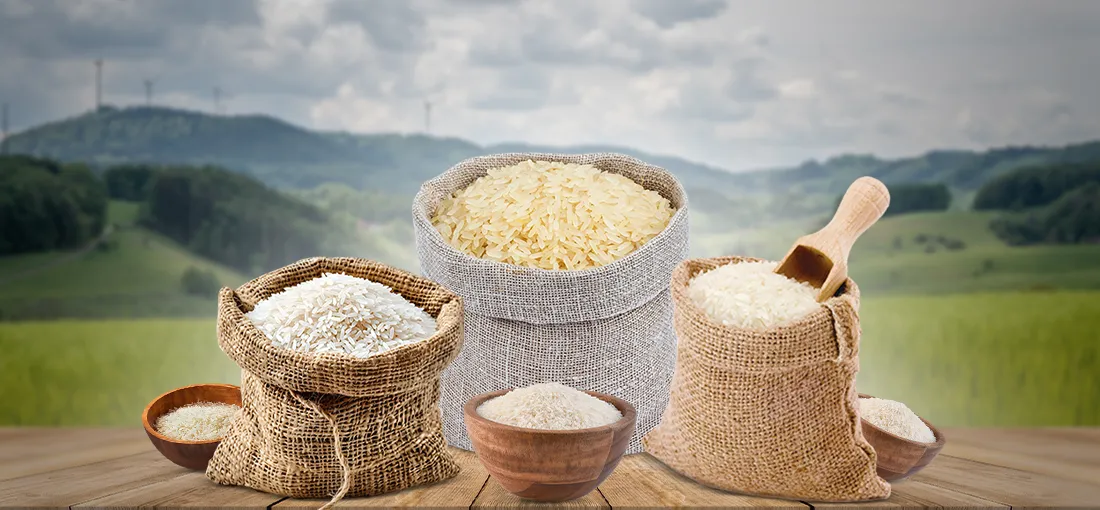
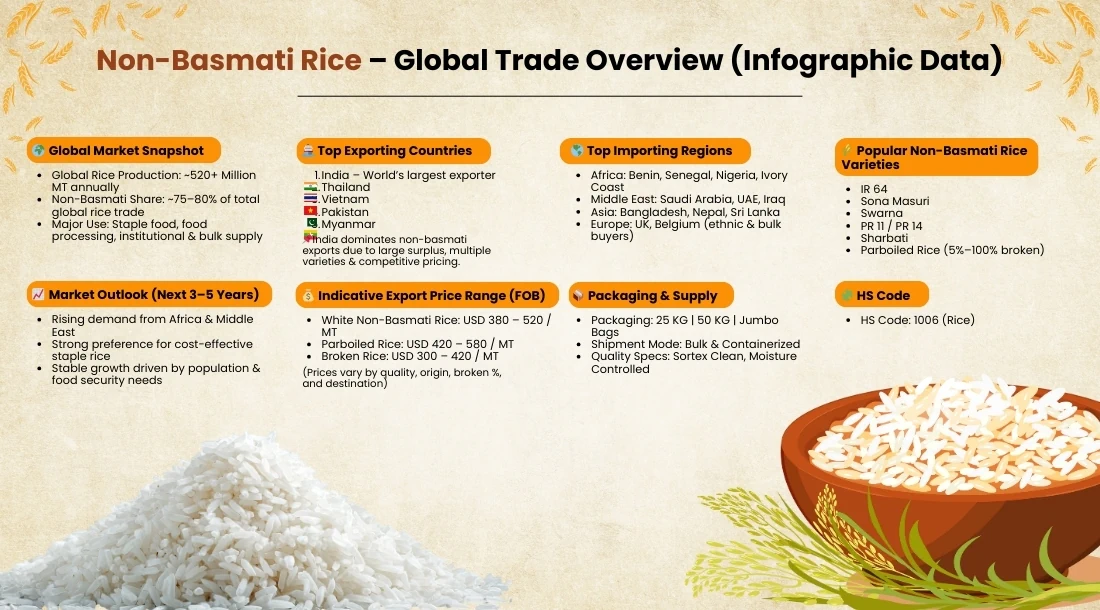
India has made a reputation for itself as the 'world's rice granary' in this high-stakes realm of world agri-commodities. At the beginning of January 2026, India alone represented 40% of the world's rice trade (Source: Reuters), reaching markets in over 170 countries. For large importers, knowledge of the Indian non-basmati industry can equip you with a complex market in which cutting-edge milling technology and policy changes come together in a rich array of varieties.
If you're searching for non basmati rice exporters or suppliers in India, this page provides:
The Indian export market is dominated by players with massive milling capacities and international quality certifications. Some of the most trusted Non Basmati rice suppliers include:

After a period of restrictive trade measures, the Indian government has fully reopened the market to non-basmati exports. However, the "Free" export policy has been replaced with a more structured framework that bulk buyers must understand:
India offers a diverse range of non-basmati rice types catering to different culinary and industrial needs. Below are the primary export-grade varieties:
| Variety | Type | Lengtd | Moisture | Best For |
| IR 64 | Raw / Steam / Parboiled | 6.0 - 6.4 mm | < 14% | Africa, SE Asia, Middle East |
| IR 36 | Raw / Steam | 5.8 - 6.0 mm | < 14% | West African markets |
| Sona Masoori | Raw / Steam | 5.0 - 5.2 mm | < 13% | Retail, Horeca, US & UAE Diaspora |
| Swarna Rice | Parboiled / Raw | 5.0 mm | < 14% | Low-GI health markets, Africa |
| Kolam Rice | Raw / Steam | 4.5 - 5.0 mm | < 13% | Global retail, Daily consumption |
| 100% Broken | Parboiled / Raw | Broken Grains | < 14% | Breweries, Feed industry, Flour |

Being the top non-Basmati rice-exporting nation in the world, the massive agri-infrastructure of India owes its roots to the country's diverse agri-zones, ranging from the Indo-Gangetic Plains to the deltaic regions of the southern part of the country. In contrast to other countries, which generally get to harvest only once, the agri-zones in the country make it possible to harvest rice the entire year around.
A major contributing element in this dominant position is the efficiency of the supply chain in India. While most countries face climate-related fluctuations in their supply chains for rice imports, in India's "Rice Bowl" regions like Punjab, Haryana, and Andhra Pradesh, some of the most extensive irrigation systems in the world ensure that monsoons are less likely to affect this supply because their irrigation systems are less affected by monsoons.
In addition to the sheer scale, there has also been a technological revolution in the processing of grains in India. Gone are the days of the traditional, manual processing of grains in mills, which have now given way to mills using artificial intelligence with advanced Sortex cleaning and silky polishing units. These advanced processing plants use optical sensors to detect and thereby eliminate the tainted or chalked grains with virtually 100% efficiency, thus ensuring the quality standards demanded by the EU, US, and Middle Eastern markets.
The economic advantage of sourcing from India remains the most compelling feature for bulk importers. non basmati rice suppliers, because of the large cost savings, are able to consistently offer FOB and CIF prices that are ahead of the competition from either Thailand or Vietnam. This is made possible by a rigorous regulatory framework that ensures APEDA certification for all suppliers, thereby ensuring that all exports meet international phytosanitary requirements.
For a long time, the traditional rice export industry has been hampered by unclear pricing, disjointed supply chains, and a significant dependence on regional middlemen. By acting as a digital link between bulk importers and the centre of India's rice-producing regions, Tradologie has completely changed this landscape. The platform removes the risks and inefficiencies that frequently impede international trade by transferring the whole procurement process—from discovery to delivery—into a transparent digital ecosystem.
Importers no longer need to travel for months or attend trade exhibitions in order to find reliable partners. Tradologie provides instant access to a network of over 850 verified non-Basmati exporters, ranging from historic milling houses to major industrial suppliers. Every seller on the platform is subjected to a stringent AI-driven verification process that looks at their milling capacity, financial stability, and previous export credentials.
Tradologie turns this bidding process around with a refined one-on-one negotiation system. It gets an immersive experience of a physical trade negotiation combined with the agile pace of a digital environment. No more waiting days for fixed email quotes only to learn they are already outdated by the time you submit your first response. This is made possible through a specialised Counter-Offer Mechanism to achieve a lively communication with constantly fluctuating market value in real-time. When a buyer ultimately demands a massive order of non-Basmati rice, some authentic exporters submit initial trade quotes to begin with. This allows further adjustments to specifications or counter-offers to take place.
International trade is based on trust, and Tradologie further strengthens this by providing comprehensive security systems that emphasise financial security and transparency. To counter the risks involved in international transactions, the platform provides safe payment systems like Letters of Credit (LC) and ESCROW accounts, which protect the buyer's funds until the consignment is finally verified. Although Tradologie acts as the catalyst for the trade, the onus of quality verification lies with the buyer, who can take the initiative to contact globally recognised inspection companies to verify that the grain is of the same quality as the approved sample. With Tradologie handling the complex nuances of the trade, you can focus on growing your business with your worries in good hands.
In order to ensure smooth customs clearance and regular retail reception, non basmati rice exporters in India have to adhere to a strict set of technical specifications. These specifications are essential in determining the extent to which the rice meets the requirements of various international markets, ranging from industrial use in West Africa to upmarket sales in the Middle East.