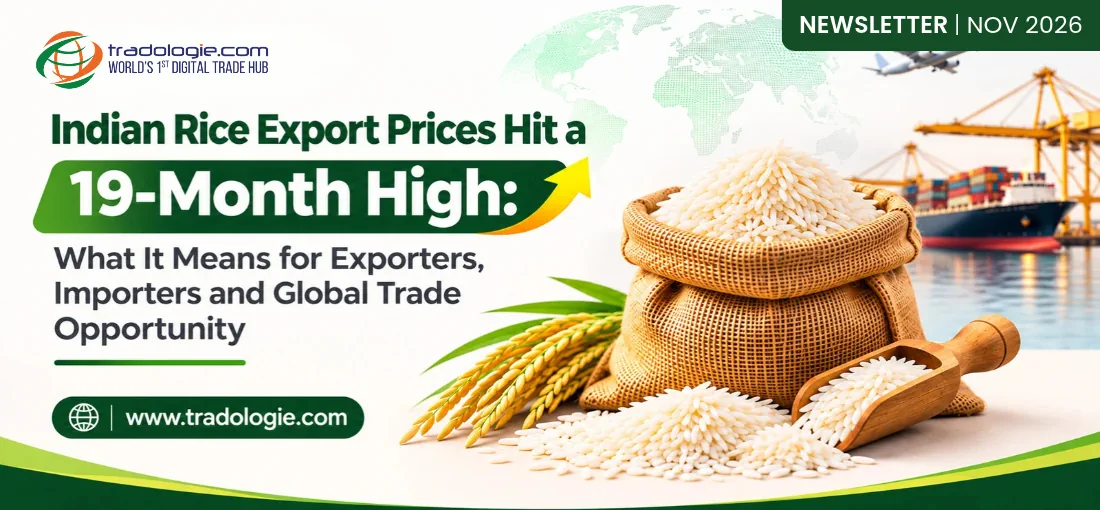
Due to a strengthening INR, elevated domestic prices and robust demand from African markets, Indian rice prices are witnessing an upward trajectory. This has wider implications for international rice importing countries.
For buyers, it means increased procurement costs. For bulk rice exporters in India, this presents an opportunity to strengthen buyer relationships, improve realisation and potentially expand market share. If domestic procurement costs still remain manageable for rice suppliers , then this opportunity can be capitalised on.

Strong demand from Africa
This increase in export prices is largely attributable to robust demand from African countries. Non basmati and parboiled rice have historically witnessed strong demand from African buyers who seek to procure this product to cater to price sensitive consumers.
This demand indicates that international buyers are still willing to absorb higher prices. This is an encouraging sign for Indian rice exporters , as we can see that demand remains resilient in international markets even though prices are now higher.
Indian exporters have the opportunity to consolidate their presence in African countries, and identify new buyers through B2B trade.
Buyers may also be increasingly inclined to engage with dependable suppliers who can assure quality, delivery and competitive pricing. For large volumes of goods, reliability becomes paramount. Even if one supplier offers marginally lower pricing, if there are uncertainties regarding quality or delivery, it may not be the most prudent decision.
Therefore, exporters should capitalise on this opportunity to cultivate long term relationships with buyers.
Significant competitive advantage over Thailand
Although Indian rice prices are higher than they have been in 19 months, the prevailing price point still gives Indian rice a considerable competitive advantage over Thai rice.
Thai 5% broken rice prices are currently between 505-510 per metric tonne, whereas 5% broken white rice prices in India are between 395-400 per metric tonne. Whilst we must consider specific product requirements and conditions before making a direct comparison, this demonstrates that Indian rice remains relatively competitive.
This can be particularly significant for international buyers.
With Thai rice prices increasing due to heightened purchases from the Philippines and Indonesia, buyers may begin to reassess their sourcing destinations. If a buyer has flexible sourcing options, Indian rice may be an attractive alternative for large purchases to be distributed, processed and consumed domestically.

Opportunity
India has a substantial opportunity here, as although competition from other countries may be intense, Indian rice remains competitive in terms of price, production capacity, export infrastructure and product diversity.
If buyers are looking to procure large volumes of rice for African, Asian and other international markets, India can still be a viable sourcing destination for them. As long as the rice complies with the quality standards required by its destination and delivery timeframes are met.
Opportunity for regular procurement
This is especially relevant for Indian rice suppliers who can facilitate consistent procurement and cater to the needs for the African markets.
Increased Domestic Prices & INR
Despite export prices increasing, the underlying economics for exporters may be more complex.
As the INR is strengthening, exporters will not realise as much value for products in domestic currency. Due to rice typically being traded in USD, appreciation in the INR means that exporters will not realise as much value from their exports, once converted back into domestic currency.
Conversely, as domestic paddy prices have increased, additional procurement costs will be incurred by exporters. Therefore, despite increased export prices, profitability may not have improved as substantially as expected.
Considerations for margin growth
If exporters have inventory from previous procurements at a lower price point, they may be able to capitalise on this situation. However, if procurement is taking place at higher prices, it will be important for exporters to account for the cost of processing, interest, transport and so on in order to determine whether they will make a profit.
Therefore, contract pricing and procurement timing will be particularly important. If exporters enter into fixed price contracts without accounting for currency fluctuations, and the cost of replenishing stock, they may begin to experience margin compression.
To ensure sustainability in this situation, exporters should ensure their procurement schedules align with confirmed export orders. Due consideration should be given to currency exposure, and flexibility should be retained during negotiations.
Significant Domestic Stock
Despite concerns regarding subdued monsoon levels and adverse weather conditions, India's substantial domestic rice stock means supply disruptions are unlikely.
Despite lower production levels being anticipated in India this year and next, rice exports are expected to increase (USDA).
This is an important point to note. Despite production concerns, export availability should remain stable as there is sufficient stock to supply rice to international markets.
For international buyers, this reinforces confidence that exports from India can be fulfilled. For exporters, it presents an opportunity to continue supplying established markets and also tap into emerging demand. However, it is important to note that just because there is a substantial amount of domestic stock, it does not mean export quantities will be unlimited. Costs, government stock, domestic consumption and the performance of future crops will still influence the volume of rice available for export.
Therefore, exporters should closely monitor the relationship between new crop availability, domestic stock and international demand to identify viable export opportunities in the medium term.
Vietnam Price Decline
Whilst Indian and Thai rice prices are increasing, Vietnamese rice prices are witnessing a decline. Prices of 5% broken rice in Vietnam have declined to 475-485 per metric tonne. Purchases have weakened, and exporters have had to revise their prices downwards in order to stimulate demand.
Implications
In this current market situation, international traders may find the competitive dynamics between countries particularly significant. Vietnamese suppliers may look to lower prices in order to attract interest from buyers. If importers have flexible sourcing options, they may decide to source from Vietnam instead of India. Therefore, Indian exporters should not assume that increased prices from Thailand will automatically translate into higher orders for Indian rice.
Buyers will increasingly evaluate the total landed cost of rice from different origins. This includes freight, insurance, import taxes, quality requirements and delivery times.
Opportunity
Indian exporters have an opportunity to offer competitive pricing, and dependable supply. While pricing may initially attract interest, consistent delivery will help convert individual orders into repeat business.
Bulk Market Buyers
This market situation makes it particularly important for international buyers to plan procurement strategically.
While waiting for prices to decline may seem like a prudent decision, if demand remains robust or concerns regarding weather conditions intensify, the cost of replenishing stock may increase. On the other hand, procuring excessive stock at elevated prices may increase working capital requirements, and expose importers to the risk of subsequent price declines.
To balance this, staggered procurement, a diversified supplier base and closer monitoring of export prices from key origins should be considered.
Importers should also evaluate short and long term inventory requirements. If exact quantities can be secured for short term distribution, but flexibility retained for further purchases, price exposure can be minimised.
When looking to procure large volumes of rice for domestic markets, equal emphasis should be placed on verifying suppliers, product specifications, delivery documentation and secure payments.
Using digital B2B trade platforms can streamline this process. Using platforms such as Tradologie, buyers can readily connect with verified suppliers and negotiate transactions efficiently. Businesses can explore international sourcing opportunities.
Conclusion
Currently, Indian rice export prices are at a favourable level. With robust demand from African markets, substantial domestic stock and rising prices from Thailand, Indian exporters have an opportunity to strengthen their international market position.
However, to capitalise on this opportunity, exporters must effectively manage domestic procurement costs, currency fluctuations and competition from alternative origins.
Overall, there is considerable scope to establish sustainable repeat business in Indian rice. Exporters should look to cultivate strong relationships with buyers, and ensure dependable delivery and well-structured contracts. Importers should evaluate sourcing decisions based on total landed costs, and risks associated with supply.
India holds a strong position in the international rice trade. The current market dynamics present an opportunity to consolidate this position. However, in order to do so effectively, prices should be managed with financial discipline, rather than optimism.