
India's black pepper market looks set to stabilise in November as farmers and stockists in Kerala and Karnataka are exercising greater restraint in selling. Although domestic wholesale prices are beginning to firm, Vietnam's export quotations are edging slightly lower. For international brokers, spice processors and high-volume black pepper importers , this is becoming a key consideration in their sourcing decisions.
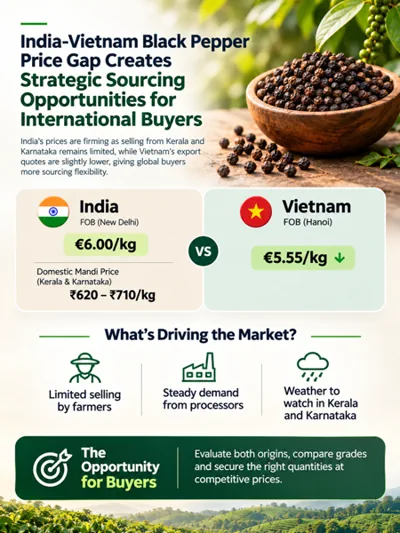
From a supply perspective, we have seen indications over recent days that the domestic market is lending support to prices. Whilst Vietnam is still offering relatively competitive export prices, India's wholesale prices have started to strengthen. Prices have increased by approximately $0.05/kg in some locations. Prices are currently between ~₹620/kg - ₹710/kg in the mandis across Kerala and Karnataka. However, Vietnamese FOB prices for black pepper are witnessing a slight decline.
This means that India is beginning to emerge as a relatively expensive sourcing origin for international buyers, whilst Vietnam is demonstrating greater price flexibility. However, this may not always be the case. Buyers will assess grades, shipping, commitments and their preferred origins.
Limited Selling From Farmers
The primary reason we are seeing prices rise in India is the restrained selling activity among farmers and stockists.
Whilst Kerala and Karnataka are key production regions in India, producers are holding back and restricting the quantity of pepper reaching the primary mandis and secondary markets. This means there is less pepper immediately available to processors, wholesalers and other buyers.
A key factor in commodity trading is the difference between overall supply and the quantity that is actually available in the market. We are seeing limited selling from producers, meaning supply is becoming tighter. If buyers require immediate delivery of pepper, they may be forced into a bidding war, pushing wholesale prices higher.
This also means that producers are increasingly inclined to withhold their stocks from the market. If they anticipate prices will rise, they are more likely to delay selling, creating further upward pressure.
For black pepper exporters in India, this can present both an opportunity and a challenge. Whilst prices are rising, this means they could secure better returns on their stocks. However, it could also mean they have to pay more to procure sufficient pepper to fulfil their export commitments. They need to exercise caution and understand the prevailing market conditions.

Vietnam Export Prices Falling
Whilst supply is becoming tighter in India, Vietnam is offering relatively lower export prices. As the world's largest exporter of black pepper, Vietnam will play a key role in shaping international buyers' sourcing decisions.
As of 31st October 2026, black pepper 500g/l FAQ is being offered at around €5.55/kg FOB Hanoi. This is down from €5.65/kg a week ago. Clean is being offered at €5.95/kg (500g/l) and €6.00/kg (550g/l). In India, black pepper clean 500g/l is being offered at €6.00/kg FOB New Delhi.
These are relatively modest price differences. However, when procuring high volumes, even a small difference can influence the overall purchase cost.
International bulk black pepper importers will have an opportunity to assess Vietnamese offers and secure some forward cover at relatively competitive prices. Those purchasing for spice processors, wholesalers and food manufacturers can benefit from this price differential.
However, it is important to evaluate the grade, cleanliness, appearance, shipping schedules, freight and import requirements. Just because a product is cheaper does not necessarily mean it is the most economical option to procure.
Overall, this makes it a more selective period for purchasing.
Stable Demand From Processors
Another key factor supporting prices in India is the steady demand from spice processors and wholesalers.
Industrial buyers will require a consistent supply of raw material. If arrivals are lower, they may not always be in a position to defer their purchases. This will provide some underlying support to prices.
Processors will want to ensure they secure sufficient raw material without paying excessive prices that could erode their margins. Wholesalers and stockists will also have an opportunity to manage their inventories.
Considering we are approaching the end of the year, those looking to replenish their stocks may enter the market to purchase, generating firmer demand. This could mean a considerable quantity of the limited available stock is absorbed by buyers looking to replenish their inventories.
If selling from producers remains restricted, even a modest increase in demand can exert upward pressure on prices.
Weather Outlook
Weather conditions in Kerala and Karnataka will also influence the immediate supply outlook in India.
We are expecting near-normal to slightly above-average rainfall in the Western Ghats over the next week due to the onset of the North East Monsoon in November. There are no indications of extreme stress on the pepper vines; however, heavy or prolonged rainfall could create short-term disruptions to harvesting and transportation.
It is important to note that this is not causing any crop loss, but is simply influencing the market. At the moment, prices in India are firm due to restrained selling by farmers and reduced supply. However,
If rainfall disrupts field operations or transportation, we could see slower arrivals into the mandis. This would provide further support to prices.
Overall, it is more useful to monitor arrival volumes and weather conditions. This will give back pepper suppliers and high-volume buyers a clearer indication of what they can expect to procure.

What Does This Mean For International Black Pepper Buyers?
Overall, this is creating a more segmented market.
International buyers procuring high volumes will have an opportunity to assess the different origins. Vietnam is offering slightly lower FOB prices, meaning buyers could secure some forward cover. However, India is witnessing firmer prices, meaning there may be greater cost exposure when purchasing for immediate delivery.
Black pepper importers could consider spreading their purchases across different periods and origins. This will help them manage procurement risks.
Black pepper exporters in India will need to exercise caution when procuring their raw material. Whilst prices are rising, this can generate better returns for them. However, they will need to ensure they can fulfil their overseas commitments at competitive prices by securing the right grades at reasonable rates.
Those exporting from Vietnam may gain an advantage through their relatively competitive prices. This could help them negotiate with black pepper buyers in key importing countries, especially as prices have declined recently, which may encourage some forward purchasing.
There is also an opportunity for those selling organic black pepper. Organic whole black pepper 500g/l from India is being offered at €7.85/kg FOB (31st October). This represents a considerable premium over the clean grade. This illustrates the value of maintaining a diversified product portfolio. This will depend on certification, buyer requirements and market acceptance.
Looking Ahead
Over the next couple of weeks, we are likely to see the Indian market influenced by the volume of produce farmers are willing to sell. If farmers and stockists continue to withhold their stocks, we could see further upward pressure on wholesale prices. If arrivals remain limited, we could see another price increase, especially if processors continue purchasing.
Vietnam's export prices are likely to remain stable to slightly lower. However, we will need to monitor how much suppliers are willing to sell and the extent of purchasing activity among buyers.
Overall, with the domestic market in India remaining firm and Vietnam offering relatively competitive prices, international prices may remain within a range. Different origins will continue to face different market pressures.
Those who can manage their procurement effectively will have an advantage.
Overall, we can see that there are several factors to consider when trading agricultural commodities. International competitiveness is not determined purely by global supply and demand. Producer selling activity, local availability, processor demand and export quotations from different origins can all create considerable differences between domestic and international prices.
Those looking to procure high volumes, spice processors and international trading houses will have an opportunity to reassess their sourcing strategies. They can negotiate with different origins and purchase according to their requirements. As November progresses, one of the most important factors to monitor will be the volume of arrivals from Kerala and Karnataka.