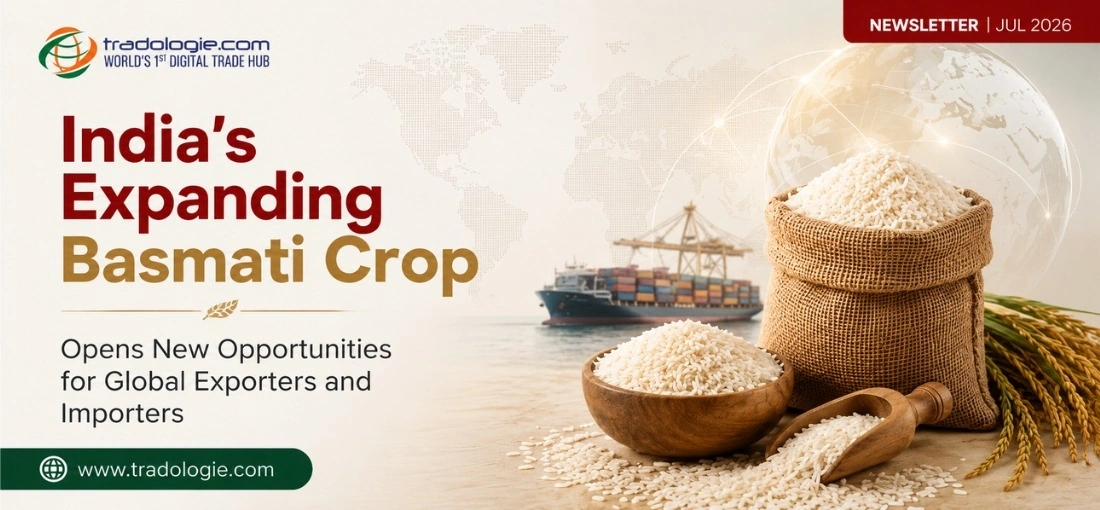
Higher Basmati acreage across India's core northern belt signals a clear expansion in production for the 2026-27 marketing season. Farmers in Punjab, Haryana, western Uttar Pradesh, and parts of Jammu are expanding Basmati cultivation. The driver is straightforward: recent paddy prices delivered strong profit margins, encouraging growers to dedicate more land to aromatic varieties even amidst weather uncertainties.
This shift follows a sharp price rally through late 2025 and early 2026. Tight carryover stocks, heavy buying from the Middle East, and aggressive procurement by private traders drove wholesale values to historic highs. Those high returns naturally set the stage for higher planting decisions this season.
For merchant basmati rice exporters and international basmati rice importers , this isn't just about farm-level acreage. It marks a fundamental transition in the global market—moving from a phase of tight supply and elevated prices toward improved availability, stiffer competition, and shifting price dynamics.

Key Supply Dynamics Shaping the 2026-27 Market
If the monsoon remains reasonably normal across northern India, exportable supplies will expand significantly once fresh crop arrivals begin around October-November. More hectares under cultivation directly build India's exportable surplus, altering market mechanics across multiple fronts.
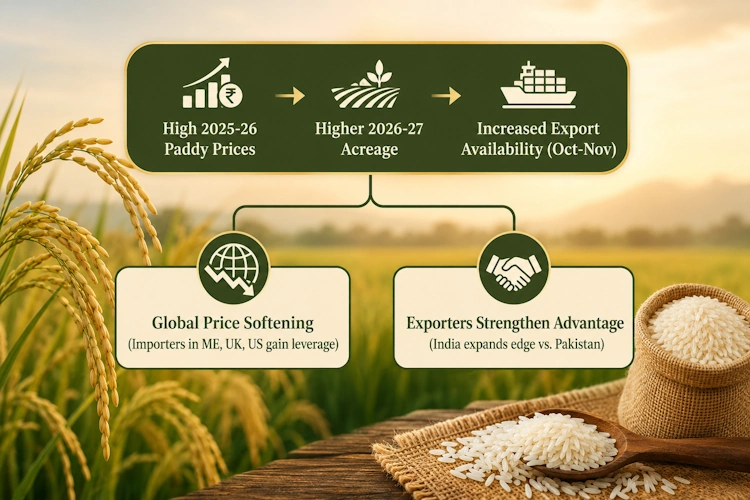
- Softening Global Export Prices: Greater production will intensify competition among Indian suppliers. Global Basmati prices may soften during the mid-to-late marketing season as fresh arrivals fill mandis. This shift benefits major import markets like Saudi Arabia, Iraq, the UAE, and even European markets, and the US.
- Strengthened Dominance Over Competitors: India and Pakistan remain the world's sole commercial producers of authentic Basmati. A larger Indian harvest provides domestic exporters with pricing flexibility, allowing them to capture additional market share if Pakistani output stays flat.
- Importers Deferring Immediate Orders: Expecting prices to moderate, international buyers are delaying large forward contracts. Many are purchasing on a hand-to-mouth basis until new-crop arrivals peak, creating a temporary lull in trade activity before harvest.
- Middle East as the Core Swing Factor: Saudi Arabia, Iraq, Iran, and the UAE take the vast majority of Indian Basmati exports. Any stabilization in regional shipping routes will allow these core bulk basmati rice buyers to absorb large volumes once new-crop supplies hit the market.
- Persistent Geopolitical and Freight Risks: Supply is only half the equation. Freight spikes and route disruptions through the Strait of Hormuz and the Red Sea have elevated shipping costs and delayed transit times. Even with a record harvest, shipping logistics remain a major wild card.
- Shifting Farm Income Prospects: Strong baseline prices encouraged farmers to plant heavily. However, if total output surges, raw paddy rates could moderate during peak mandi arrivals unless overseas shipments clear the surplus quickly.
What Higher Acreage Means for Merchant Exporters
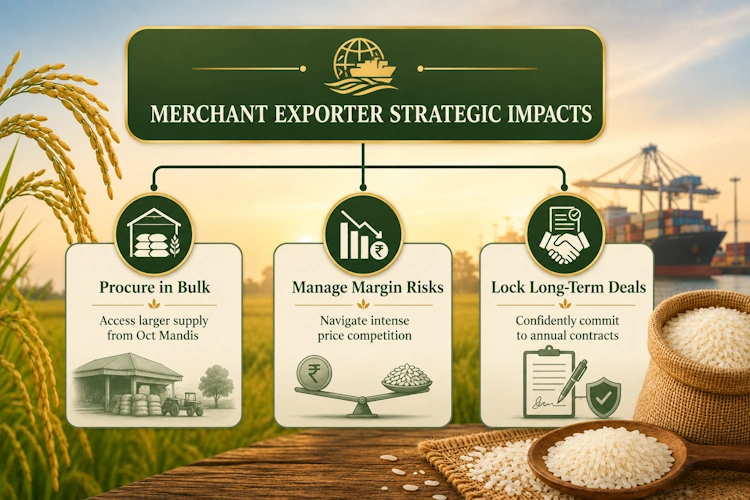
For merchant exporters planning to export basmati rice in bulk , a larger domestic crop fundamentally changes procurement strategies, cash flow management, and contract execution.
1. Larger Procurement Windows After Harvest
A broader production base means merchant exporters won't have to chase limited stocks. From October onwards, Mandis across Punjab, Haryana, and Western UP will see heavy arrivals. This abundance makes it far easier to source high-grade paddy to sell basmati rice globally without causing immediate localized price spikes.
2. Easing Procurement Costs
Elevated paddy prices squeeze exporter margins when overseas buyers refuse to absorb higher costs. As harvest volume peaks, Mandi purchase rates are expected to adjust downward from earlier peaks. Exporters who align their buying cycles post-harvest stand to rebuild their operating margins.
3. Heightened Domestic Export Competition
Higher market volume isn't without risk. When supply is abundant, more merchant traders enter the market and quote aggressively to win overseas accounts.
This dynamic leads to:
- Narrower per-ton profit margins.
- Lower baseline Free On Board (FOB) price quotes.
- Fierce competition to secure verified global basmati rice buyers .

4. Confident Execution of Long-Term Supply Contracts
During periods of supply scarcity, merchant exporters avoid long-term fixed-price deals out of fear that raw paddy costs will surge before fulfillment. A larger harvest removes this bottleneck, allowing exporters to confidently sign:
- Annual supply programs with major international supermarket chains.
- Multi-container commitments with private distributors.
- Large-scale tender bids for government procurement agencies.
5. Expanding India's Competitive Advantage Over Pakistan
India and Pakistan compete head-to-head across key consumption markets. If Indian production expands while Pakistan's output remains unchanged, Indian exporters gain the pricing leverage needed to win competitive tenders across Saudi Arabia, Iraq, the UAE, the UK, and Europe.
6. Logistics Remains the Dominant Bottleneck
Even with full warehouses, getting rice onto vessels remains a challenge. Soaring container rates, higher marine insurance premiums, and transit delays around the Arabian Peninsula mean that actual export volume will depend just as much on freight logistics as it does on crop size.
What Higher Acreage Means for Global Importers
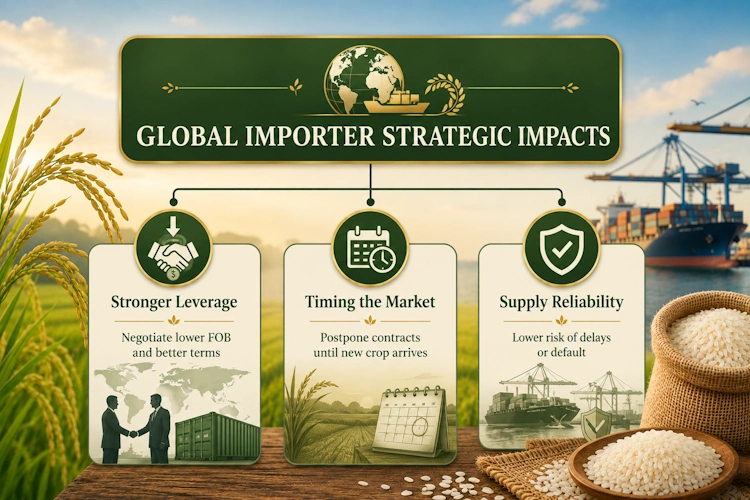
For international trade desks, wholesale distributors, and supermarket sourcing managers, India's expanding acreage shifts power back toward the buyer.
1. Increased Buyer Negotiation Leverage
Overseas basmati rice importers aware of India's expanding acreage are under little pressure to accept inflated quotes. Importers are using this shift to secure:
- Reduced FOB contract rates.
- Extended payment terms (such as longer LC windows or open-account terms).
- Volume-based price discounts on bulk shipments.
2. Tactical Delays in Contract Commitments
Knowing that fresh crop arrivals usually soften market prices, many global basmati rice buyers are intentionally holding off on signing large multi-quarter contracts.
This buyer behavior creates a clear two-phase cycle:
- Short-Term Phase: A temporary slowdown in long-term contract signings through late summer.
- Post-Harvest Phase: A rapid surge in contract execution once new-crop pricing stabilizes in Q4.
3. Greater Supply Chain Security
Supply chain failures during tight crop years damage retail relationships. A larger Indian harvest provides international buying networks with reliable supply, drastically reducing the risk of contract defaults, shipment delays, or quantity shortfalls.
4. Moderate Downward Pressure on Export Prices
Assuming monsoon rains remain favorable through the late maturation stage, export prices should gradually ease from earlier highs. However, if severe weather impacts yields or if freight rates stay elevated, shipping costs could offset some of those on-farm price declines.
Market Outlook: A Balance of Volume and Price
The market outlook for the 2026-27 season points to higher export volumes alongside softening prices .
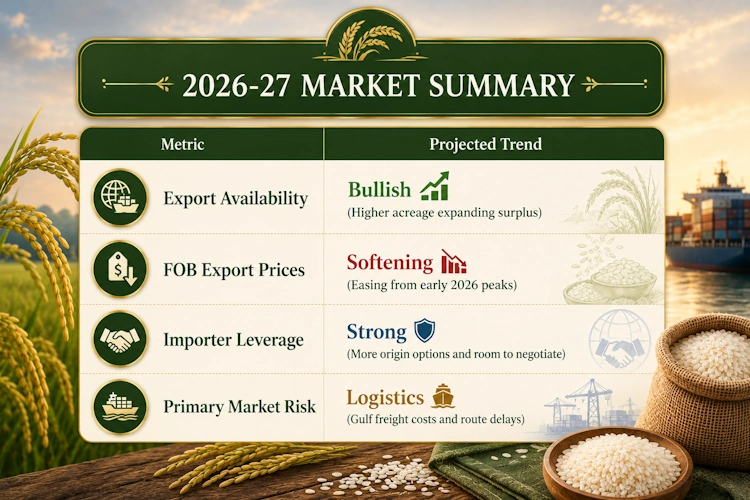
Ultimately, expanded Basmati acreage in India marks a return to supply availability. The market is shifting away from supply tightness toward a balanced environment where higher harvests support export growth, lower procurement costs, and offer international buyers competitive pricing—provided monsoon coverage remains steady and geopolitical transit routes stay open.
Conclusion
India's expanding Basmati acreage marks a fundamental transition toward supply abundance for 2026-27. While higher production offers international buyers greater price leverage and supply security, merchant exporters must adapt to narrower per-ton margins. Ultimately, managing freight logistics and volatile West Asian shipping routes will determine who profits in this evolving trade environment.