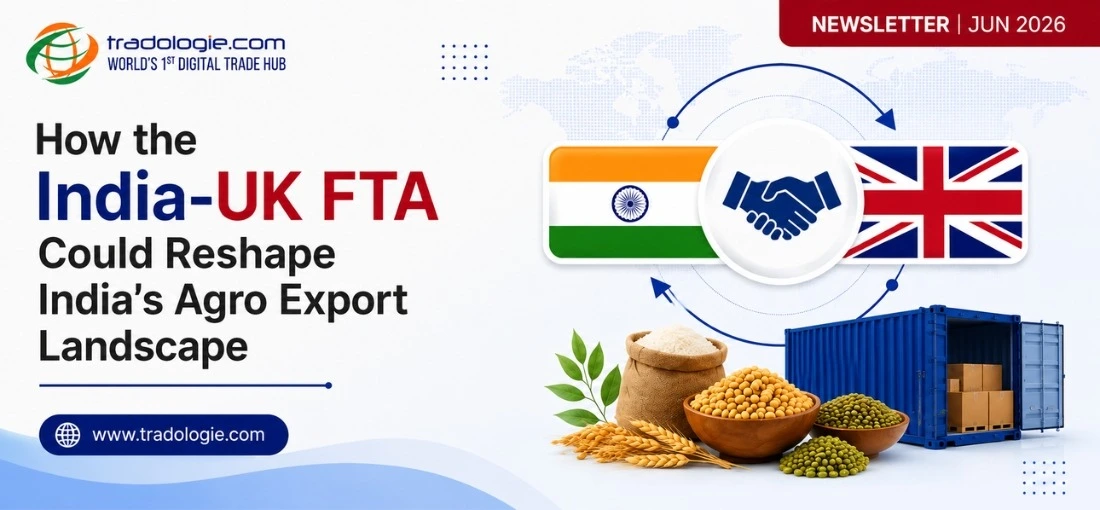
The ink is finally dry, and the countdown has officially ended. On July 15, 2026, the highly anticipated India-UK Free Trade Agreement (FTA) officially goes live, fundamentally rewriting the playbook for cross-border trade between New Delhi and London.
For months, mainstream media headlines have focused on the usual high-profile talking points: cheaper British scotch arriving on Indian shelves and slashed duties on sleek UK automobiles. But if you look past the luxury retail buzz, the shift is perhaps also significantly happening on the loading docks. Deep within the agricultural and processed food sectors, this deal represents a lucrative market access that could fundamentally alter the margins of Indian agriculture traders.
Under the baseline parameters of this pact, the UK is granting immediate, tariff-free access to an astonishing 99% of Indian exports. A massive chunk of that duty-free entry applies directly to agricultural lines and value-added processed foods.

But let’s step away from this glitter and come to the ground reality. In the gritty reality of international agriculture trade, a zero-tariff policy does not automatically trigger an agriculture export boom. Tariffs are simply the gatekeepers; the real victory relies on how tightly Indian agriculture suppliers can align their processing loops, documentation, and quality standards with strict British market realities. The door has been unlocked, but walking through it requires absolute operational precision.
Shifting the Competitive Balance: The New Landscape
To understand why this agreement matters so much, look at how pricing dynamics operate at a major UK entry port like Felixstowe or Southampton. When a British food manufacturer or supermarket chain sits down to source wholesale ingredients, they weigh quotes down to the fractional cent per metric ton. Historically, Indian agro-exporters had to absorb baseline import tariffs that routinely squeezed their margins when competing against nations with friendlier trade ties or lower baseline logistics costs.
The removal of these import duties instantly shifts the competitive balance. On July 15, Indian shipments secured a direct pricing edge over traditional global heavyweights like Thailand, Vietnam, Turkey, Egypt, and Pakistan. This structural price correction provides a massive operational cushion across several dominant categories.
Right now, India’s outbound agro trade to the British market is valued at a substantial $1,022.57 Million, resting heavily on a few key pillars.
Current Baseline: Top Indian Agricultural Exports to the UK
| Rank | Commodity Group | Export Value (USD Millions) | Category Percentage Share within UK Shipments | Market Context & Flow |
|---|---|---|---|---|
| 1 | Basmati Rice | $190.93 | 18.67% | High premium demand from the massive South Asian retail and restaurant sectors. |
| 2 | Spices | $118.17 | 11.56% | Constant industrial consumption for local blending, grinding, and spice packaging facilities. |
| 3 | Marine Products | $111.80 | 10.93% | Dominated heavily by high-value frozen shrimp lots moving directly into retail cold-chains. |
| 4 | Miscellaneous Preparations | $86.02 | 8.41% | Value-added processed foods, ready-to-eat meals, and ethnic snack lines. |
| 5 | Processed Vegetables | $64.52 | 6.31% | Chilled, frozen, and pickled vegetable lines destined for supermarket shelves. |
The Real Prize: Moving Up the Value Chain
While bulk commodity trading keeps processing machinery moving, the real financial jackpot of this FTA lies in value-added processing. Shipping raw agricultural inputs is a low-margin game defined by hyper-commoditization. The real wealth generation happens when you process, brand, and package those inputs before they leave Indian shores.
The UK market is uniquely primed for this shift. Home to a massive, affluent South Asian diaspora and a broader consumer base with a deep, mainstream appetite for international cuisines, the demand for authentic ethnic flavors is insatiable.

Value-added goods like miscellaneous preparations ($86.02 Million) and processed vegetables ($64.52 Million) are already outperforming traditional raw bulk commodities.
Instead of just sending raw spice shipments, the big winners under this deal will be the facilities exporting retail-ready spice mixes, ready-to-eat meals, premium pickles, frozen foods, and high-purity mango pulp. For an Indian food processor, a zero-tariff entry into British supermarket chains means they can capture consumer brand equity directly, rather than acting as a silent, unbranded supplier to foreign re-packagers.
The Fine Print: Rice, Sugar, and Sensitive Protections
However, an objective look at the trade text reveals that this agreement is not a green light for every single item in the warehouse. International trade negotiations are an exercise in compromise, and both nations have carefully guarded their sensitive domestic sectors.
The Rice Parameters
Rice trade under the new framework is a mixed bag. If you are handling premium, geographic-indicator lines like Basmati rice exports, the FTA offers an excellent pathway to solidify your presence in high-end UK retail spaces, building perfectly on the $190.93 Million baseline currently recorded. Specialty varieties are well-positioned to leverage the tariff drop.
However, if you are trading in high-volume, low-cost bulk commodity rice, don't expect a sudden surge. The UK has retained specific, protective mechanisms for sensitive agricultural lines, meaning that standard white or parboiled bulk volumes face strict, calculated boundaries.
The Sugar Standoff
Sugar remains one of the most heavily protected and politically sensitive commodities on the planet. Unsurprisingly, the India-UK FTA treats sugar with a high degree of caution. Unlike the sweeping duty-free access granted to spice mixes or frozen seafood, sugar exporters will find their terms largely unchanged. The deal maintains baseline defense mechanisms here, meaning sugar houses will not see the high-intensity windfall expected by processed food manufacturers.
Why the Gains Are Not Automatic: The Operational Hurdles
The widely circulated headline that "99% of trade value is now tariff-free" is a metric of potential, not a guarantee of sales. If an export house assumes they can just ship the same old way and watch profits roll in, they are in for a rude awakening. Non-tariff barriers are the new battleground.
1. The Rules of Origin Trap
To legally claim that zero-tariff stamp at British customs, you have to prove your product is genuinely Indian. This requires absolute compliance with the agreement's Rules of Origin (RoO).
You cannot simply import raw components from a neighboring Asian country, run a basic packing loop in an Indian facility, and ship it to London duty-free. Your compliance desk must maintain an unassailable paper trail proving significant domestic processing and local origin validation. One missing certificate or a flawed origin ledger, and British customs will slap the standard, full-duty rate on your containers at the port of entry.
2. The Uncompromising Wall of SPS Compliance
In agricultural trade, Sanitary and Phytosanitary (SPS) rules matter far more than tariff percentages. The UK maintains some of the most stringent food safety standards, Maximum Residue Limits (MRLs), and product traceability mandates in the world.
If a shipment of premium chillies or spices exports shows even a fractional trace of an unapproved pesticide, or if a seafood batch fails a routine heavy-metal screen, that cargo will be rejected, quarantined, or destroyed at the exporter's expense. The elimination of a tariff line does not mean British inspectors will lower their guard on food safety. Traceability from the farm gate to the shipping container remains your ultimate survival tool.
Expected Winners from the FTA Framework
Based on the core structure of the agreement and current trade values, the trade map splits into clear performance brackets:
| Commodity Category | Expected FTA Impact | Core Driver / Operational Reality |
|---|---|---|
| Spices & Seasonings | Very High | Instant price edge over non-FTA competitors; massive industrial demand. |
| Processed Ethnic Foods | Very High | Aligns perfectly with the UK’s massive South Asian diaspora and retail trends. |
| Seafood & Marine Items | Very High | Shrimp and frozen protein lines gain direct access to major UK cold-chains. |
| Tea & Coffee | High | Improves competitiveness for premium estate brands in retail spaces. |
| Fresh Fruits (Mango/Grapes) | High | Duty-free entry allows exporters to absorb air-freight costs more comfortably. |
| Premium Rice (Basmati) | Moderate | Strengthens brand positions, though bulk varieties face ongoing limits. |
| Refined Sugar | Limited | Sensitive status keeps protective trade barriers largely intact. |
The Tactical Verdict
The India-UK Free Trade Agreement is an undeniably powerful tool, but it is exactly that—a tool. It opens a massive commercial corridor, removes immediate financial friction, and hands Indian exporters a distinct head-start over their global peers.
But an open door doesn't automatically put money in the bank. The real rewards of this historic deal will be captured by the organizations that move away from a legacy commodity mindset. The future belongs to trading houses that invest heavily in certified testing labs, ironclad origin documentation, premium retail packaging, and highly resilient cold-chain logistics. For the prepared exporter, July 15, 2026, isn't just a date on the calendar—it is the launchpad for a highly profitable, new era of global trade.