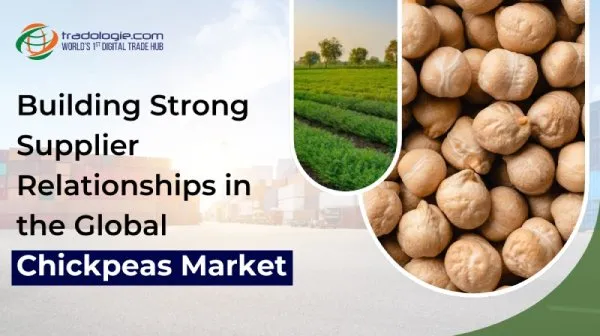
The increasing demand from consumers for plant-based proteins and the growing acceptance of chickpeas in healthy diets have driven substantial expansion in the worldwide chickpea market. Building solid exporters connections is crucial for B2B customers and exporters to guarantee a steady supply of premium chickpeas. In this dynamic market, these collaborations promote trust, dependability, and long-term success.
Looking to import chickpeas in bulk? In this blog, we'll look at the importance of exporter relationships in the market for chickpeas. Also how B2B platforms like Tradologie.com can eliminate obstacles that importers confront, and methods for fostering stronger ties.
The Importance of exporters Relationships in the Global Chickpeas Market
Consistency in Supply
The market for chickpeas faces significant challenges in ensuring a consistent supply because of variables like climate and unpredictable weather. Establishing enduring connections with reliable exporters aids importers in obtaining a steady supply, diminishing the possibility of stockouts and guaranteeing excellence. exporters who understand an importer's requirements are better able to predict changes in demand and modify their operations accordingly.
Price Negotiation and Stability
Like many other agro-commodities, the chickpea market is vulnerable to price volatility brought on by a variety of reasons, including changes in global demand, weather patterns, and geopolitical events. Importers can better negotiate rates and secure favourable terms when they have close connections with exporters. Furthermore, dependable exporters are more likely to provide long-term partners with consistent price arrangements, enabling importers to continue making money even when the market is volatile.
Quality Assurance
In the worldwide chickpea industry, where importers looking to buy bulk chickpeas must satisfy stringent regulatory requirements as well as consumer demands, quality is crucial. Consistent product quality can be ensured through strong exporters connections. In order to maintain the product's competitiveness in the global market, exporters who comprehend and value these standards are more inclined to make investments in better farming, processing, and quality control.
Risk Management
Building strong relationships with exporters is essential to reducing the risks of doing business internationally, including shipment delays, supply chain interruptions, and legal difficulties. Long-term relationships between customers and exporters increase the likelihood that the latter would prioritise orders, give prompt updates, and cooperate to address any potential problems. These connections offer a safety net to help assure business continuity during difficult times, like natural disasters or unstable political environments.
Key Challenges in Building Strong exporters Relationships
Cultural and Communication Barriers
Due to the global nature of the chickpea industry, importers frequently collaborate with exporterss from many geographical areas, each of which has its own customs, dialects, and business processes. Relationships can be strained by misunderstandings and poor communication, which can also cause delays or poor quality. To close these gaps, it is imperative that both sides make an investment in open, honest communication.
Quality Variability
Chickpea quality varies due to factors like farming methods, climate, and post-harvest treatment. Importers often struggle with consistency when sourcing from multiple regions. Tradologie.com helps by connecting importers with trusted exporters, enhancing quality control and consistency. Reliable networks like Tradologie.com are crucial for maintaining uniform quality across shipments, fostering strong, trust-based relationships.
Market Competition
Importers' competition has intensified due to the rising demand for chickpeas, especially in areas where supply is scarce. Due to the rivalry, importers looking to buy bulk chickpeas may find it challenging to obtain favourable terms or first dibs on premium chickpeas. Smaller or newer importers may suffer when exporters give preference to those with better price or higher order quantities in fiercely competitive marketplaces.
Strategies for Building Strong exporters Relationships
Conduct Thorough exporters Due Diligence
It's essential to carry out extensive due diligence before collaborating with exporters. Customers ought to investigate the exporters's track record, sound financial standing, level of production, and quality assurance procedures. Selecting approved exporters that have a track record of dependability and who follow legal requirements reduces risks and guarantees the legitimacy of the goods.
Invest in Transparent Communication
Having good communication is essential to developing enduring relationships with exporters. In addition to keeping regular check-ins via phone conversations, video meetings, or emails, importers should establish precise standards for quality, delivery, and pricing. Clear communication about production issues, pricing patterns, and market situations promotes mutual trust and facilitates productive teamwork.
Create Long-Term Partnerships
Rather than treating exporters relationships like any other transaction, importers should concentrate on creating lasting alliances. exporters are more inclined to make investments in process optimization, quality control, and competitive pricing when they perceive the possibility of a long-term partnership. Long-term alliances also make it possible for exporters and customers to work together on innovations including enhanced supply chain procedures, new product formulations, and sustainability projects.
Conclusion
For reliable supply and high quality in the global chickpea industry, developing strong exporters connections is crucial. B2B importers wishing to Chickpeas Exporters in bulk get a competitive advantage from long-term collaborations, and B2B platforms such as Tradologie.com link them to reputable, pre-screened exporters. Success in these connections will be critical as demand for plant-based protein increases.