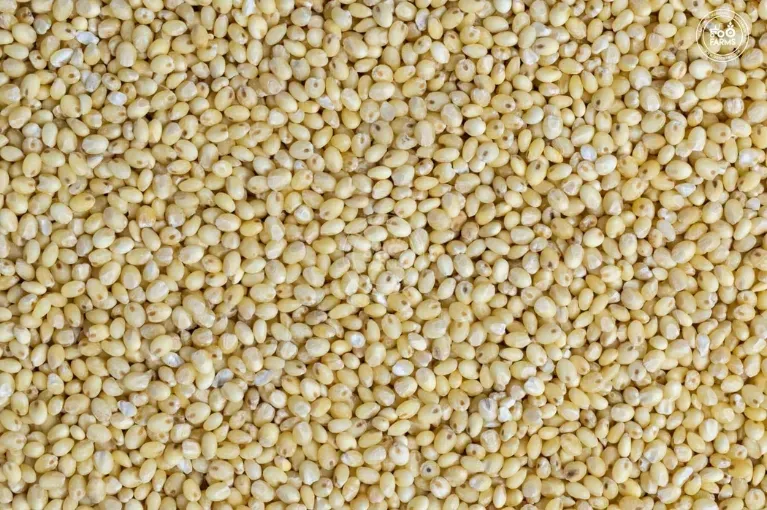
Explore different types of millets, their health benefits, food applications, and growing global demand, while connecting with verified buyers and suppliers through Tradologie.
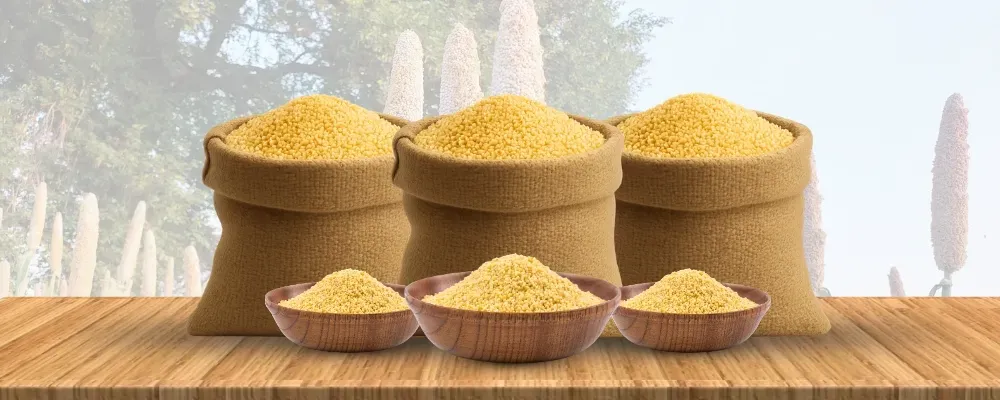
Introduction
When exploring the core millet definition, a wide variety of small-seeded cereal crops make up millets, often collectively referred to as grain millets. They are naturally resistant to drought. Around the world, farmers grow them to make animal feed and human food. These grains have historically been a staple diet in semi-arid areas. They now play a much larger role. They are being used more and more in contemporary global trade networks. This change aids in addressing important problems like agricultural sustainability and global food security. Additionally, it satisfies the growing demand from consumers for gluten-free products. These grains and millets have historically been a staple diet in semi-arid areas. They are also essential to the commercial brewing industry and producers of livestock feed. Millets are therefore a very useful agricultural product. A thorough description of these grains is given in this guide. Their commercial varieties and agronomic definition are covered. It also describes the dynamics of bulk trade and global production metrics.
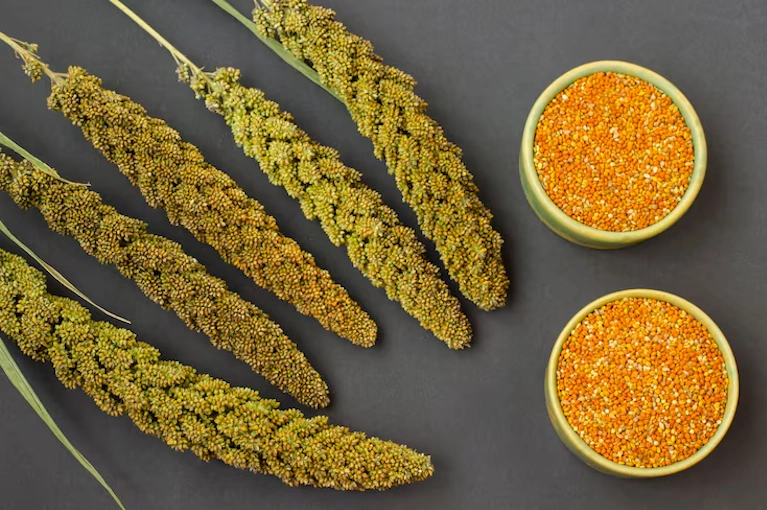
For those asking what is millet, agronomy classifies the millet plant as a member of the Poaceae family of grasses (with millet in hindi translating to terms like Bajra or Jowar). Their C4 photosynthetic pathway gives them a unique identity. They are very effective at fixing carbon because of this special botanical feature. They therefore flourish in conditions with high temperatures and little moisture. Technically speaking, the harvested millet grain consists of tiny, spherical seeds of millet. In most cases, these millet seeds need particular post-harvest processing. In order to remove the indigestible outer husk, this processing entails dehulling. They are only prepared for commercial milling or human consumption following this important step. Millets are classified as climate-resilient coarse cereals by the agricultural industry. They are very valuable commercially. Their low dependency on artificial fertilisers makes them highly valued by buyers. They also have the amazing capacity to produce healthy crops in marginal soils. Almost always, traditional cereals fail in these same harsh soil conditions.

To put it simply, millets are small, extremely resilient grains. Dry, hot climates are ideal for their growth. Other crops frequently have a difficult time surviving in these same conditions. Large grains usually need enormous amounts of water. They also require farmers to tend to them constantly and carefully. In contrast to those traditional crops, millets are real "survivor crops."You may be closely examining the contemporary grain trade. If so, millets will be marketed as gluten-free, ancient seeds. They are currently going through a huge comeback. This economic boom is particularly apparent in the global market for health foods. For marketing purposes, people frequently use general terms like ancient grains and gluten-free grains. This broad term often includes seeds such as amaranth or quinoa. But "millets" is a far more precise term. It only refers to one particular family of grasses. Popular types of this particular botanical family include foxtail, finger, and pearl millets.
| Feature | Millets | Wheat & Riced |
|---|---|---|
| Water Requirement | Very low (approx. 250-300mm per crop cycle) | High (wheat) to extremely high (rice) |
| Climate Resilience | Extremely high; highly drought and heat tolerant | Vulnerable to extreme heat and erratic rainfall |
| Processing | Dehulling required; varied milling protocols | Highly standardized, large-scale industrial milling |
| Market Dominance | Niche, but rapidly growing (health & feed sectors) | Global staples; heavily commoditized and subsidized |
| Trade Preference | Valued for gluten-free foods and bird/poultry feed | Traded for primary global caloric sustenance |
Think about the viewpoint of bulk buyers. Consider the requirements for agricultural aggregators' operations. The true value of millets is complex for these important industry participants. It mostly consists of clear functional advantages. The crop also has significant logistical benefits.
The commercial application of millets is heavily segmented, with the final end-use strictly dictated by the baseline grain quality and specific crop variety.
When evaluating the various types of millets, the commercial market is absolutely not monolithic. Instead, it is highly fragmented. It comprises several distinct, genetically diverse species. Consequently, each specific variety holds a unique, quantifiable trade value in the global supply chain.
Quality Classification In the realm of international millet wholesale and bulk trade, strict classification systems apply for those looking to buy millets in bulk. Millets are meticulously categorized by established quality grades before export. The "Machine Cleaned" (MC) designation is the industry baseline for any bulk millet order, representing the standard, acceptable quality for general trading by wholesale millet suppliers. Conversely, the "Sortex Cleaned" label denotes a strictly premium, high-value product. These superior grains have been rigorously processed through advanced optical sorters. Therefore, they are contractually guaranteed to be entirely free of surface discoloration. Furthermore, this rigorous process completely eliminates foreign matter and broken kernels.
Tight regulations govern the international millet export trade and dictate global millet sourcing. These cross-border movements are subject to strict phytosanitary compliance. Suppliers must also continuously meet strict quality requirements.

Think about the complex global millet ecosystem. Within it, India occupies a remarkably dominant position. At the moment, the country contributes significantly to the world's agricultural output. 2023 was formally proclaimed the International Year of Millets by the United Nations. This historic worldwide event was one of the primary catalysts. The Indian domestic market underwent a significant transformation after it, which simultaneously boosted organic millet sourcing from India. Security of the supply chain soon gained importance. As a result, the government quickly created comprehensive, aggressive procurement policies. They implemented lucrative subsidies as well. These financial incentives were specifically designed to support regional farmers. The fast-moving consumer goods (FMCG) industry shifted its focus concurrently. It witnessed a sharp rise in the creation of novel products.
The commercial landscape is rapidly segmenting on a global scale. However, traditional grain demand is still very stable. This consistency is especially noticeable in large regions of Asia and Africa. Millets are used on a daily basis in these particular areas. For millions of people, they consistently meet their basic calorie requirements. In contrast, the economic situation facing consumer markets in the West is entirely different. There are unprecedented spikes in demand. This new demand is described as low-volume, high-value. This particular growth is primarily driven by two factors. These are the rapidly growing gluten-free and plant-based food movements.
The data presents a clear picture in terms of finances. The global millets market was projected to be valued at USD 15.3 billion in 2024(Research and Markets). Future growth is expected to be substantial, according to industry experts. They predict that this sum will rise to about USD 23.4 billion by 2034. This is a noteworthy financial trajectory. It shows a consistent 4.4% Compound Annual Growth Rate (CAGR). As a result, a fundamental economic shift is underway across the global market. The old, marginalised image of millet is quickly disappearing. It is no longer thought of as a simple "poor man's crop." Its status has completely changed in the present. It is making a strong name for itself as a very high-end, climate-smart crop.
Millets are a distinct category of small-seeded grasses. They represent a highly robust agricultural commodity. Furthermore, they are inherently climate-resilient. Consequently, they play a critical role in global food security. They also significantly anchor the international agricultural trade sector. Several key agronomic traits define these unique grains. They possess exceptional, natural drought tolerance. Cultivation demands minimal chemical or water inputs.
Commercially, they boast incredibly versatile end-use applications. For instance, they are heavily utilized in premium gluten-free foods. Simultaneously, they serve as a foundational ingredient in commercial livestock feed. Additionally, these grains offer immense logistical advantages for bulk handlers. A primary benefit is their prolonged, highly stable shelf life. Currently, global agricultural supply chains are rapidly pivoting. They are shifting heavily toward ecological sustainability and diverse nutrition. Amidst this massive transition, the commercial status of millets is firmly established. They are recognized globally as a high-value, exceptionally reliable commodity. Ultimately, they are perfectly positioned to dominate modern import and export markets.
In agricultural trade, millets refer to a group of small-seeded, drought-resistant cereal grasses cultivated for food and fodder, typically traded under specific HS codes (e.g., HS Code 1008) representing coarse grains.
While both are gluten-free, millets are generally more heat-tolerant, cheaper to produce, and traded in significantly higher volumes globally, whereas quinoa requires specific high-altitude conditions and commands a higher millets price per ton.
Imported millets are primarily utilized in three sectors: premium health-food manufacturing (flours, snacks), the commercial birdseed industry, and livestock/poultry feed formulations.
Exporters must ensure strict moisture levels (usually under 12%), an absence of live weevils or pests, strict limits on foreign matter (dust, stones), and passing results for aflatoxin/mycotoxin tests to meet destination country phytosanitary standards.
Yes. Due to their hard outer structure and low innate moisture content, properly dried and stored millets are highly resilient to spoilage during long-term transit, making them excellent commodities for bulk ocean freight.
.webp)