Key Highlights
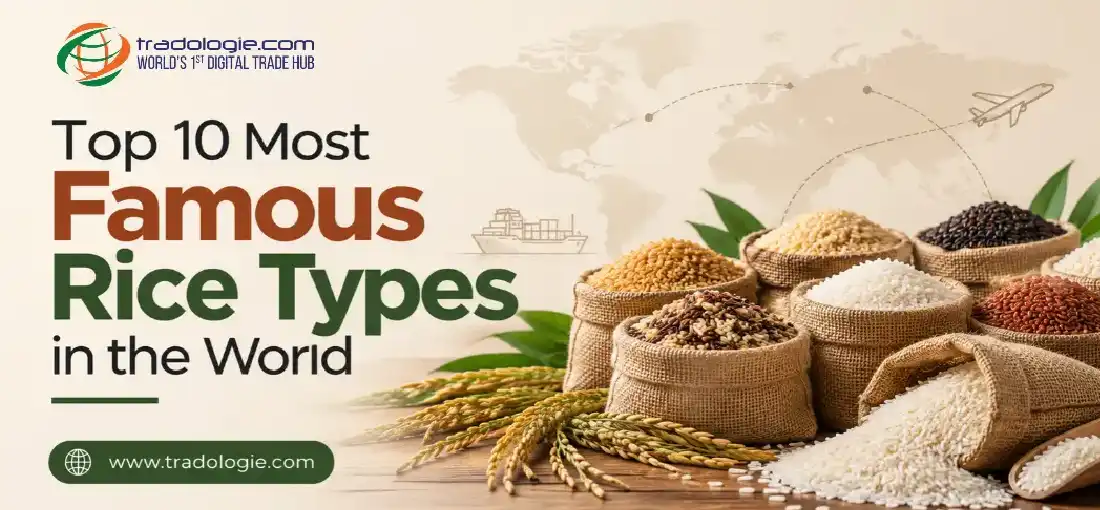
- The top 10 most famous rice types in the world include Basmati, Jasmine, Japonica, Arborio, Calrose, Wehani, Black Rice, Red Rice, Glutinous Rice and Sona Masoori.
- Basmati and Jasmine rice are known for their distinctive aroma, while Japonica and Calrose are valued for their soft, cohesive texture.
- Arborio rice is widely used for risotto, Glutinous rice for sticky dishes and desserts, and Black and Red rice for speciality meals.
- Rice demand varies by country according to local cuisine, grain characteristics, price, cooking properties and consumer preferences.
- For rice traders, grain length, aroma, moisture, broken percentage, milling quality and destination-country import requirements influence market suitability.
Introduction
Although rice is one of the most important food staples around the world, there can be a significant difference between the rice consumed in an Indian household compared to the rice eaten in Japan, Thailand or Italy. Different rice types can be distinguished by their aroma, long and slender grains, and sticky texture. To truly understand the world's most popular rice types you need to know why they are popular, what makes them distinctive, and where they originate from.
As a rice trader, importer or exporter you will find that there are many factors that can influence the demand for a rice type. This includes the grain length, aroma, starch content, cooking properties, and consumer preference. The top rice varieties globally include premium aromatic types, medium grain types and specialist types.
What Are The Major Types Of Rice Around The World?
Rice is generally categorised based on grain length, texture, aroma and processing. However, the actual cooking properties will depend on the starch content and processing.
| Type of Rice | Common Properties | Typical Use |
|---|---|---|
| Long grain | Long slender grains that typically do not clump. | Used for common meals, pilafs and rice dishes. |
| Medium grain | Shorter grains that have a soft texture. | Ideal for risotto and many Asian dishes. |
| Short grain | Small compact grains that can be sticky. | Used for sushi and select traditional dishes. |
| Aromatic | Has a distinctive aroma. | Used for premium meals and speciality dishes. |
| Glutinous | High amylopectin content with a sticky texture. | Used for desserts and traditional Asian dishes. |
These categories can often overlap. For example, aromatic long grain types like basmati and jasmine have different aromas and cooking properties.

Top 10 Most Famous Rice Varieties In The World
1. Basmati Rice
This is one of the most well-known premium top 10 rice types globally. Popular in South Asia, the Middle East and parts of Europe. Long slender grains, aroma and elongating properties make it popular for biryani, pulao and other rice dishes.
Basmati originates from India and Pakistan. Indian basmati types like Pusa Basmati 1121 and Pusa Basmati 1509 are particularly important in the export market.
As a trader you will want to consider the grain length, ageing, broken%, moisture and aroma. Different grades will be available which will influence the price point.
2. Jasmine Rice
Jasmine rice is very popular in Thailand. It is widely consumed in Southeast Asia and internationally. It is an aromatic long grain rice with a subtle aroma and soft, slightly sticky texture.
Thai Hom Mali is a premium jasmine rice type. This rice is popular due to its distinctive aroma and cooking qualities.
Jasmine rice does not have the same aroma or texture as basmati. If you are looking for fluffy, distinct grains then basmati may be the best choice.
3. Japonica Rice
Japonica rice is commonly cultivated in Japan, South Korea and parts of China. It typically has short to medium grain lengths with a soft, sticky texture.
This is very popular in Japanese cuisine. It is a suitable rice for sushi, rice bowls and everyday meals. As the rice has a relatively sticky texture it will help keep the grains together.
As an international supplier it will serve a completely different market to long grain aromatic rice. Grain appearance, texture, milling quality and consistency are often key factors.
4. Arborio Rice
Arborio rice is an Italian medium grain rice. It is best known for being used in risotto. It has high starch content which creates a creamy texture, whilst retaining some structure.
Although Arborio rice is strongly associated with Italian cuisine, it can be found in international retail and food service.
This rice has a strong appeal for culinary applications. Unlike basmati, Arborio is valued for its creamy texture.
5. Calrose Rice
Calrose rice is a medium grain rice developed in California. After cooking it generally has a soft texture and moderate stickiness.
It is used in rice bowls, select Asian-inspired dishes, sushi and common meals. It is popular with food service businesses due to its versatility. The rice has a softer texture compared to long grain rice.
When choosing Calrose rice it will be important to consider the consistency and suitability for the desired recipe. It will be different from aromatic rice types.
6. Wehani Rice
Wehani rice is an aromatic reddish-brown rice developed in California. It has a distinctive nutty taste, red bran exterior and chewy texture. It is associated with the Lundberg family of rice growers.
Unlike typical white rice, Wehani rice is usually sold as whole grain rice. It is used in salads, side dishes and meals where a nuttier taste and firm texture is preferred.
Despite being a specialist rice type it is not as widely traded as basmati or jasmine. However, it shows how consumers want more distinctive whole grain rice rather than typical white rice.

7. Black Rice
Black rice can also be known as forbidden rice. It is a rice with a dark colour due to anthocyanins in the outer layers. Depending on the rice type the rice can range from a deep purple to almost black after cooking.
Black rice is consumed in parts of Asia. It is becoming increasingly popular in speciality foods, desserts, salads and premium retail. It is an excellent rice to use in dishes where presentation is important.
It is important to note that there are multiple types of black rice. They can have different shapes, textures and cooking properties.
8. Red Rice
Red rice is another broad category. The rice has a red colour due to pigments in the bran. It is often sold as whole grain rice.
There are multiple types of red rice grown in Asia. For example, Bhutanese red rice is known for its distinctive colour and traditional meals.
Generally this rice has a firmer texture than polished white rice. If the bran is kept intact it can provide more fibre. The nutritional content will depend on the rice type and processing.
9. Glutinous Rice
Glutinous rice, also known as sticky rice or sweet rice, is popular in Southeast and East Asian cuisine. Despite its name this rice does not contain gluten. The rice is sticky due to the starch content, specifically its high amylopectin content.
It is commonly used in desserts, steamed meals and traditional dishes. It is also an important rice in many regional food cultures. It is often eaten with hands or in compact pieces.
Glutinous rice should not be confused with short grain rice. Both can be sticky however they have different starch properties.
10. Sona Masoori Rice
Sona Masoori is a popular medium grain rice in India. It is popular in Andhra Pradesh, Telangana and Karnataka. It is commonly used for everyday meals like steamed rice, lemon rice and many regional dishes.
Compared to premium extra-long-grain basmati rice it will generally have a lighter body and different texture. It is popular with customers who prefer a less aromatic rice.
This rice shows how not all rice needs to be premium to generate strong consumer demand.
Comparison Of World's Most Famous Rice Varities
| Rice Type | Origin | Grain/Texture | Use |
|---|---|---|---|
| Basmati | India/Pakistan | Long slender grains with aroma | Biryani/pulao |
| Jasmine | Thailand | Long grain with aroma and soft texture | Southeast Asian meals |
| Japonica | Japan/Korea/China | Short to medium grain with cohesive texture | Sushi/rice bowls |
| Arborio | Italy | Medium grain with high starch | Risotto |
| Calrose | USA (California) | Medium grain with soft texture | Rice bowls/common meals |
| Wehani | USA (California) | Reddish brown with nutty taste | Whole grain meals |
| Black rice | Various (Asia) | Dark grain (varies depending on rice type) | Desserts/speciality |
| Red rice | Various (Asia) | Red bran (often chewy) | Traditional meals |
| Glutinous | East/Southeast Asia | Extremely sticky | Desserts/steamed |
| Sona Masoori | India | Medium grain with light body | Common meals |
Note: These are commonly associated with these rice types.
What Factors Impact Demand For Rice Internationally?
As there are many different rice types there will not be one variety that will be suitable for everyone.
Factors that can influence demand include:
- Consumer preference: Some people will prefer aromatic long grain rice, whilst others will prefer softer or stickier rice.
- Price: Premium rice can command higher prices but common rice can generate high volumes.
- Cuisine: Local cuisine will influence what type of rice is imported.
- Quality: Grain length, broken%, moisture, aroma and milling quality can influence demand.
- Import requirements: You will need to check phytosanitary, food safety, labelling and customs requirements.
As an exporter it is important to not get caught up with the most famous rice types. You will need to ensure you are providing the right product for the customer. This means ensuring it is suitable for the intended use, price and technical requirements.
Conclusion
The diversity of rice across the world has developed over the years based on agricultural choices, regional cuisine and changing consumer preferences. Basmati and jasmine are popular for their aroma, japonica and calrose for their texture, arborio for its cooking properties and black/red rice for their distinctive appearance and whole grain properties.
For international traders, identifying the right rice for the right market will be essential. Knowing the grain properties, consumer preferences, origin and import requirements will provide you with a better starting point.
Ultimately, the most famous rice types cannot be treated as a uniform commodity. Every rice type has a distinctive culinary purpose and it is important to understand this when studying the global rice market.
Disclaimer
Rice varieties differ in their origin, grain characteristics, cooking properties and nutritional composition. Consumer preferences and market demand may vary by country. Exporters and importers should verify product specifications, applicable food safety standards, customs classifications and destination-country import requirements before entering into a commercial transaction.