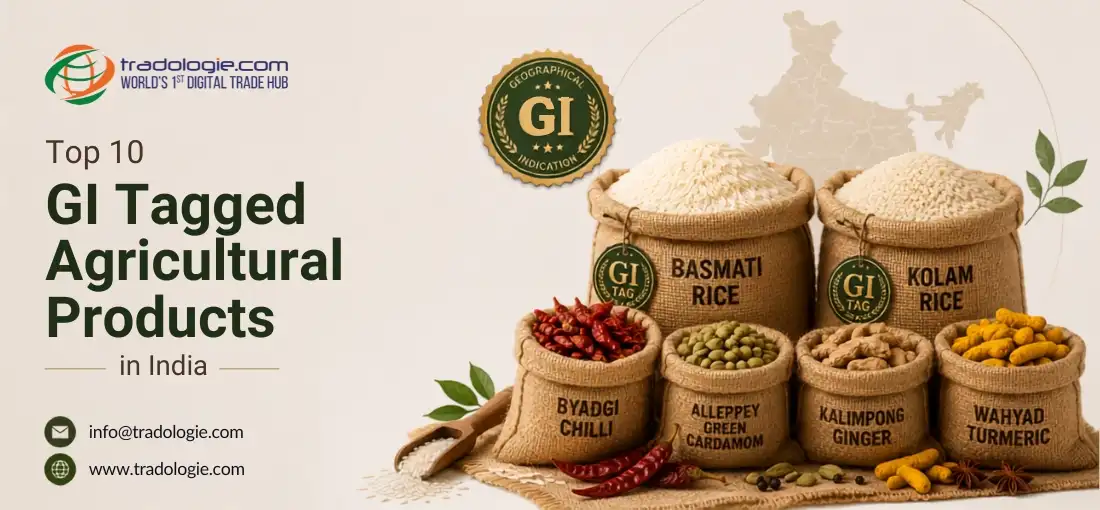
Key Highlights
- GI tags protect the regional identity and authenticity of agricultural products.
- GI-certified products can command premium prices in global markets.
- Basmati Rice is highlighted as India's strongest GI agricultural export.
- Darjeeling Tea, Guntur Sannam Chilli, and Kashmir Saffron are major GI products.
- Alphonso, Kesar, Nagpur Orange, and Shahi Litchi have strong fresh-fruit demand.
- Bhalia Wheat and Kashmir Walnut add value to India's GI agricultural exports.
- Exporters need Authorized User registration to use the GI logo officially.
Introduction:
There are many GI tagged Agricultural Products in India. But what exactly is a geographical indication tag for farm produce? To put it in very simple language and understand clearly, it is basically a tag that indicates that this particular crop can only grow in this particular region under the ideal soil and climatic conditions. This also means that this crop can't be replicated and it has a good B2B commercial value in the global commodity market.
In India, the climate and soil change every fifty kilometers or so. GI tags have turned simple regional harvests into multi-million-dollar global brands. Out of all the GI tagged items in the country, GI tagged food products in India drive the real export volume. They protect local farming communities from cheap knockoffs. And frankly, they help exporters pull in much better profit margins. Looking at trade data, certified GI registered agricultural products easily command a 20% to 40% price premium in global markets over regular, unbranded commodities.
So if you are an exporter, a wholesale buyer, or you're just curious about India’s top regional harvests, here is how the top 10 GI Tagged Agricultural Products in India actually stack up.

Why GI Certification Is Such a Big Deal for Agri Exports
Think about what used to happen before India passed the Geographical Indications of Goods Act back in the year 1999.
Any trader could take random long-grain rice and sell it as "Basmati." Or package basic green tea and call it "Darjeeling." What happened? Genuine regional farmers got pushed right out of the market because they couldn't compete with cheap, mass-produced imitations.
Once a regional crop secures that official GI tag, the whole commercial setup changes:
- Real Premium Pricing: International buyers in the Gulf, Europe, and the US actively look for authentic GI seals. And yes, they gladly pay extra for the real thing.
- A Legal Shield: It becomes flat-out illegal for traders outside that specific geographical belt to use the brand name.
- Traceability: Importers get a clear paper trail that traces the shipment directly back to verified farm cooperatives in the region.
With over 200 food and agricultural items registered today, India’s export position in specialty regional crops has never been stronger.
The Top 10 GI Tagged Agricultural Products in India
1. Basmati Rice
So what's the Indian rice market's biggest star? When people talk about GI tagged rice varieties in India like Pusa Basmati rice varieties and traditional rice varieties, Basmati is always the first name that comes up. Frankly, it's not surprising at all.
It grows down in the fertile river plains at the foothills of the Himalayas across northern India. It remains the country's absolute strongest GI agricultural export. And the demand just keeps growing year after year.
Why does it stand out? It's that unique mix of mountain soil, canal water, and traditional aging. When you cook it, the grains stretch out to double their dry length without sticking together. Plus, they release a distinct nutty aroma. Buyers across the Middle East, Europe, and the US pay top dollar for it. It's the ultimate example of how protecting a regional brand creates massive global demand.
2. Darjeeling Tea
It would not be a hyperbole to say that Darjeeling tea is simply the undisputed crown tea among all the teas produced in India. In fact, it was among the very first products in India to get the Geographical Indication Tag way back in 2004. In the pristine hills of Darjeeling, you will find beautiful legacy estates that have been growing the tea for many decades. These estates hold the tag of geographical indication and export tea globally to the global markets that are fond of such unique tea. In fact, the premium tea that is cultivated in the region is so distinct that connoisseurs around the world call it the "Champagne of Teas."
The cool altitude, the frequent rainfall, and the rich soil chemistry all come together here. It gives this tea a natural muscatel flavor profile that you simply can't get anywhere else. Getting that GI tag was a massive legal victory for local growers. Why? Because if we look at history you will witness millions of kilograms of fake tea being sold globally under the "Darjeeling" label—way more than those hills could ever physically grow. Today, genuine Darjeeling tea commands top prices at auctions from London all the way to Tokyo.
3. Guntur Sannam Chilli
If you work anywhere in the spice trade, you already know about Guntur in Andhra Pradesh. It is the main hub for Indian chillies. And out of all the spicy varieties moving through that market every day, the Guntur Sannam Chilli—specifically that S17 grade—is the undisputed star.
Among GI tagged spices in India, Guntur chilli moves massive physical volume. It's famous for having a biting heat, a deep red color, and high capsaicin levels. Hot sauce makers, spice blenders, and oleoresin processors across Asia and North America buy it constantly. That GI tag gives foreign buyers peace of mind that heat levels will stay consistent from batch to batch.
4. Kashmir Saffron
When it's about Geographical Indication Tag, how can we forget Kashmiri Saffron? Well, we simply can't. The pristine hills of the Himalayas grow this premium commodity, and the value of the beautiful petals sold in the global market is simply unbeatable.
In fact, Kashmiri saffron is the only saffron in the world that is grown at such a high altitude of 1,600 to 1,800 m above sea level. And there is no surprise that, because of this high altitude and unique climatic conditions, the threads have a deep crimson colour, a heavy aroma, and crocin levels that are exceptionally high. The prices of Kashmiri Zafran have increased gradually over the years ever since it secured the prestigious tag of geographical indication in the year 2020.

5. Alphonso Mango (Hapus)
Ask any fruit trader in Maharashtra to name the absolute best mango. They will immediately point you straight toward the Konkan coastal belt. Famous orchards in places like Ratnagiri, Sindhudurg, and Raigad.
Alphonso mangoes that are grown in this beautiful coastal belt have an extremely rich, sweet, buttery pulp. The aroma can literally fill up an entire room. This is the reason that the GI tag protects local Konkan growers from cheaper lookalikes shipped in from other states. Chartered cargo flights carry crates of certified Hapus straight to high-end grocery chains across global markets in the UK, the US, and the Gulf during peak summer harvest.
6. Kesar Mango
We all know that Maharashtra has its Alphonso. But it is also interesting to see that Gujarat claims its own mango fame with the Gir Kesar Mango.
This GI-tagged fruit grows around the sunny foothills of the Gir sanctuary in Junagadh and Amreli. It stands out instantly with its bright orange pulp and intense sweetness.
Kesar is a massive hit for both fresh fruit markets and commercial pulp processing. That deep sweetness makes it an ideal raw material for ice creams, desserts, and mango drinks. It drives heavy export orders across the Middle East and North America every single harvest season.
7. Nagpur Orange
Nagpur in Maharashtra didn't earn the name "Orange City" by chance. The specific soil setup and dry climate over in the Vidarbha region produce a mandarin orange with a sweet-and-tangy balance that is hard to find anywhere else.
The GI tagged Nagpur Orange has turned into a major commercial success story for local farmers. It supplies domestic fruit markets as well as juice processing factories. Every season you'll see heavy truckloads moving across the border into Bangladesh, Nepal, and down into the Middle East.
8. Shahi Litchi
Shashi Lichi is another unique agricultural product produced in the beautiful Muzaffarpur district of Bihar. What's interesting is that the rich riverbed soil and a unique humid weather condition make up the perfect growing conditions for Shahi Lichi, and with give this commodity its GI Tag. It has a very sweet, juicy white pulp along with a tiny seed within. This commodity is said to have a very subtle rose fragrance that no other Lichi in the world has.
Fresh litchis go bad extremely fast after picking. Getting that GI tag really helped local farmer groups set up dedicated cold-chain transport routes. Today, fresh Shahi Litchis get air-freighted straight out of Bihar to major Indian metros and international destination ports within 48 hours of being picked off the tree.
9. Bhalia Wheat
If you look at GI tagged wheat varieties in India, Bhalia Wheat from Gujarat and Sharbati Wheat from Madhya Pradesh, sit in a category all by themselves. It's grown organically without artificial irrigation down in the rain-fed Bhal region. This durum wheat is naturally packed with high protein and carotene.
What makes Bhalia wheat so popular in food processing? It's the hard grain texture and high gluten content. That makes it perfect for manufacturing semolina, pasta, and flatbreads. The fact that it's drought-resistant and grown naturally without chemicals gives it a really strong position in premium organic food markets.
10. Kashmir Walnut
Finishing up the list is the Kashmir Walnut, a major horticultural asset coming out of the scenic valleys of Jammu & Kashmir. Kashmir actually produces the vast majority of India's total walnut crop. These nuts are known for being rich in natural oils and heavy on flavor.
Because they grow naturally without heavy chemical fertilizers, Kashmiri walnuts—which come in both thin-shelled (Kagzi) and medium-shelled options—see steady demand month after month. They are a staple buy for commercial bakery chains, confectionery brands, and health-conscious retail consumers across both local and international trade channels.
At a Glance: Top GI Agri Products Summary
Here is a quick snapshot showing how these ten famous GI tagged food products in India compare against each other.
| Product Name | Category | Primary Origin Region | Core Commercial Appeal |
|---|---|---|---|
| Basmati Rice | Food Grain | Northern River Plains | Long grain that stretches when cooked, distinct aroma, huge export volume |
| Darjeeling Tea | Plantation Crop | Darjeeling Hills, West Bengal | Rare muscatel flavor profile, luxury market positioning |
| Guntur Sannam Chilli | Spice | Guntur, Andhra Pradesh | Biting heat, deep red color, ideal for oleoresin extraction |
| Kashmir Saffron | Spice | Pampore, Jammu & Kashmir | Deep crimson threads, high crocin content, commands top prices |
| Alphonso Mango | Fresh Fruit | Konkan Coast, Maharashtra | Creamy sweet pulp, heavy fragrance, high demand in luxury markets |
| Kesar Mango | Fresh Fruit | Gir Region, Gujarat | Bright orange pulp, very sweet, favorite for commercial pulp |
| Nagpur Orange | Fresh Fruit | Vidarbha, Maharashtra | Perfect sweet-tangy juice balance, great for fresh and processed trade |
| Shahi Litchi | Fresh Fruit | Muzaffarpur, Bihar | Sweet juicy pulp with a small seed, built for fast air-freight |
| Bhalia Wheat | Food Grain | Bhal Region, Gujarat | High protein durum wheat, rain-fed organic crop, great for pasta |
| Kashmir Walnut | Nut / Horticulture | Valleys of Jammu & Kashmir | Naturally high oil content, chemical-free growth, bakery favorite |
How Importers and Exporters Can Capitalize on GI Tags
So if you are working in the agri-trade space, how do you actually use these regional GI certifications to build real commercial value? How do you avoid competing in endless price wars?
First, you need to register as an "Authorized User." Just buying a GI crop from a local mandi doesn't mean you can automatically print the official GI logo on your export cartons. Exporters have to formally apply and register as an Authorized User with the GI Registry down in Chennai. Having that legal stamp builds instant credibility when negotiating with foreign customs officers and large retail buyers.
Next, make sure you take advantage of APEDA support programs. The Agricultural and Processed Food Products Export Development Authority actively runs promotional schemes, funds buyer-seller meets, and helps cover costs for trial shipments that feature GI goods.
Also, shift your focus toward packaging that is consumer ready. The problem with bulk container shipments is that they usually lose their regional identity the moment they land at a foreign port. If you pack GI goods into pouches that are retail ready that feature origin stories and official QR codes, you capture much higher retail margins inside overseas supermarkets.
Bottom Line
At the end of the day, a Geographical Indication tag is much more than legal paperwork sitting on a government desk. It's a way of protecting local soil, generational farming knowledge, and product quality that can't be cloned in a lab or a factory.
Whether it's the extra length of cooked Basmati, the aroma of Kashmiri saffron, or the sweet pulp of a Konkan Alphonso, India's GI-tagged agricultural products give international buyers something that standard commodity markets can't offer—100% genuine origin and quality. And for smart trade businesses, bringing those regional products to the world stage is just good business.





.webp "Trade Shows vs. Digital Trade Hubs in 2026: Why Smart Agro Exporters Prefer Tradologie for Verified Global Buyers")