OPC vs PPC Cement: Choosing the Right Grade for Your Construction Needs
Key Highlights:
- Price & Performance Variance: OPC and PPC differ in strength development, durability, and cost, which directly impact project outcomes.Rising demand for plant-based protein, climate-resilient crops, and food security concerns is making them reliable commodities for importers and exporters alike.
- Market Growth: India's cement market is expected to grow to USD 470 billion by 2030, mainly because of the rising infrastructure projects and the expansion of real estate.
- Major Applications: OPC is mainly used for strong structures and projects that need faster completion, while PPC is used for large concreting work and construction focusing on long-term durability.
- Procurement Channels: Buyers can source cement from plants, distributors, dealers, and online B2B platforms like Tradologie.
- Smart Procurement: Long-term supplier relationships, bulk purchasing during demand lulls, and strict quality certification checks ensure consistency in cost and performance.

Introduction:
Cement is the most essential element in construction, acting as the binding material that defines the strength and longevity of a project. In India, two types of cement dominate the market — Ordinary Portland Cement (OPC) and Portland Pozzolana Cement (PPC).
While both serve the same fundamental purpose, their composition, application, and long-term benefits are different in nature. India's cement demand is projected to rise steadily alongside urbanization, infrastructure push, and housing growth, and choosing the right cement grade is critical for contractors, developers, and institutional buyers.
For contractors and buyers looking to buy PPC cement in bulk in India, understanding its role in long-term durability and cost efficiency is key. Let's have a look at each of the critical aspects in detail.
Why OPC and PPC Cement Differ in Application
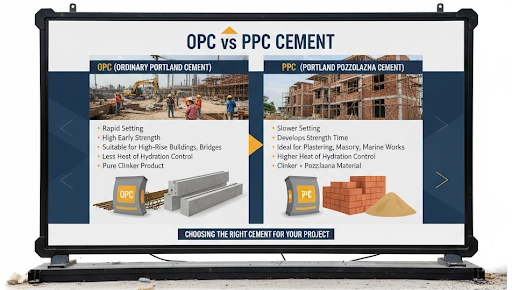
Knowing the main differences between OPC and PPC helps buyers plan their cement purchase in line with the specific needs of their projects.
- OPC (Ordinary Portland Cement) OPC is known for early strength gain and faster setting, and it is widely used in high-rise buildings, bridges, and industrial structures. It is costlier than PPC but ensures speed, which is vital in large-scale projects with tight deadlines.
- PPC (Portland Pozzolana Cement) PPC is manufactured by blending OPC with pozzolanic materials like fly ash, PPC develops strength gradually but offers greater resistance to chemicals, moisture, and cracks.For businesses looking to procure PPC cement directly from manufacturing plants in India, it stands out as a more economical, eco-friendly option, ideal for dams, residential housing, and water-retaining structures.
Market Size and Trends
- Cement Demand in India: India is the second-largest cement producer globally, with consumption expected to cross 470 million tons by 2030.
- Urban Infrastructure Growth: Government focus on smart cities, metro rail, and housing schemes is boosting cement procurement.
- Sustainability Shift: PPC is increasingly favored for its eco-friendly composition and reduced carbon footprint.
- Preference Split: While OPC dominates institutional and high-strength projects, PPC continues to lead in residential and infrastructure segments due to cost-effectiveness.

Different Buying Options for Cement
Buyers have multiple procurement routes depending on scale, budget, and consistency requirements:
- Direct from Plants : Best for institutional buyers needing bulk supply at the lowest price.
- Through Third-Party Agents : Offers flexibility and negotiation benefits, suitable for mid-to-large contractors.
- Distributors : Reliable supply chain partners for medium-scale buyers balancing price and volume.
- Dealers/Retailers : Common for small builders with flexible quantities but higher per-bag costs.
- Online Platforms: B2B portals like Tradologie.com enable transparent pricing, access to multiple cement suppliers, and faster procurement decisions.
- Government Tenders & Auctions : Major infrastructure projects often rely on e-auctions to secure bulk cement at competitive rates.
Tips for Long-Term Cement Procurement Planning
To manage cost efficiency and supply consistency, contractors and buyers should adopt these strategies:
- Build Strong Supplier Relationships Long-term partnerships ensure timely delivery and protect against sudden price spikes.
- Diversify Procurement Sources Depending on a single supplier can be risky. A mix of direct, distributor, and online sourcing reduces supply chain disruption.
- Bulk Purchases During Demand Lulls Cement prices often dip during monsoon seasons when construction slows down. Buying in bulk during such periods helps save costs.
- Focus on Certification and Standards Always procure BIS-certified OPC or PPC cement to maintain structural safety and compliance.
- Leverage Digital Platforms Use online B2B platforms to monitor price trends, compare suppliers, and make data-backed procurement decisions.
- Plan with Market Forecasts With cement demand tied to government projects and real estate cycles, forecasting ensures buyers stay ahead of rising costs.
Future Outlook
The cement industry in India will remain robust with continued demand for housing, infrastructure, and industrial projects. Buyers who carefully match OPC and PPC to project requirements, while leveraging bulk procurement and digital platforms, will optimize both cost and performance.
Institutional buyers stand to gain the most by aligning with credible cement suppliers and adopting flexible procurement models.
Conclusion
Choosing between OPC and PPC cement is not just about cost, it is also about the strength, durability, and long-term performance of projects. By knowing the differences, building strong supplier ties, and planning procurement in-advance, businesses can get quality material and lower risks.
With India's cement market expected to grow fast, contractors and builders who work with trusted suppliers and follow smart procurement practices now will have a big advantage in the future.




.webp "JK Super vs UltraTech vs Shree Cement: Which One is Best for Your Project in 2026-27?")