Key highlights
- Incoterms are commercial levers, not just logistics terms — pricing signals who controls cost, risk, and execution
- FOB keeps exporter risk low but shifts complexity to the buyer; best for large, freight-savvy importers
- CFR is the most deal-friendly middle ground in bulk agro trade, balancing control, visibility, and risk
- CIF simplifies buying decisions but increases margin and liability pressure on the seller
- Buyers evaluate execution strength, not just price — demurrage handling, delays, and repeat reliability matter
- Flexibility wins contracts — exporters who adapt FOB/CFR/CIF to buyer profiles close more deals
- No Incoterm is universally “best”; the right choice is the one that helps the buyer say yes
- Smart pricing reduces friction post-shipment and protects margins in volatile freight markets
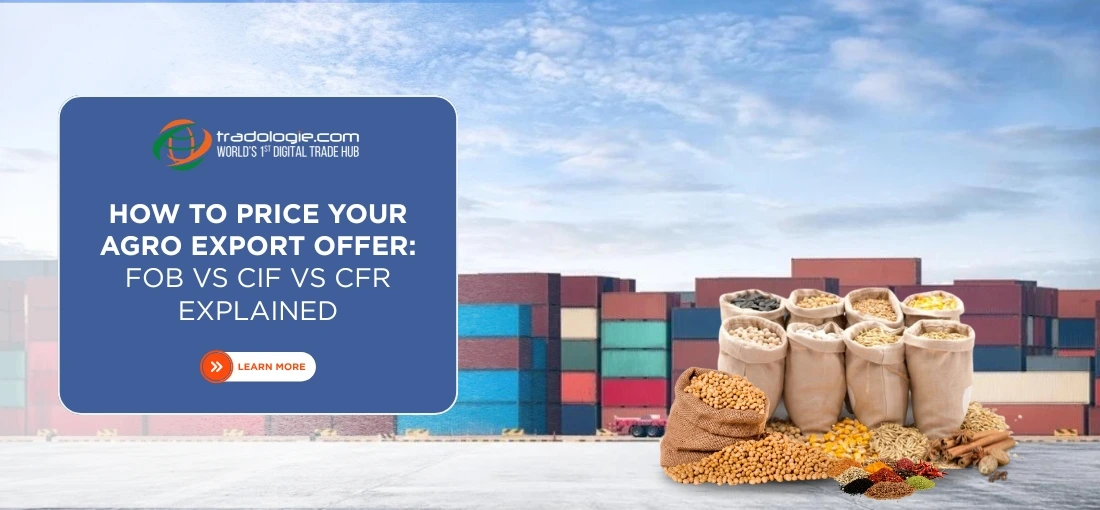
Why Incoterms Matter More Than Price in Agro Export Negotiations
Pricing an agro export offer isn’t about choosing the “right” Incoterm from a list. It’s about knowing who controls the shipment, who carries the risk, and who is best placed to manage costs. Get that wrong, and even a competitive price won’t convert into a contract.
FOB, CFR, and CIF dominate bulk agriculture trade like wheat, basmati rice and pulses for a reason. They’re familiar, negotiable, and work well for containerised as well as breakbulk cargo. But each sends a different signal to your buyer—and each shifts responsibility in very real ways.
FOB: When Control Matters More Than Convenience
FOB (Free on Board) pricing is straightforward. You quote up to the port of loading. Once the cargo is on board, the buyer takes over freight, insurance, and downstream risk.
This works best when:
- The buyer has strong freight contracts
- The buyer wants full control over vessel selection and routing
- You’re selling into large trading houses or mills
For exporters, FOB keeps things clean:
- Lower exposure to freight volatility
- Easier cash-flow planning
- Fewer post-shipment disputes
The flip side? FOB quotes often look cheaper on paper, but they shift complexity to the buyer. Smaller importers may hesitate if they don’t have reliable freight access or port-side experience.
CFR: The Middle Ground Agriculture Traders Prefer
CFR (Cost and Freight) is where many bulk agriculture deals actually close.
You handle ocean freight. The buyer handles insurance and takes risk once the cargo crosses the ship’s rail at origin.
Why CFR works well in practice:
- Buyers get landed visibility without worrying about freight booking
- Sellers can leverage freight margins if they have scale
- Risk is still clearly defined
In markets facing logistics congestion or limited vessel availability, CFR becomes attractive because the exporter solves the hardest part of the transaction—moving the cargo.
For grains, pulses, oilseeds, and animal feed, CFR is often seen as the most commercially balanced structure.

CIF: When Buyers Want a Single Number
CIF (Cost, Insurance, and Freight) offers maximum simplicity for the buyer. One price. One responsibility point at the destination port.
This is common when:
- Buyers lack insurance arrangements
- The destination market is price-sensitive
- The food exporter has strong logistics and insurance partnerships
However, CIF carries hidden pressures for sellers:
- Insurance claims can turn messy
- Margins can erode if freight spikes post-contract
- Buyers may assume more seller responsibility than the Incoterm actually implies
CIF works best when roles are clearly documented and both sides understand where liability ends.
What Buyers Don’t Say—but Always Think
In real negotiations, buyers look beyond the Incoterm label. They ask:
- Who manages delays?
- Who absorbs demurrage risk?
- How transparent is the freight component?
- Can this supplier execute repeatedly?
A mill buying wheat or maize doesn’t just want the lowest price. They want predictability, especially when currency pressure, port congestion, or food inflation is in play.

That’s why agricultural exporters who can flex between FOB, CFR, and CIF—based on buyer profile—close more deals than those who insist on a single structure.
Choosing the Right Term Is a Commercial Decision
There is no universally “better” pricing term.
- FOB suits strong buyers with freight muscle
- CFR fits most bulk agriculture trade flows
- CIF helps win price-led or less sophisticated buyers
Smart agriculture exporters don’t ask, “Which Incoterm should I use?”
They ask, “Which term helps this buyer say yes—and come back?”
Final Takeaway
FOB, CFR, and CIF are not just logistics choices. They are negotiation tools.
Used well, they:
- Improve deal conversion
- Protect margins
- Reduce post-shipment friction
Used poorly, they turn good offers into costly lessons.
In food exports, pricing isn’t about being cheapest.
It’s about being clear, reliable, and easy to trade with.


.webp "Indian Agriculture Seasons — Kharif, Rabi and Zaid Complete Step-by-Step Guide")