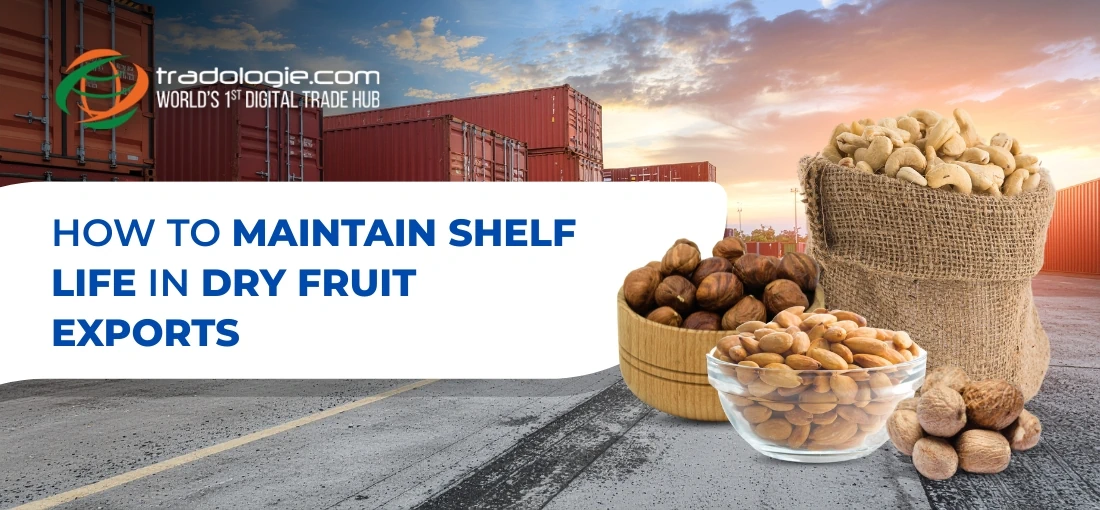
How to Maintain Shelf Life in Dry Fruit Exports
Key Highlights
- Dry fruits look stable, but they spoil faster than most people think. Problems usually show up after the shipment lands.
- Moisture is the first thing dry fruits buyers check. Even a small increase can ruin a full container on long routes.
- Broken or dusty lots don't travel well. Cleaner, uniform cargo simply lasts longer. Simple as that.
- Good packaging saves shipments. Cheap bags don't.
- A lot of losses happen in storage, not at sea. Heat and humidity eat away shelf life quietly.
- Containers need checking too. Wet floors or bad smells have spoiled many “perfect” loads.
- Paperwork delays hurt quality. The longer cargo sits at port, the older it gets.
- Nothing fancy fixes shelf life. Just small checks, every time, before the doors close.
Introduction:
The global dried fruit market is already worth around $12 billion today, and if current trends hold, it could touch $16.5 billion by 2030, growing steadily at about 5-6% a year. Dry fruits look tough when it comes to their shelf life. That's the first illusion. They sit there quietly in sacks and cartons, light, dry, harmless. No juice, no pulp, no obvious risk. But anyone who has handled exports for a few seasons knows the truth — dry fruits can go bad just as easily as fresh produce, only more quietly.
And quiet problems are the expensive ones.
A container can travel for four weeks looking perfectly fine on paper and still arrive with mould spots, stale smell, or discoloured kernels. By the time the doors open at the destination port, the argument is already lost.
Keep reading this informative piece of blog if you are a bulk dry fruits supplier . It will tell you the best practices on how to maintain the shelf life in bulk dry fruits exports.
Start with moisture — always
If there's one thing seasoned bulk dry fruits buyers ask first, it's moisture. Not price. Not packaging. Moisture.
Dry fruits are supposed to be dry. That's the whole idea. Even a small rise in moisture levels can shorten shelf life faster than most people expect. Especially on long sea routes.
Containers heat up in the day, cool at night. Condensation builds. The air becomes humid. And suddenly that “safe” cargo isn't so safe.
A few extra percentage points of moisture is all it takes for mould or fungal growth to begin.
Most experienced dry fruits exporters don't leave this to guesswork. They test every lot before loading. Handheld moisture meters, random bag sampling, third-party lab inspections. There is a well-established testing and clearance mechanism global dry fruits importers are strict about it.
Because once the container sails, there's no rewind button.
Clean product, clean start
Another thing people underestimate is basic cleaning.
Stones, dust, broken pieces, shrivelled kernels — they don't just look bad. They affect stability. Broken pieces absorb moisture faster. Powder and dust trap humidity. That's how spoilage starts.
Before packing, most serious exporters run the lot through graders and sorters. Remove foreign matter. Separate broken pieces. Keep the lot uniform.
- It's not about perfection. It's about consistency.
- Uniform lots store better. Ship better. Age better.
- In bulk trade, small details add up quietly.
Packaging is half the battle
Ask any warehouse manager and they'll tell you — good packaging does more than marketing ever will.
Dry fruits breathe. They react to air and humidity. So the wrong packaging can undo everything you did right at sourcing.
Most exporters today use:
- moisture-barrier liners
- food-grade poly bags
- vacuum or nitrogen flushing for sensitive products
- strong corrugated cartons for stacking stability
The idea is simple. Keep outside air out. Keep internal conditions stable.
Loose or low-grade packing might save a few cents per bag, but one rejected container can wipe out a year’s savings.
Packaging is insurance. Not cost.
Storage before shipment matters just as much
A lot of damage doesn't happen at sea. It happens before the container even leaves.
Dry fruits sitting in a hot warehouse for weeks lose shelf life quietly. High temperature speeds up oxidation. Nuts go rancid faster. Colours dull. Texture changes.
Good exporters treat storage like part of the product, not an afterthought.
Cool, dry warehouses. Pallets off the floor. Proper ventilation. No direct sunlight. No damp corners.
It sounds basic. But basic practices are what keep shipments safe. In this business, never ignoring the basics is always a good practice.
Containers need attention too
People focus on the cargo and forget the box carrying it.
But containers can cause half the problems.
A slightly wet floor, leftover odour, or poor ventilation can ruin an otherwise perfect load. So before loading, most teams check:
- dryness of the container floor
- no leaks or rust
- no strong smells
- proper lining or desiccants
Desiccant bags, especially on long routes, are becoming standard. They absorb excess moisture during temperature swings.
Small steps. Big difference.
Sometimes it's these small precautions that separate a smooth delivery from a dispute.
Documentation and checks aren't just paperwork
Shelf life isn't only physical. It's also procedural.
Incorrect fumigation, missing certificates, or delayed customs clearance can leave cargo sitting at ports for days under poor conditions. And time is the enemy of dry fruits.
Good exporters line up paperwork early — phytosanitary certificates, fumigation records, quality reports. The idea is simple: move fast through ports, not sit around.
The longer the cargo waits, the more it ages.
And aged stock rarely sells happily.
Conclusion
There’s no secret formula to maintaining shelf life in dry fruit exports. It really comes down to small, consistent habits done right every single time — checking moisture, cleaning the lot properly, packing it tight, keeping storage cool, inspecting containers, and moving shipments without unnecessary delays. Nothing fancy, nothing dramatic. Just discipline. That’s how experienced traders work. They don’t depend on luck or assume things will somehow be fine. They plan for what could go wrong and fix it before it has the chance to. Because once a container is out at sea, it's out of your hands. And in this business, prevention almost always costs less than trying to repair the damage later.