Key Highlights
- The UAE relies heavily on imported packaged food due to limited domestic production.
- UAE packaged food market projected to reach nearly USD 19.8 billion by 2031.
- Importing requires collaboration with a licensed UAE food importer or distributor.
- Products must be registered with municipal systems like Dubai’s Montaji before shipment.
- Strict Arabic labeling and food safety compliance are mandatory for packaged food imports.
- UAE also acts as a regional re-export hub for packaged food trade.
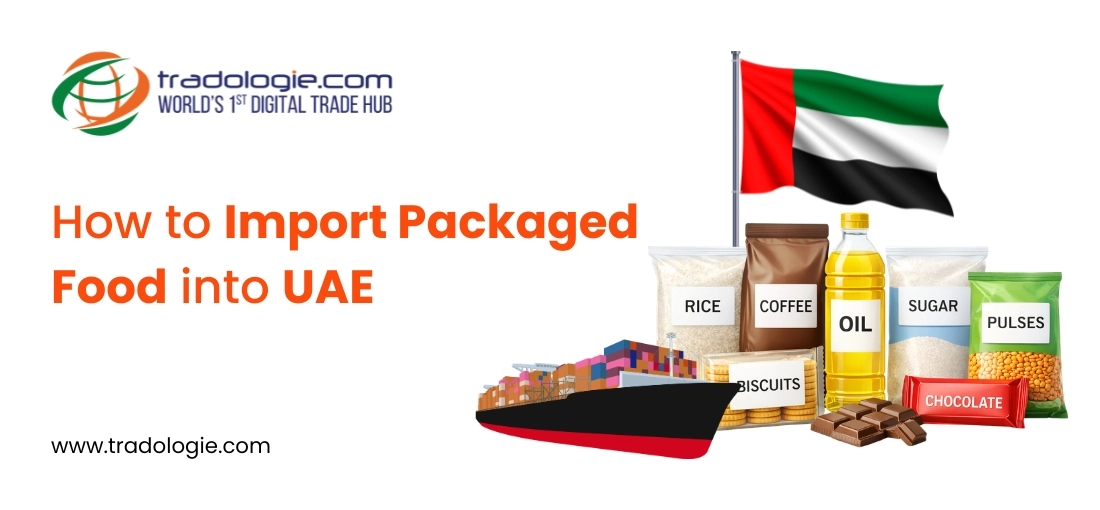
Anyone who has spent even a short time in a supermarket in Dubai will notice something pretty quickly. A lot of the food on the shelves isn't produced locally. It comes from everywhere—India, Europe, Southeast Asia, and many other places. The UAE simply doesn't produce enough food to feed its population, so imports fill the gap.

That's exactly why so many companies look to import packed food products in the UAE. The demand is already sitting there in plain sight. Supermarkets keep rotating new brands, new flavours, and all sorts of international products onto the shelves. One aisle has snacks and sauces, another is full of frozen meals and breakfast cereals. Imported packaged food is pretty much everywhere you look.
Dubai also has another interesting role in this trade. A lot of businesses buy packed food in Dubai and then ship it onward to other regions. Gulf countries, parts of Africa, sometimes even Central Asia. In other words, the UAE isn't just consuming packaged food—it's also moving it around the region.
The Numbers Make the Opportunity Pretty Clear
The market size alone explains why exporters pay attention.
If we take an estimate, the UAE food products market is expected to reach around USD 16.3 billion in 2026. This is slightly up from about USD 15.68 billion in 2025. And it is interesting to note that the market could climb to nearly USD 19.8 billion by 2031 if current projections hold. That works out to roughly 4% annual growth.
A few factors keep the demand moving:
- A very diverse expatriate population
- Consumers who are comfortable with international food brands
- Modern retail chains with massive product ranges
- Rising interest in premium and organic foods
Because of this environment, many distributors prefer to import FMCG food products in bulk instead of bringing in small shipments. For packed food products suppliers and bulk food exporters from India, the UAE often becomes the first serious entry point into the Middle East.
But before those products reach supermarket shelves, there are a few practical steps exporters need to understand.
Step 1: Work With a Licensed Importer
The first thing exporters usually discover is that food imports in the UAE must go through a licensed business.
To import packed food products in the UAE, the importing company must hold a valid food trading license issued by the economic authority of the respective emirate.
Most international brands don't rush into opening their own company. Instead, they work with a local distributor who already understands the market. That distributor takes care of the import documentation, customs clearance, and distribution side of things.
For bulk food exporters from India, this approach tends to save a lot of time and unnecessary complications.
Step 2: Register the Product Before Shipping
Here's a step many first-time exporters overlook.
Before packaged food enters the UAE market, the product itself usually needs to be registered with local authorities.
In Dubai, this is done through the Montaji system managed by Dubai Municipality. Other emirates follow similar processes through their own municipal food departments.
The registration process typically asks for:
- Product name and category
- Ingredient list
- Country of origin
- Label artwork and packaging details
- Shelf-life information
Once the product gets approval, shipments can start moving normally. Without registration, even companies trying to import FMCG food products in bulk may find their cargo stuck at the port longer than expected.
Step 3: Labeling Is Not Something You Can Ignore
Food labeling is one area where the UAE authorities are particularly strict.
To put it bluntly, the country doesn't tolerate sloppy labeling. Everything that needs to be on the package should be there—clearly and correctly. If something important slips through the cracks, the shipment might have to go through relabeling before it can be sold.
Typical label details include:
- Product name
- Ingredients list
- Net weight or volume
- Country of origin
- Production and expiry dates
- Storage instructions
Arabic labeling is mandatory. Many companies avoid future headaches by printing bilingual labels right from the start.

Step 4: Food Safety Checks Are Taken Seriously
The UAE is definitely not a place that takes food safety and norms casually. In fact, just like any professional country, imported food products go through regular checks to make sure that everything meets the required standards.
Officials are quite vigilant about things that are related to ingredients, additives, shelf life, and even the extent as to how the product is packaged just to ensure that it matches relevant norms and standards. If everything lines up the way it should, the shipment usually moves forward. The cargo can get instantly held back if something does not add up. That's why experienced packed food products suppliers usually double-check compliance before sending cargo to the UAE.
Step 5: Make Sure the Import Documents Are Ready
Once the shipment reaches the UAE port, customs authorities review the documentation carefully.
Typical documents include:
- Commercial invoice
- Packing list
- Bill of lading or airway bill
- Certificate of origin
- Health certificates for certain food products
Clearance generally happens without major delays and as such any goof ups when everything lines up with the registered product details and nothing in general is fishy. Companies that regularly import FMCG food products in bulk for the b2b procurement needs in general often rely on freight agents to this process smoothly and comprehensively without any hassles as such.
Step 6: From the Port to the Retail Shelf
Once the shipment clears customs, the products move into the distribution network.
The UAE has a very organised retail ecosystem. Supermarkets like Carrefour, Lulu, and Spinneys carry huge selections of imported packaged food. Hotels, restaurants, and catering businesses also purchase large quantities through distributors.
Another interesting side of the trade is re-export. Traders frequently buy bulk food products in Dubai and then move them onward to neighboring markets. That's one of the reasons Dubai continues to function as a regional trading hub.
Why Exporters Keep Targeting the UAE
For international suppliers, the UAE offers something fairly practical: strong demand combined with efficient logistics.
Once exporters understand the registration process, labeling requirements, and documentation rules, the system becomes relatively straightforward to navigate.
That's why bulk food exporters from India and many other global suppliers continue expanding their presence here. For many of them, the UAE isn't just another export destination-it's the gateway to the wider Middle Eastern food market.