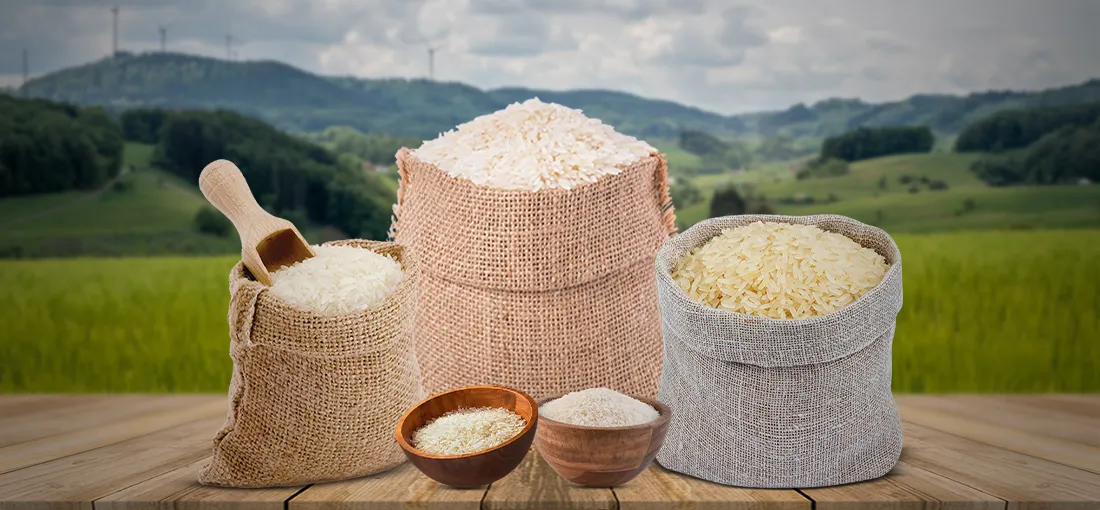
India's Basmati Export Market: Insights for Bulk Buyers
India currently leads the world in Basmati rice exports, accounting for more than 70% of the global market share (APEDA). Often dubbed "The Queen of Fragrance", Basmati rice from India is so popular because of its sophisticated differentiation through its GI (Geographical Indication) mark and impressive elongation properties after cooking. With varieties 1121, 1509, and 1718 at the top, it has been noted that the industry has accomplished an impressive integration in terms of technological aspects.
If you are searching for Basmati rice exporters or suppliers in India, this page provides:
- Complete list of Basmati varieties (Raw, Steam, Sella)
- Profiles of leading Basmati exporters
- Technical specifications (Length, Purity, Moisture)
- Procurement strategies via Tradologie

Top 10 Basmati Rice Exporters from India
The leading suppliers and exporters of Basmati rice, known for their massive milling capacities, strong global presence, and compliance with international safety regulations, include:
- KRBL Ltd: The largest rice miller in the world with advanced ageing facilities, exporting to over 80 countries, and renowned for the “India Gate” brand.
- LT Foods Ltd: Famous for the "Daawat" brand; specialises in organic and premium aged Basmati with a dominant presence in the USA and Europe.
- Kohinoor Foods: A pioneer in the Basmati segment, utilising high-tech milling plants and holding ISO/HACCP certifications for stringent Middle Eastern markets.
- Shri Lal Mahal Group: One of India's oldest exporters (est. 1907) with a processing capacity of 3,000 MT per day and vast experience in bulk global contracts.
- Amir Chand Jagdish Kumar (Exports) Ltd: This major international Basmati rice supplier, known for its "Aeroplane" brand, specialises in cultivating and exporting premium extra-long grain Basmati rice. The company primarily exports to the sophisticated Gulf countries.
- Sarveshwar Foods: Targeting health-conscious customers in the European Union and North America, the company specialises in organically produced and environmentally sustainable Basmati rice sourced from the Himalayan foothills.
- Chaman Lal Setia Exports: Using cutting-edge Sortex cleaning and robust global distribution networks, this company is an expert in parboiled (Sella) Basmati rice.
- Verified Millers on Tradologie: Availability of more than 850 millers registered with APEDA for factory-direct prices without any middleman surcharges.
The Basmati Export Landscape in 2026
The Indian Basmati industry has entered a "high-tech" era, with a value-driven ecosystem taking the place of traditional volume-based trade. Three significant structural changes characterise this evolution:
- The Post-MEP Era: Competitive Pricing and Market Recovery : The abolition of the Minimum Export Price (MEP) of $950/MT towards the end of 2025 was a game-changer. The freedom to set prices for Indian Basmati rice exporters resulted in an increase in rice exports of over 10% in the first half of FY 2025-26. This allowed India to regain its market share in the “medium-premium” category, as well as retain its stronghold in the Middle East, specifically Saudi Arabia and Iraq, while hedging against market fluctuations in Iran.
- The Digital Fortification of the Basmati GI : In an effort to protect the Basmati GI, the APEDA launched Basmati.net, a traceability solution that gives a 'Digital Birth Certificate' to every consignment, thereby scientifically authenticating that it is of genuine origin in the Indo-Gangetic plains. By 2026, this system, using DNA fingerprinting and harvest dates, will be the main defence against "Basmati blending". QR codes on packaging offer international consumers direct farm-to-table transparency, guaranteeing 100% purity and maintaining the sector's luxury status.
- The Sustainability Shield: MRL and IPM Compliance : Safety standards are the new currency in the international rice trade. Seeing that the EU and North America are increasing their Maximum Residue Levels (MRLs) on pesticides, Indian exporters have largely switched to Integrated Pest Management (IPM). By adopting biological pesticides and online field monitoring, rejection rates to the EU went to historic lows in 2026. The trend lately to produce pesticide-free rice has enabled India to grab over half of the brown Basmati rice trade from the EU, not only positioning rice as a staple food product, as it has been traditionally, but also as a SAFE product.
Basmati Rice Varieties & Specifications
Basmati is distinguished from common rice by its extra-long grain, delicate texture, and nutty aroma. Below are the key export varieties available for bulk procurement:
| Variety |
Type |
Avg. Length (Pre-Cooked) |
Moisture |
USP / Best For |
| 1121 Basmati |
Raw/Steam/Sella |
8.35 mm+ |
< 12.5% |
World's longest grain; Biryani & Fine Dining |
| 1509 Basmati |
Raw/Steam/Sella |
8.10 mm+ |
< 13% |
Economical premium; Faster cooking time |
| 1718 Basmati |
Raw/Steam/Sella |
8.30 mm+ |
< 12.5% |
Disease-resistant; Excellent aroma & firmness |
| Traditional |
Raw / Steamed |
7.30 mm+ |
< 12.5% |
The "Original" Basmati; Niche aromatic markets |
| Pusa Basmati |
Raw/Steam/Sella |
7.45 mm+ |
< 13% |
High-yield hybrid; Consistent retail quality |
| Sugandha |
Raw/Steam/Sella |
7.80 mm+ |
< 14% |
Semi-Basmati; Budget-friendly bulk cateringg |
Why India Dominates the Basmati Market
India's leadership is reinforced by a combination of unique environmental factors and a modern industrial backbone:
- GI Tag Status: The Basmati name is exclusive to rice products within a certain range. It can be claimed to be Basmati rice if it is from Punjab, Haryana, Himachal Pradesh, Uttarakhand, and certain parts of Uttar Pradesh that can be labelled ‘Basmati.’ Thus, an unmistakable and irreproducible identity of the product is assured.
- Superior Ageing: Basmati rice improves with age. Some Indian exporters are storing their Basmati in large climate-controlled silos for a year to two years, letting the moisture evaporate, increasing the oils. It is beneficial to the consumer since the grains are fluffier and non-sticky.
- Modern Processing Hubs: Satake and Buhler equipment is in use at the milling facilities in Sonipat and Karnal. The factories use optical sorters with AI technology that can detect even the slightest imperfections, ensuring that a 20-ton consignment will emerge spotless.
- Global Cost-Efficiency: Although it is a high-quality variety, the large production base of India helps the exporting countries offer competitive CIF costs. The inland mills and ports like Kandla and Mundra are connected by a robust logistics network that guarantees an unhindered flow of commodity supplies.
How Tradologie Helps Importers Source Basmati
Tradologie's digital ecosystem is designed to turn the conventional, frequently opaque commodity supply chain into a highly efficient, streamlined business. It reduces the risks of international trade while optimising value for the buyer by incorporating technology into every phase of the procurement lifecycle. By offering a comprehensive infrastructure that manages everything from initial discovery to the final release of funds, this strategy goes beyond straightforward matchmaking.
- Direct Sourcing and Brokerage Elimination : The platform cuts costs by eliminating the "brokerage lag" in the Basmati rice trade. It provides direct, transparent access to over 850 verified Basmati millers. Each exporter is rigorously checked for capacity, finances, and history. This direct connection ensures clear communication, understood specifications, and passes broker-free cost savings directly to your bottom line.
- Dynamic Price Discovery through Reverse Bidding : Buyers looking to compare live basmati rice 25kg price quotes across multiple verified exporters can use Tradologie's reverse bidding system to discover real-time bulk rates. The Live Negotiation Platform uses reverse bidding to empower buyers. Instead of fixed prices, you invite verified exporters to a time-bound "reverse auction." When a buyer demands a massive order of basmati rice, exporters submit initial trade quotes to begin with. The specifications or counteroffers are then further modified.
- Risk mitigation and financial safeguards : To build trust in global trade, the ecosystem's final pillar is a robust financial security framework. Tradologie ensures "zero-risk" secure transactions using Letters of Credit (LC) and Escrow systems. Payments are held securely and released only after full verification of shipment documentation (e.g., Bill of Lading, Phyto-sanitary certificates). This milestone-based release protects capital and guarantees seller compensation upon successful performance.

Basmati Rice Specifications Required by Importers
For smooth customs clearance and to retain a world-class ranking in the market, Indian Basmati rice exporters are forced to adhere to the requirements on technical specifications that are way more stringent than for non-Basmati rice. Guaranteeing high-value consumers in Europe, North America, and the Middle East the quality of Indian Basmati rice, backed by a GI tag.
Grain Elongation Ratio and Length
Extra-long, delicate grains that greatly lengthen during cooking are the hallmark of basmati rice. Export regulations normally include a minimum Average Pre-cooked Grain Length (AGL) greater than 7.50 mm for contemporary varieties like 1121, or 6.61 mm in the case of traditional types, in addition to an Elongation Ratio greater than at least 1:2 - this indicates that the grain doubles its length without any significant increase in width - to differentiate it from other long-grain rices.
Varietal Purity and DNA Testing
In a regulated market like the EU and UK, consignment purity is a must with a minimum standard requirement of 95% Basmati and not above 5% non-Basmati or adulterants. To verify that rice is from approved Basmati varieties, a molecular guarantee is to be provided by approved mills in the form of certified DNA analysis results.
Moisture Content and Ageing
Basmati rice improves in quality by ageing, but has to be carefully managed in terms of moisture, keeping it precisely 12 to 13%. This small difference in moisture is very important in the 12 to 24 months of rice ageing, rendering it fluffier and less sticky when cooked because of the concentration of natural oils.
Broken Percentage and Physical Defects
As a premium grain, Basmati can't afford much breakage - more often than not, only about 2-5% at most - since whole kernels matter a lot for such classic dishes like Biryani. The Sortex optical cleaning maintains the damaged, discoloured, or "yellow" grains under 0.5%, as per the Zero Foreign Matter standard.
Pesticide Residue Limits (MRLs)
The toughest technology-related challenge for Indian export-oriented companies in 2026 is meeting the 'Maximum Residue Levels or Limits' (MRLs). Every export company is required to produce laboratory reports to ensure that the residues of certain chemicals, such as 'Tricyclazole' and 'Buprofezin', remain within the stipulated limits of the 'ppb' levels of the exporting countries.
Advanced Packaging Solutions
The Basmati packaging type has the function of both defending the Basmati rice and marketing the Basmati rice in the global market. The most effective packaging used in upscale retail outlets would either be the use of BOPP packaging bags or packing in a vacuum pouch in order to preserve the aroma of the Basmati rice.