Explore competitive bulk pricing on premium Basmati rice from verified and trusted Indian suppliers
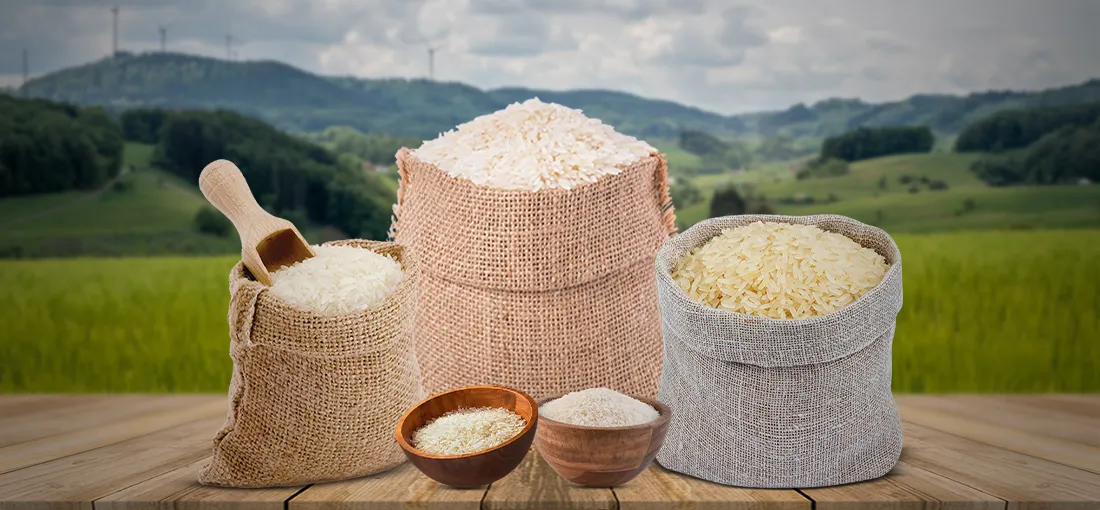
India currently leads the world in Basmati rice exports, accounting for more than 70% of the global market share (APEDA). Often dubbed "The Queen of Fragrance", Basmati rice from India is so popular because of its sophisticated differentiation through its GI (Geographical Indication) mark and impressive elongation properties after cooking. With varieties 1121, 1509, and 1718 at the top, it has been noted that the industry has accomplished an impressive integration in terms of technological aspects.
If you are searching for Basmati rice exporters or suppliers in India, this page provides:

The leading suppliers and exporters of Basmati rice, known for their massive milling capacities, strong global presence, and compliance with international safety regulations, include:
The Indian Basmati industry has entered a "high-tech" era, with a value-driven ecosystem taking the place of traditional volume-based trade. Three significant structural changes characterise this evolution:
Basmati is distinguished from common rice by its extra-long grain, delicate texture, and nutty aroma. Below are the key export varieties available for bulk procurement:
| Variety | Type | Avg. Length (Pre-Cooked) | Moisture | USP / Best For |
|---|---|---|---|---|
| 1121 Basmati | Raw/Steam/Sella | 8.35 mm+ | < 12.5% | World's longest grain; Biryani & Fine Dining |
| 1509 Basmati | Raw/Steam/Sella | 8.10 mm+ | < 13% | Economical premium; Faster cooking time |
| 1718 Basmati | Raw/Steam/Sella | 8.30 mm+ | < 12.5% | Disease-resistant; Excellent aroma & firmness |
| Traditional | Raw / Steamed | 7.30 mm+ | < 12.5% | The "Original" Basmati; Niche aromatic markets |
| Pusa Basmati | Raw/Steam/Sella | 7.45 mm+ | < 13% | High-yield hybrid; Consistent retail quality |
| Sugandha | Raw/Steam/Sella | 7.80 mm+ | < 14% | Semi-Basmati; Budget-friendly bulk cateringg |
India's leadership is reinforced by a combination of unique environmental factors and a modern industrial backbone:
Tradologie's digital ecosystem is designed to turn the conventional, frequently opaque commodity supply chain into a highly efficient, streamlined business. It reduces the risks of international trade while optimising value for the buyer by incorporating technology into every phase of the procurement lifecycle. By offering a comprehensive infrastructure that manages everything from initial discovery to the final release of funds, this strategy goes beyond straightforward matchmaking.

For smooth customs clearance and to retain a world-class ranking in the market, Indian Basmati rice exporters are forced to adhere to the requirements on technical specifications that are way more stringent than for non-Basmati rice. Guaranteeing high-value consumers in Europe, North America, and the Middle East the quality of Indian Basmati rice, backed by a GI tag.
Grain Elongation Ratio and Length
Extra-long, delicate grains that greatly lengthen during cooking are the hallmark of basmati rice. Export regulations normally include a minimum Average Pre-cooked Grain Length (AGL) greater than 7.50 mm for contemporary varieties like 1121, or 6.61 mm in the case of traditional types, in addition to an Elongation Ratio greater than at least 1:2 - this indicates that the grain doubles its length without any significant increase in width - to differentiate it from other long-grain rices.
Varietal Purity and DNA Testing
In a regulated market like the EU and UK, consignment purity is a must with a minimum standard requirement of 95% Basmati and not above 5% non-Basmati or adulterants. To verify that rice is from approved Basmati varieties, a molecular guarantee is to be provided by approved mills in the form of certified DNA analysis results.
Moisture Content and Ageing
Basmati rice improves in quality by ageing, but has to be carefully managed in terms of moisture, keeping it precisely 12 to 13%. This small difference in moisture is very important in the 12 to 24 months of rice ageing, rendering it fluffier and less sticky when cooked because of the concentration of natural oils.
Broken Percentage and Physical Defects
As a premium grain, Basmati can't afford much breakage - more often than not, only about 2-5% at most - since whole kernels matter a lot for such classic dishes like Biryani. The Sortex optical cleaning maintains the damaged, discoloured, or "yellow" grains under 0.5%, as per the Zero Foreign Matter standard.
Pesticide Residue Limits (MRLs)
The toughest technology-related challenge for Indian export-oriented companies in 2026 is meeting the 'Maximum Residue Levels or Limits' (MRLs). Every export company is required to produce laboratory reports to ensure that the residues of certain chemicals, such as 'Tricyclazole' and 'Buprofezin', remain within the stipulated limits of the 'ppb' levels of the exporting countries.
Advanced Packaging Solutions
The Basmati packaging type has the function of both defending the Basmati rice and marketing the Basmati rice in the global market. The most effective packaging used in upscale retail outlets would either be the use of BOPP packaging bags or packing in a vacuum pouch in order to preserve the aroma of the Basmati rice.
Prominent exporters include Kohinoor Foods, Shri Lal Mahal, LT Foods (Daawat), KRBL Ltd (India Gate), and numerous other verified millers on Tradologie.
With a length of 8.35 mm+, the premium standard 1121 is perfect for opulent dining. Although 1509 is slightly shorter (8.10 mm), it is more economical for retail and catering due to its higher yield and quicker cooking time.
APEDA registration, FSSAI, ISO 22000, HACCP, and phytosanitary certificates should all be verified by importers. The TRC (Transaction Registration Certificate) is also crucial for European markets.
By initiating a procurement request on Tradologie.com, buyers can participate in live price discovery sessions to see real-time quotes from multiple verified exporters simultaneously.